
10-slot watch box
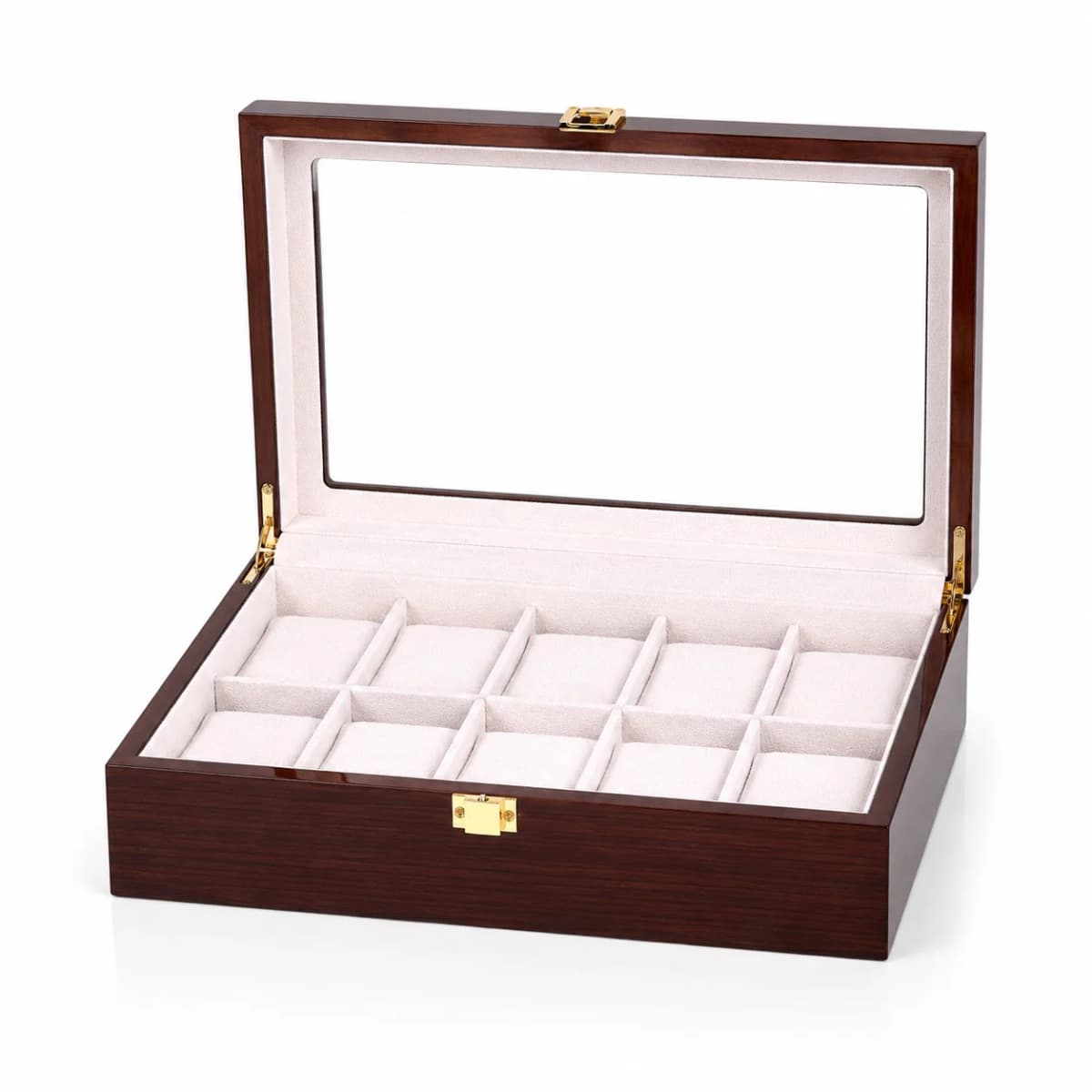
With its two rows of five compartments, the 10-compartment watch box is the first genuine collector format: enough space for a complete rotation without the bulk of a cabinet.
Explore watch storage
Discover the other watch boxes collections
With its two rows of five compartments, the 10-compartment watch box is the first genuine collector format: enough space for a complete rotation without the bulk of a cabinet. Our range runs from 800 g (zipped Voyager travel case) to 2 kg (Ravello walnut with glass lid).
10-compartment watch box: surprisingly compact format
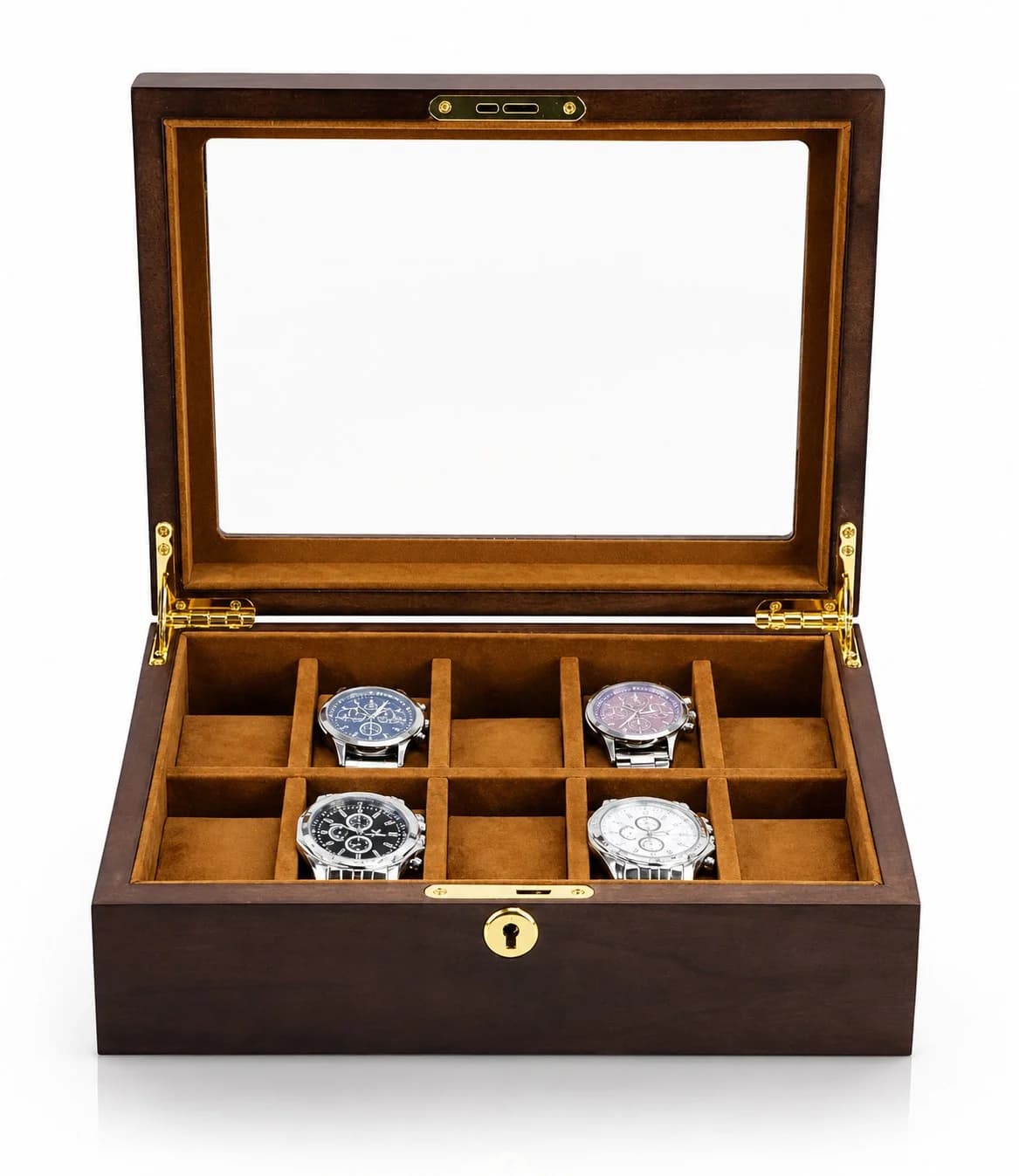
Contrary to intuition, moving from 6 to 10 watches does not double the footprint: you go from a single row lengthways (33 cm and more) to a 2 × 5 tray of approximately 26 to 28.5 cm per side. The brown wood Gandi (26 × 20 × 8 cm) thus takes up less linear space than a standard 6-compartment box, whilst accommodating 4 additional watches.
Walnut wood, carbon effect or soft travel case
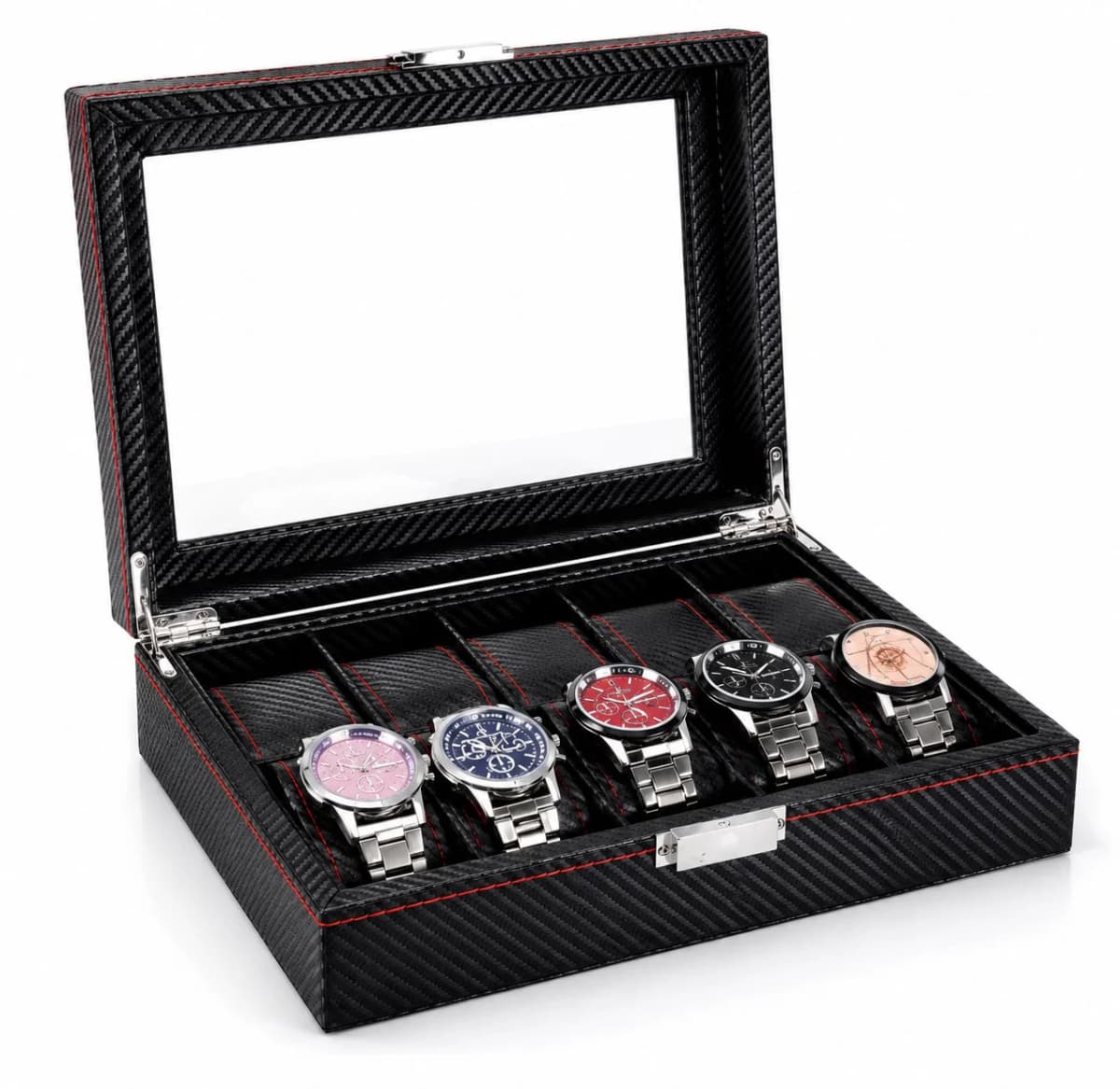
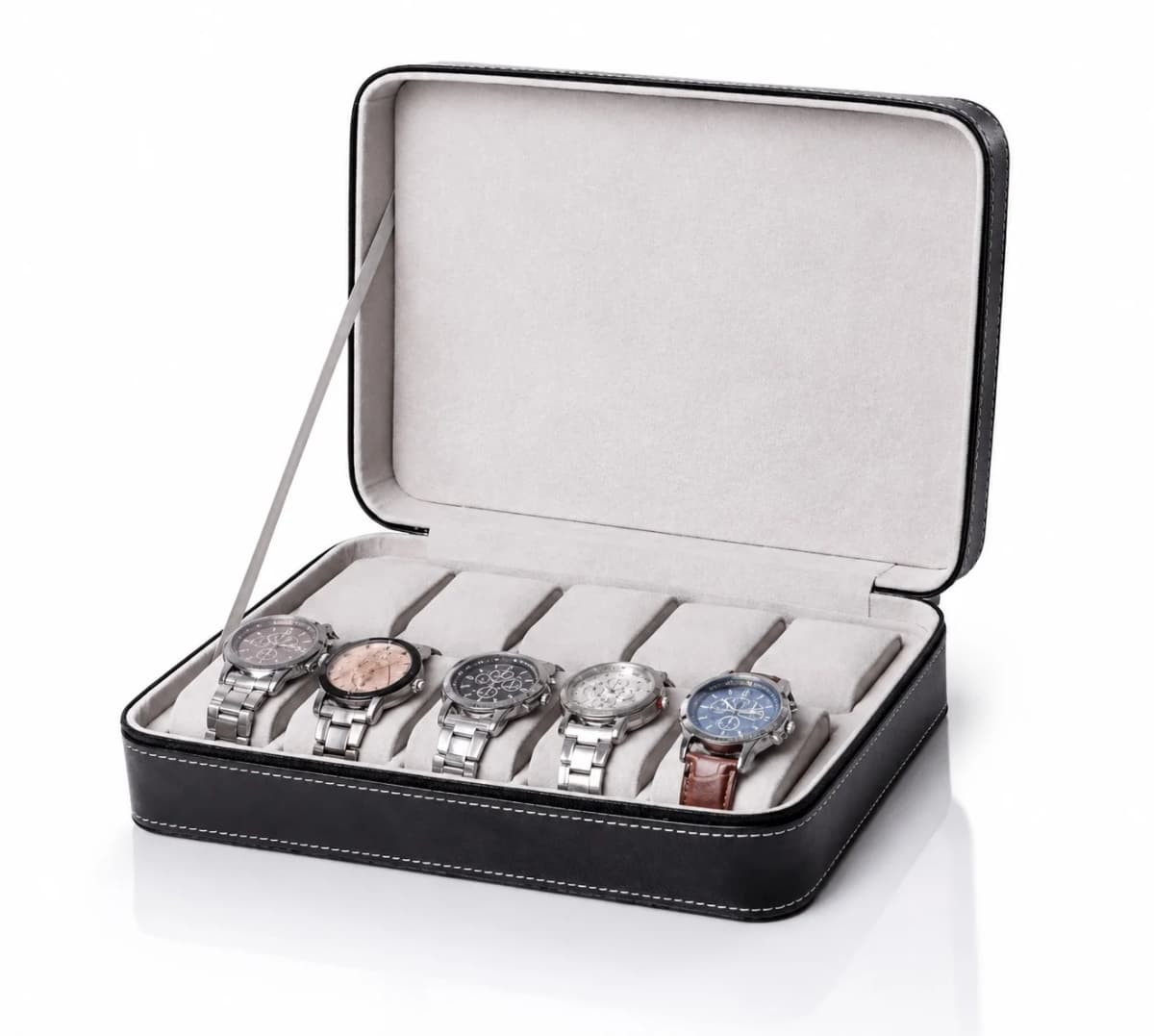
The Ravello walnut (28.5 × 21 × 9 cm, 2 kg, glass lid) is the most prestigious of the range: solid structure and permanent display case. The Monza carbon effect (1.1 kg) aims for a more contemporary aesthetic. The Voyager travel case with zip closure (800 g) remains the only option designed for mobility: 10 watches flat in a weekend bag. For 1 to 3 watches on the move, our travel pouches and watch cases remain lighter.
10 or 12 compartments: the real difference
At this capacity level, two compartments of difference change little in footprint but open up the jewellery drawer option: it appears on the 12-compartment format (Bellagio with double-tier drawer). Conversely, if your collection tops out at 7 or 8 pieces, the 8-compartment format is more compact. All formats are gathered on the watch boxes page, and our complete guide details the choice by collection profile.