
Misting in a watch: normal condensation or water resistance problem?

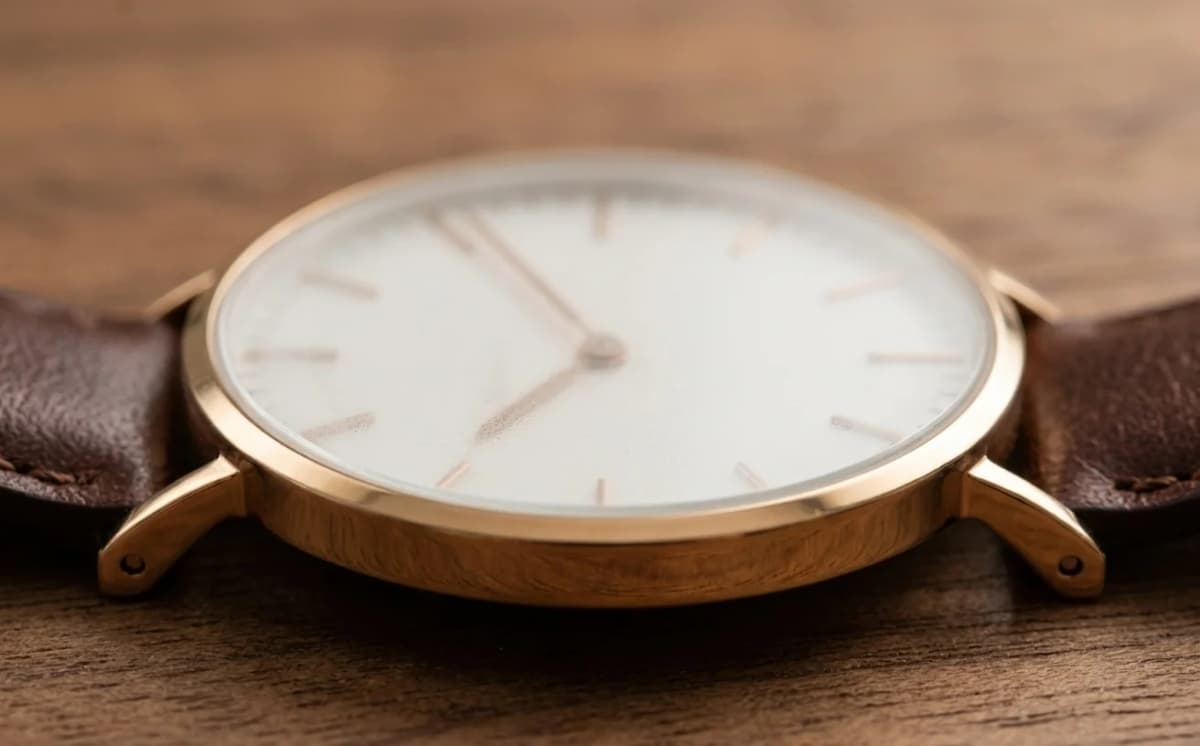
You discover a veil of condensation under the crystal of your watch when you wake up. Or when stepping out of the shower. Or worse, on a watch you've just bought. First instinct: think that the warranty on
water resistance is a lie. Reality: in nine cases out of ten, what you see is not a failure, but a perfectly normal physical phenomenon. This guide explains in detail why, how to distinguish benign condensation from genuine water ingress, the actions that save a watch and those that ruin one, and how never to have the problem again.Diagnosis in 5 seconds

Why condensation forms in a watch: the physics in two minutes
Even a water-resistant watch is not sealed under vacuum. Each time it is opened for servicing or battery change, a volume of ambient air, and therefore humidity, remains trapped between movement, dial and crystal. On the cases I have serviced over twenty-five years, this quantity is tiny but constant, and it obeys the laws of thermodynamics without exception.
The mechanism is straightforward: warm air contains far more water vapour than cold air. When the crystal temperature drops suddenly, stepping out of the shower, arm plunged into cold water, air conditioning or evening breeze, the internal vapour meets the cold surface and deposits as micro-droplets. Identical to condensation on a bathroom mirror. What surprises most owners: this phenomenon can occur even on a watch whose seals are perfectly intact.
The threshold at which this change occurs is called the dew point. The faster and more marked the temperature difference, the more visible the condensation. A case that goes from 30 °C (on the wrist) to 5 °C (under the cold tap) in a few seconds will almost always produce a temporary veil, even if the seal is new and the water resistance test perfect.
Second overlooked factor: the internal pressure of the case. As it cools, the trapped air contracts and creates a slight vacuum. This vacuum draws humidity towards the slightest micro-gap whilst pressing the seals against their housing. A genuine paradox: it strengthens water resistance in the short term, but accelerates seal fatigue over time.

Understanding these two mechanisms: dew point and internal pressure: changes everything in reading the problem. On the cases I have opened over the years, condensation is not the symptom of a defect: it's the inevitable consequence of having trapped air in a case subject to temperature variations. The real issue is not is there condensation, but how much, in what form, and for how long.
Normal condensation or genuine ingress: the table that settles it
The distinction between benign condensation and serious ingress directly determines the urgency of the response. Here are the seven criteria that allow you to decide in a few seconds of observation, without any special tools.
| Criterion | Benign condensation | Water ingress (alert) |
|---|---|---|
| Visual appearance | Uniform, fine, misty veil | Distinct droplets, sometimes aligned |
| Location | Entire interior surface of the crystal | Often at the bottom of the dial (gravity) |
| Evolution over 24-48 hours | Disappears on its own in a warm, dry room | Persists, or even worsens |
| Trace after drying | No residual marks | Halo, brown or green oxidation |
| Condition of the hands | Normal movement | Hands slowed, stuck or erratic |
| Dial | Intact, legible | Indices peeling, varnish blistering, stains |
| Action required | None (passive drying is sufficient) | Watch repair service within 24 hours essential |

If you are still uncertain after this table, remember the two-day rule: any condensation that has not disappeared spontaneously after 48 hours in a dry environment at room temperature is abnormal. Beyond that, residual moisture attacks the components: steel springs that rust, lubricants that emulsify, dial varnish that blisters, electronic contacts (on quartz) that oxidise. The longer you wait, the higher the repair bill.
Why a new watch can have condensation
This is one of the most stressful situations for a buyer: unpack a brand new watch, wear it for a few hours, and discover a mist veil the next morning. The immediate reflex is: I've been ripped off, it's a counterfeit, or a defective product. In almost all cases, this is false. Here is why a watch that is perfectly authentic and guaranteed can absolutely have condensation during its first days of use.
First, workshop assembly is never carried out in a 0% humidity environment. Manufactures work in air-conditioned rooms at 30-45% humidity: dry, but not zero. When the case back is closed, this micro-volume of humid air is trapped. Stable temperature, no symptoms. First real thermal shock, condensation. On the movements I have dismantled over the years, I have found that this phenomenon affects almost systematically new watches worn for the first time in winter.
Next, quality control often requires a water resistance test just before packaging. Depending on the type of test (dry or wet), minute additional humidity can be introduced or displaced into the case. Nothing abnormal in itself, but in roughly 1 new watch in 10 that we handle, it is precisely this step that generates the temporary mist noticed by the first wearer.
Transport and storage carry significant weight. A watch that has passed through a poorly air-conditioned warehouse, then an unpressurised cargo hold, then a parcel delivered in the middle of winter, has undergone a succession of thermal shocks and pressure variations that no static water resistance fully compensates for. Counter-intuitively, a watch certified 10 ATM can show condensation on delivery without its seal being defective: it is the internal air in unstable equilibrium that manifests at the first abrupt transition.
In all these cases, the healthy reflex is passive observation over 48 to 72 hours. Place the watch in a temperate, dry location, flat, and watch what happens. If the mist disappears on its own and does not return, your watch is in perfect condition and the initial residual humidity has dissipated through the natural micro-passages of the case. If the mist returns or intensifies, only then contact the repair service.
Decoding ATM ratings: what your water resistance actually allows
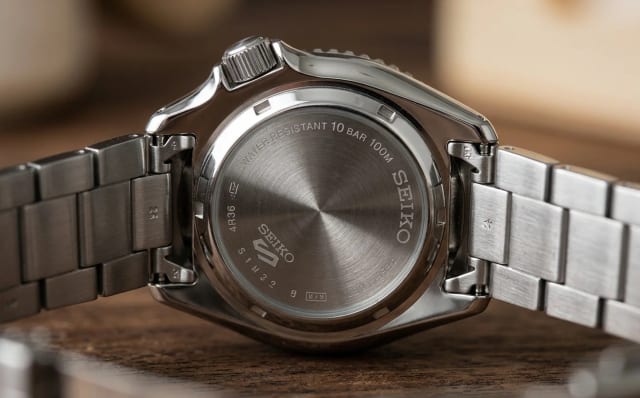
The water resistance rating engraved on the back of a watch: 3 ATM, 5 ATM, 10 ATM, 20 ATM, 100 m, 200 m: is probably the most misunderstood specification in all of watchmaking. These figures do not describe the depth to which you can dive. They correspond to a static pressure measured in the laboratory, on a new watch, under perfectly controlled conditions. Real-world use is quite different, because splashes, impacts and sudden movements generate pressure spikes far exceeding the equivalent static pressure.

The table below summarises the uses actually permitted according to your ATM rating. For each activity, the icon indicates whether it is risk-free (✓), to be avoided (⚠) or forbidden (✕).
| Rating | 🚿Shower | 🏊Swimming pool | 🌊Sea | 🤿Snorkelling | 🧖Sauna | 🐚Diving |
|---|---|---|---|---|---|---|
| 3 ATM | ✕ | ✕ | ✕ | ✕ | ✕ | ✕ |
| 5 ATM | ⚠ | ✕ | ✕ | ✕ | ✕ | ✕ |
| 10 ATM | ✓ | ✓ | ✓ | ⚠ | ✕ | ✕ |
| 20 ATM | ✓ | ✓ | ✓ | ✓ | ✕ | ⚠ |
| 30 ATM+ | ✓ | ✓ | ✓ | ✓ | ✕ | ✓ |
Three crucial clarifications that manufacturers rarely express clearly. First clarification: the water resistance indicated is valid at the time of the factory test. Elastomer seals age, harden, lose their elasticity with UV, heat and the chemistry of perspiration. A 10 ATM watch five years old probably has only half its original water resistance, unless the seals have been replaced during a service.
Second point : vapour is not water. Vapour molecules are incomparably smaller than liquid droplets and pass through micro-passages that liquid water would never breach. That's why saunas and hammams are forbidden on all watches, including 20 ATM. No water resistance standard covers this use.
Third point : the mention "water resistant" on certain entry-level models does not correspond to any binding standard. It means at best "resists a few accidental splashes". If you plan to use water regularly, demand a rating in bars or metres, and ideally compliance with ISO 22810 (water-resistant) or ISO 6425 (diving watches).
Real causes of water ingress (it's never by chance)
When water truly enters a watch, in the form of visible droplets and not just a light mist, it's almost always a combination of identifiable factors, therefore avoidable. In twenty-five years in the workshop, I've seen the same six causes return in the vast majority of cases.

The poorly screwed or pulled crown is by far the number one culprit. On a watch with a screw-down crown (typical of diving watches and many Seiko, Tudor, Rolex, and certain Tag Heuer models), the crown must be turned clockwise until it stops before any contact with water. A crown merely pushed but not screwed down leaves a direct passage to the movement. A quarter turn short and flooding is guaranteed.
Seal ageing comes second. Synthetic elastomer seals (NBR, FKM, Viton depending on quality) have a lifespan of three to five years with moderate use, two to three years with intensive use (sea, heavy perspiration, UV exposure). Beyond that, they harden, crack, and lose their ability to fit snugly in the grooves. A service every three years with systematic seal replacement is the minimum guarantee of lasting water resistance.
Battery change by an unequipped watchmaker ruins water resistance more often than one might think. In twenty-five years in the trade, I estimate that one watch in three that arrives at my workshop with misting has had its seal damaged during a battery change at a general jeweller. Opening a water-resistant watch requires removing the seals, inspecting them, sometimes replacing them, then redoing a water resistance test before returning it. Many jewellers skip these steps, sometimes without even properly refitting the seal in its groove. The watch looks identical on the outside, but its water resistance has become zero.
Extreme thermal shock can, in limited cases, overcome water resistance that is otherwise compliant. Plunging a watch heated by the sun (50 °C in high summer) directly into seawater at 18 °C causes a sudden contraction of the case and internal air that can momentarily misalign an ageing seal. Mechanical shocks (a fall, impact against an edge) can also deform a seal or create an invisible micro-crack on the crystal.
Hot water and vapour deserve a category of their own. Contrary to what most wearers believe, a watch rated water-resistant to 10 ATM is tested only in cold, static water : a very hot shower, a hammam or sauna subject the seals to thermal expansions outside the test protocol, and vapour, with molecules smaller than liquid water, passes through interstices that would perfectly hold back cold water. Accumulated over a few years, this treatment destroys even the best silicone O-rings.
Certain aggressive chemical products silently attack seals without leaving visible traces : alcohol-based perfumes sprayed directly on the wrist, highly acidic shower products, seawater not rinsed after swimming. On watches I've dismantled after repeated chlorine pool exposure, the seals were literally crumbly.
The DANGEROUS mistakes never to make
The internet is full of "miracle remedies" to make misting disappear from a watch. Most are at best ineffective, at worst destructive. Here are the five gestures that damage a watch more surely than misting itself, to be absolutely avoided : in twenty-five years in the workshop, I've seen their damage far more often than that of moisture itself.

Do
- Crown unscrewed to position 1 for aeration
- Silica gel in a zip bag for 24-48 hours
- Room temperature 20-25 °C, away from heating
- Observe for 48 hours, note the progress
- Watch repair service if droplets or persistence
Don't
- Hair dryer on hot setting (destroys seals)
- Radiator, direct sunlight, car boot
- Freezer (causes more condensation, damages varnish)
- Open the case yourself
- Immerse to "test" water resistance
- Shake vigorously (water penetrates deeper)
The rice, a forum favourite remedy, works poorly on a watch. Unlike a phone, whose gaps are wide, a watch has crown and pusher tolerances that are far tighter: I have removed micro-grains of rice trapped in a screw-down crown of a Seiko SKX007, which had jammed the O-ring. Silica gel absorbs four to five times faster, with no residue whatsoever, and remains the only desiccant I recommend.
Shaking the watch vigorously to "force out the water" is one of the most devastating reflexes. The water is projected towards the wheels and jewels, where it accelerates corrosion. In case of confirmed infiltration: watch still, lying flat, crown in position 1, and to a watchmaker within 24 hours.
Safe protocol to eliminate fogging in 5 steps
If the fogging matches the criteria for benign condensation, you can eliminate it yourself without risk by following this methodical protocol. Allow 24 to 48 hours, sometimes less, sometimes a little more depending on the volume of trapped moisture.
- Unscrew or pull the crown to position 1 (date adjustment, or first notch if no date). This position slightly opens the case to air passage and allows internal moisture to escape more easily. On a screw-down crown, unscrew only a quarter to half turn, without pulling it out.
- Prepare a hermetic container with silica gel. A freezer zip bag will do. Place inside 4 to 6 silica gel sachets (the ones found in shoe boxes, electronic packaging, or in dedicated sachets sold in pharmacies or DIY shops). For maximum effectiveness, you can reactivate the sachets by placing them in the oven at 80 °C for 1 hour.
- Place the watch flat in the bag in the middle of the silica gel sachets. Close the zip well. Important: the watch must not be in direct contact with the silica gel, just share the same confined air volume.
- Place the whole thing in a temperate and dry location: office, bedroom, away from heat sources. Ideal temperature: 20 to 25 °C. No radiator, no direct sunlight, no bathroom.
- Wait 24 to 48 hours checking progress every 12 hours. If the fogging has disappeared, remove the watch, rescrew the crown, wait another 24 hours in open air to confirm nothing returns. If after 48 hours the fogging persists or if you see coloured marks appear, go immediately to the service step.

Professional tests at the watchmaker: what happens in the workshop
When fogging resists the home protocol, or when droplets and oxidation are visible, a water resistance check at a qualified watchmaker becomes essential. Understanding the tests performed will allow you to communicate effectively with the professional and evaluate the quality of the work.

The dry pressure test is the modern reference method. The watch is placed in a transparent cylindrical chamber connected to a pump and a very high precision pressure sensor. The device, typically a Witschi Proofmaster, a Bergeon 5555 or equivalent, applies progressive pressure corresponding to the stated water resistance (3, 5, 10 bars depending on the model), measures micro-deformations of the case, then depressurises. If the internal pressure does not follow exactly the external pressure during depressurisation, there is a water resistance defect even if invisible. Sensitive to a hundredth of a bar, this test detects leaks well before they allow visible water to pass through. Expect 15 to 30 € depending on the watchmaker and region.
The wet pressure test remains an older and complementary method: the watch is immersed in degassed water heated under pressure, and bubbles visually reveal the leak point. This test is never performed as a first step on a watch suspected of infiltration. Counter-intuitive, but logical: you do not plunge into water a watch already compromised.
Beyond the tests, a qualified watchmaker will remove the caseback, manually dry the inside, inspect the movement, replace the seals (crown, caseback, crystal), clean or service the movement if moisture has reached it, close with an appropriate press, then redo a full test. In twenty-five years in the workshop, I have seen prices range from 60 € for a simple seal change to 280 € as soon as a full service becomes necessary after serious infiltration. This second scenario represents, in my estimate, about 40% of watches that arrive with persistent fogging.
Always demand a water resistance test certificate after the work. Any serious watchmaker provides it without being asked. Without this document, you have no proof that the test was redone, nor any recourse if the fogging returns in the following month.
When to contact the service immediately: red flags
Certain situations brook no delay. If you observe any of the following warning signs, do not attempt home remedies, do not set the watch aside "to see what happens": contact your watchmaker or the brand's after-sales service the same day.
- Visible water droplets under the crystal, at the bottom of the dial or against an index. This is liquid water, not condensed vapour. The movement is already in contact with it.
- Brown, green or yellow marks appearing on the dial, hands or around the indices. This is oxidation. The further it progresses, the more expensive restoration becomes (and beyond a certain point, the dial is permanently lost).
- Hands stuck, slowed or irregular. Water or its emulsion with the oils has reached the movement. Continuing to wear or wind the watch in this state accelerates deterioration.
- Erratic timekeeping on a quartz watch (jerking, stopping/restarting). Moisture has reached the electronic module and corrupted the contacts.
- Persistent fogging beyond 48 hours of silica gel treatment, or fogging that returns cyclically even after complete drying. The water resistance is gone, ambient humidity is entering constantly.
- Unusual odour coming from the watch (rare but occurs with infiltrations neglected for several weeks). This is advanced corrosion.
For any questions about your watch purchased from us, the Montres Outlet customer service responds within 24 working hours and directs you to the manufacturer's after-sales service or our network of partner watchmakers.
How to prevent condensation and infiltration for good
The best intervention is one you never have to make. Seven simple reflexes cover the vast majority of moisture ingress, and applying them systematically extends the life of the seals by three to five years depending on the case type.
- Check the crown position before any water contact. On a screw-down crown, turn fully clockwise until you feel a firm stop. On a push-pull crown, check that it is fully pushed in, not in the adjustment position. This single gesture alone prevents the majority of accidental infiltrations.
- Avoid saunas, steam rooms and very hot baths systematically, regardless of the ATM rating. Vapour has molecules too small to be held back by standard seals, and heat prematurely fatigues the elastomers. If you frequent these places regularly, remove your watch in the changing room.
- Avoid extreme thermal shocks. Do not jump into cold water with a watch that has just been in the sun. Do not run your wrist under cold water immediately after a very hot shower. Allow a few minutes of transition between environments.
- Rinse the watch in lukewarm fresh water after any contact with sea water, chlorinated pool water, or soapy water. Salt and chlorine attack the seals within a few months if you do not remove the residue. Then dry with a microfibre cloth.
- Have the water resistance tested every two years by a watchmaker equipped with a pressure testing device. The cost (€15-30) is negligible compared to the price of a service after infiltration. It is also an opportunity to replace the seals preventively if necessary.
- Replace the seals every three to five years at the latest, or systematically every time the case back is opened (battery change, service). Refuse any watchmaker who changes a battery without replacing the seal and redoing a water resistance test.
- Remove the watch before applying perfume, cream or shower product directly to your wrist. Alcohol-based solvents and cosmetic acids attack the elastomer of the seals. Put the watch on after you have finished your routine.
These seven gestures, integrated into your routine, are enough to prevent virtually all moisture problems on a medium or high-quality watch.
Looking for a truly water-resistant watch?
For swimming, snorkelling or sports use, choose 10 ATM minimum (screw-down crown ideally). Our most robust selections:
Frequently asked questions about fogging and water resistance
Does my insurance or warranty cover damage caused by fogging or infiltration?
How long does normal condensation take to disappear?
Can I swim with a 3 ATM, 5 ATM or 10 ATM watch?
Sauna and water-resistant watch, are they compatible?
Can a hair dryer really eliminate watch fogging?
Does rice really work to dry a watch?
How long does a watch's water resistance last?
Quartz or automatic, is there a difference when it comes to condensation?
Battery change and water resistance, what is the connection?
To understand water resistance thresholds and the complete ATM table, see our complete guide to watch water resistance (ATM/bar/metres + infographic).
How much does a water resistance test cost at a watchmaker?
To conclude
Misting in a watch is neither inevitable nor a mystery. It is a predictable physical phenomenon, which depends on the volume of air trapped in the case, the temperature difference and the condition of the seals. After twenty-five years opening casebaks, I have learned to tell one from the other in thirty seconds: mild condensation clears on its own within a few hours. When it persists, changes appearance or is accompanied by visible droplets or oxidation on the dial, you must act quickly and professionally, because free water attacks the movement in less than 48 hours.
The golden rule comes down to one line: a uniform haze that disappears on its own is normal, droplets that remain are an emergency. The best prevention is the kind you never have to do: crown checked before water, seals replaced every three years, water resistance test every two years, sauna forbidden. Contrary to what many wearers believe, a watch rated 100 m is not necessarily water resistant at that depth after five years without seal service.
To learn more about maintaining your watch, consult our other guides in the Advice & maintenance section. And for any questions about a watch purchased from us, our customer service is at your disposal.
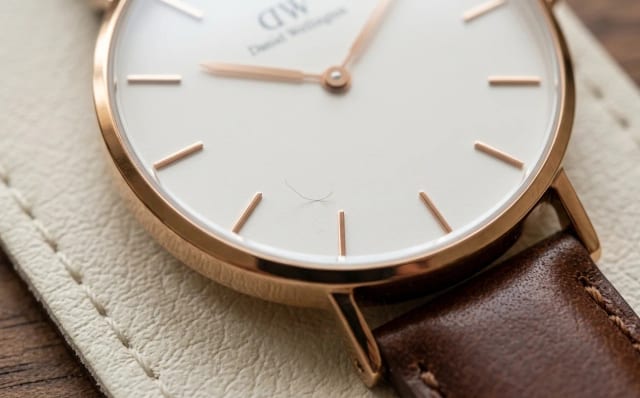
Do you notice a fixed spot rather than a haze that comes and goes? It is probably dust or a fibre rather than condensation: our guide to removing dust under a watch crystal gives you the diagnosis in 30 seconds and the step-by-step method to remove it.
Read next
More in this vein
Care & maintenance
Crystals and rhinestones falling from a watch: why, and how to protect them
Care & maintenance
Casio Water Resist: is your vintage watch water resistant? (A158, A168, LA670)
Care & maintenance
Dust on a watch dial: how to remove it easily
Care & maintenance
Watch Water Resistance Ratings: ATM, Bar, Metres (Complete Guide)
Care & maintenance
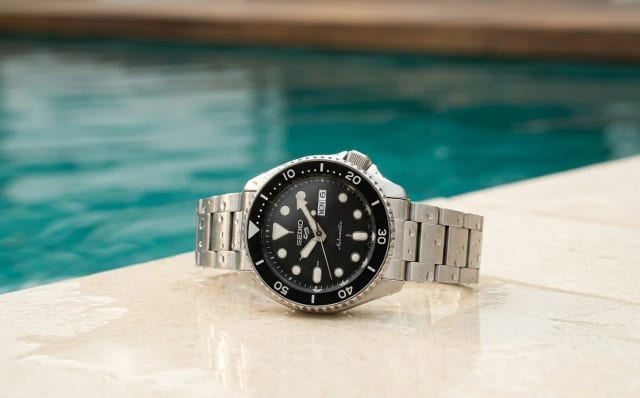
10 ATM on a watch: everything you need to know (swimming pool, sea, snorkelling)
Care & maintenance