
Men's Water Resistant Watch: The Complete Guide 2026

Updated 2 May 2026 · 14 min read · By Nicolas Bernard, field tester
Diagnosis in 5 seconds
The men's water-resistant watch is a technical object before it is a fashion accessory. PADI-certified diver, I have worn a watch in water for over fifteen years: in the pool, in the Mediterranean Sea, in the rain whilst trail running, and sometimes in conditions where one would have preferred not to test water resistance. What I have learned in the field is that most disappointments stem from a misunderstanding of what the figures engraved on the case back really mean. This guide gives you the keys to choose correctly, maintain properly and avoid common mistakes.
Decoding ATM ratings: what the figures really mean

The term "waterproof" has been forbidden in watchmaking for decades. We speak of "water resistance", expressed in atmospheres (ATM), in bars or in metres of water column. The correspondence: 1 ATM = 1 bar = approximately 10 metres of static water column.
The key word is static. A laboratory test immerses the case in a pressurised water tank, without movement. Contrary to a widespread belief, a dive into a pool or vigorous front crawl adds almost nothing: the dynamic pressure of entering the water is ½ρv², roughly 0.5 bar at 10 m/s, far below the test pressures. A pressure washer jet, on the other hand, remains a real danger. What really lets water in is the crown (pulled out or not fully screwed down means no water resistance at all), ageing seals (chlorine, salt, sun cream, soap, temperature cycles), thermal shocks (hot bath then cold water), a cracked crystal or a case back reopened without a new test. This is why a 3 ATM watch should not be kept on in the shower, and why 10 ATM is the sensible starting value for any aquatic activity.
| Rating | Pressure tested | What you can do | What you cannot do |
|---|---|---|---|
| 3 ATM / 30 m | Low static pressure | Rain, splashes, hand washing | Shower (risky), bath, swimming |
| 5 ATM / 50 m | Moderate pressure | Occasional shower, rain, hand washing | Bath (risky), swimming pool, sea, snorkelling, diving |
| 10 ATM / 100 m | Significant pressure | Swimming, light snorkelling, surfing, sailing, surface water sports | Scuba diving, deep freediving |
| 20 ATM / 200 m | High pressure | Recreational diving (if marked Diver's, ISO 6425), freediving, underwater sports | Technical diving at great depth (without 30 ATM+) |
| 30 ATM / 300 m and above | Very high pressure | Technical and professional diving, saturation (with helium valve) | Nothing in standard recreational use |
Which water resistance level for which activity

Daily and professional use (office, city, travel)
For an active man whose watch mainly encounters rain, hand washing and ambient humidity, 5 ATM is the acceptable lower limit. But 10 ATM quickly becomes preferable once you think about holidays, sporting weekends or unexpected situations. Models from brands such as Hugo Boss, Daniel Wellington or Emporio Armani generally sit within this range with a design that works from office to terrace.
Swimming, fitness and surface water sports
10 ATM is the non-negotiable minimum here. It is not the pressure of front crawl that requires it (an arm stroke adds only a fraction of a bar), it is repeated immersion: chlorine, salt, thermal shocks and seal wear. Surfing and wakeboarding add mechanical knocks to the case and crown. A silicone or rubber strap is mandatory: steel retains chlorine in its mesh and oxidises prematurely.
The sports collections from Casio (G-Shock, Pro Trek) and Seiko (Prospex) are solid references at this level, available on Montres Outlet with their complete 2-year manufacturer's warranty.
Scuba diving and freediving
This is the domain of ISO 6425 certified watches, with a minimum of 20 ATM for recreational diving and 30 ATM for technical dives. The unidirectional rotating bezel is not an aesthetic option: it is a safety device that allows you to measure immersion time without risk of error from accidental impact. It can only rotate counter-clockwise, which means that if it moves, the time shown is shortened, never extended.
To learn more on the subject, our dedicated guide to water-resistant 200 m watches for diving details the selection criteria and recommended models.
Do
- Screw down the crown before any immersion
- Rinse with lukewarm fresh water after each sea or pool bath
- Have the seals checked every 2-3 years by a watchmaker
- Choose a silicone or rubber strap for water activities
- Opt for 10 ATM minimum as soon as you swim regularly
- Check ISO 6425 certification before buying a diving watch
Don't
- Operate crown or pushers underwater
- Wear a 3 ATM watch in the shower
- Go from cold pool to sauna with the same watch on your wrist
- Use a leather strap for any water activity
- Ignore occasional fogging under the crystal (early sign of seal wear)
- Dive with a "200 m" watch without checking ISO 6425 certification
The materials that make the difference: case, crystal, strap
The case: 316L steel, titanium or resin
Stainless steel 316L is the industry reference standard. Its composition (with molybdenum) gives it excellent resistance to corrosion from salt water and chlorine. It accepts both mirror polishing and brushed matte finishing, and is found in watches at all price points, from entry-level at Tommy Hilfiger to professional diving watches.
Titanium is approximately 40% lighter by volume and even more corrosion-resistant. It is hypoallergenic, making it valuable for sensitive skin. Its weakness: it scratches slightly more easily than steel and its cost is higher. On large diving watches (42 mm and above), the weight saving is really noticeable after several hours of wear.
Resin and polycarbonate equip dedicated sports watches (G-Shock leading the way) and entry-level models. Very light and shock-absorbing through elastic deformation, they age less well in terms of appearance (micro-scratches, yellowing on light colours) but offer genuine robustness for a contained price. If your watch risks repeated impacts (climbing, contact sports), a resin case may be more suitable than polished steel.
The crystal: mineral, sapphire or Hardlex
Mineral crystal is the most common in the fashion brand segment. It resists scratches better than acrylic but breaks under violent impact. Acceptable for moderate daily use.
Synthetic sapphire crystal reaches 9 on the Mohs scale (diamond is 10), making it virtually impossible to scratch with everyday materials. On movements I disassemble in the workshop, I find that sapphires from 5 years ago display a clean surface where an equivalent mineral crystal already shows micro-scratches that diffuse light and degrade readability. In case of extreme impact, it fractures cleanly rather than chipping: less aesthetic, but readable until the last moment.
Seiko's Hardlex (treated tempered mineral crystal) occupies an excellent middle ground: far more scratch-resistant than standard mineral, at a cost well below sapphire. This is one of the reasons why mid-range Seiko watches offer a durability-to-price ratio that is hard to beat.
The strap: the choice that changes everything in practice
A silicone or rubber strap is waterproof, lightweight, grippy when wet and quick to dry: it's the logical choice for any watch used regularly in water. What many wearers don't know: in prolonged wear without rinsing, the combination of perspiration and chlorine irritates sensitive skin far more quickly than a fabric strap. Daily rinsing and drying are enough to prevent the problem.
The steel bracelet is versatile and durable, but it demands a discipline that many neglect. After each immersion in salt water or chlorinated water, rinse it with fresh water and dry the links with a cloth. Chlorine seeps into the joints and corrodes the pins if left to dry: on the second-hand bracelets I inspect, this is the leading cause of mechanical play in the links.
NATO nylon bracelets are fashionable and dry quickly. Problem: they retain moisture against the skin and can generate unpleasant odours if not washed regularly. Best reserved for light use or occasional outings.
Leather: to be avoided for any regular contact with water. Water deforms leather, loosens seams, generates odours and permanently compromises the appearance of the strap. Paradoxically, some customers choose a 20 ATM watch and then wear it with a leather strap: the case's resistance then serves no purpose.
The screw-down crown and pushers: why it's essential

The crown is the opening in the case for setting the time and, on mechanical watches, winding the movement. It's the weak link, even on a watch claimed to be waterproof: just a single seal around a rotating mobile stem. On the models I've dismantled in the workshop, it's systematically around the crown that I find the first traces of moisture, well before the case back or crystal.
On watches from 10 ATM upwards that are properly made, the screw-down crown solves this problem. It screws into the case like a dive plug, compressing one or more O-rings and creating a seal far superior to an ordinary push crown. Practical consequence: you must unscrew the crown before setting the time, then screw it back carefully afterwards. This operation takes ten seconds but makes all the difference when submerged.
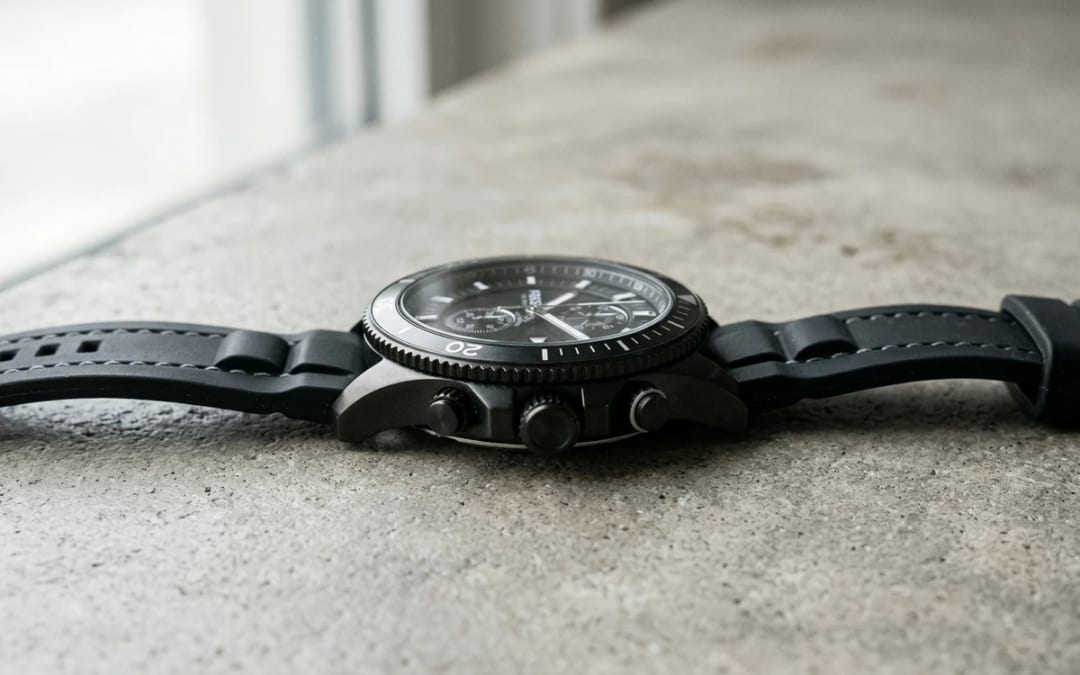
Same logic for chronograph pushers. On the vast majority of sports watches, these buttons are not waterproof when activated. Set your chronograph before entering the water, never during immersion. Screw-down pushers exist, but remain reserved for a few high-end diving watches such as the Oris Aquis Chronograph or the Breitling Superocean: it's the exception, not the rule.
Water-resistant watch styles: finding the right match with your activity
The classic diving watch
It's recognisable by its notched bezel, wide and luminescent indices, thick case and metal bracelet with extension (to fit over a diving suit). It's a safety instrument before being a fashion object. On our stock of diver-style watches, over 70% go for daily urban use: the "diver" style is worn at the office and in the city, far from the seabed, precisely because it radiates immediately legible robustness.
Minimum characteristics for a true diving watch: 20 ATM, ISO 6425 certification, unidirectional bezel, Superluminova on the indices and hands, screw-down crown, screw-down case back or screw-sealed. Our guide water-resistant 200 m watch for diving details the selection criteria in this segment.
The sports chronograph watch
The integrated chronograph (separate seconds and minutes counters from the main dial) is the flagship feature of this category. Useful for timing intervals in swimming, track laps, cooking times on a hike. Most models from brands such as Michael Kors, Tommy Hilfiger or Emporio Armani sit here: 10 ATM, 316L steel, mineral or sapphire crystal depending on the price point, dynamic design suited to larger wrists (42-46 mm).
The versatile everyday watch
This is the best-selling category. It handles aquatic mishaps without being a diving instrument. A slimmer design (10-12 mm thickness) that fits under a shirt sleeve, water resistance of 5 to 10 ATM, a clean dial. Models from Daniel Wellington or Hugo Boss illustrate this category well: legible, elegant, capable of surviving a shower and, for the 10 ATM models, a swim in the sea.
For women looking for an equivalent in this category, the complete guide to women's water-resistant watches 2026 lists suitable models with the same selection criteria.
The water-resistant sports smartwatch
Apple Watch, Garmin Forerunner, Samsung Galaxy Watch: these connected watches generally reach 5 ATM (some 10 ATM), with integrated pool swimming tracking. Their strength lies in tracking features (GPS, heart rate, lap counting, estimated VO2 max). Their limitation for divers: few exceed 10 ATM and none offer a unidirectional bezel certified to ISO 6425. These are surface watches, excellent for recreational swimming and triathlon, but not for scuba diving.
Quartz or mechanical: which movement for a water-resistant watch
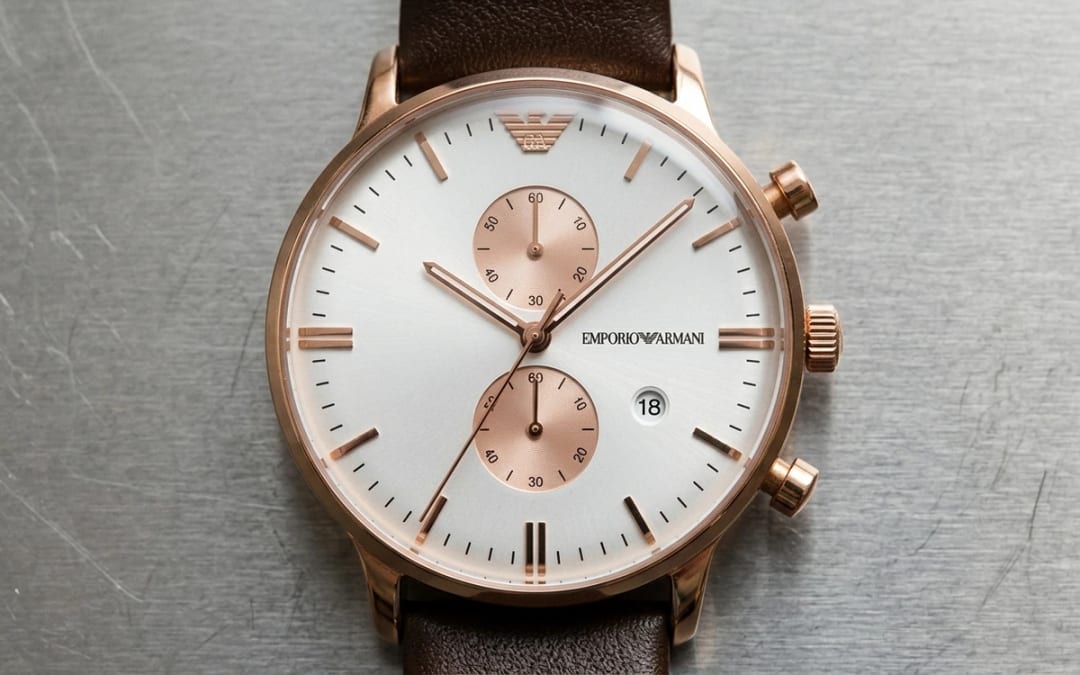
A quartz movement oscillates at 32,768 Hz thanks to a crystal oscillator powered by a battery. Accuracy: a few seconds' variation per month. Maintenance: battery change every 2 to 3 years. No daily winding. For a utilitarian water watch, it's the simplest and most reliable solution, especially if you don't wear it every day (an automatic mechanical watch stops after 40 to 70 hours without wear depending on the power reserve).
An automatic mechanical movement winds itself through wrist oscillations via a rotor. Its accuracy is lower: from a few seconds to several tens of seconds' variation per day depending on the adjustment. It requires a complete overhaul every 5 to 7 years, which includes replacement of the water-resistance seals. This overhaul is costly but essential to maintain the stated water resistance. A mechanical watch never overhauled in ten years is no longer reliable in water, even if it has never been submerged.
The water resistance of a mechanical movement can be just as effective as that of a quartz (the great diving watches Seiko such as the Prospex SRP prove this). The difference is not in the water resistance technology but in the frequency of maintenance required.
5 concrete criteria for choosing the right watch

1. Set the ATM to your most demanding activity
List your activities in order of water stress. If you swim twice a week but never dive, 10 ATM is your target. If you do recreational freediving, aim for 20 ATM. Do not buy a watch based on what you do 95% of the time: it is the remaining 5%, the unexpected snorkelling session or the kayaking trip, that puts water resistance to the test.
2. Measure your wrist before looking at case diameters
A tape measure around your wrist: that is the basic measurement. For a slim wrist (under 17 cm), cases of 38-42 mm are proportioned. Above 18 cm, you can wear 42-46 mm without the watch appearing disproportionate. Thickness counts as much as diameter: a diving watch 15 mm thick catches under shirt sleeves and can be uncomfortable at the keyboard. For office-to-pool use, a thickness of 11-13 mm remains comfortable all day.
3. Invest in sapphire crystal if you are active
A scratched crystal cannot be repaired. I compared side by side a Seiko SKX007 with mineral crystal after 18 months of active wear and an Orient Mako with sapphire crystal under the same conditions: the first showed micro-scratches visible to the naked eye, the second remained clear. The sapphire surcharge, often modest on an entry-level model, pays for itself handsomely in preserving appearance. Between two equivalent models, always choose sapphire.
4. Quartz for reliability, mechanical for passion
There is no right or wrong answer, but be honest with yourself. Quartz: immediate accuracy, zero ritual, virtually no maintenance. Mechanical: pleasure of a living object, daily winding, servicing every 3 to 5 years to budget for. What I see too often: customers who choose mechanical for prestige, then neglect it due to lack of maintenance. If you are not ready to commit to servicing, quartz will serve you better.
5. Check dimensions on your own wrist before validing your order
Product photos are taken with lenses that flatten volumes: on the web, a 44 mm case can look as discreet as a 40 mm. Field tip: cut out a circle of paper to the exact dimensions of the case and place it on your wrist. On Montres Outlet, product sheets systematically indicate diameter, thickness and lug-to-lug distance, three pieces of data I use systematically before any customer recommendation.
Practical maintenance: what really extends your watch's life

Water resistance relies on elastomer or silicone O-rings, placed around the crown, case back and crystal. These seals age, dry out and lose their elasticity, often in less than two years if the watch is exposed to chlorine, salt or sunscreen. Contrary to what most wearers believe, it is the perfume applied to the wrist that attacks the crown seal most rapidly. Here are the gestures that really make a difference:
- Rinse with lukewarm fresh water after each contact with salt water or chlorinated water. No need to rub: a trickle of water over the entire case, including under the lugs and around the crown, is enough. Then dry with a soft microfibre cloth.
- Never operate the crown or pushers underwater. Even on a 10 ATM watch. Make your adjustments dry, lock the crown, then immerse.
- Water resistance check every 2-3 years with a qualified watchmaker. This test (by air pressure or controlled immersion) costs little and detects leaks before they damage the movement. Consult our maintenance advice section for more details on these procedures.
- Avoid sudden thermal shocks. Going directly from a cold pool to a sauna stresses the seals through differential expansion. If you use a sauna after swimming, remove the watch.
- Rinse the steel bracelet after each sea immersion. Salt dries in the mesh and corrodes the pins. Ten seconds under fresh water significantly extend the bracelet's lifespan.
If you notice condensation under the crystal, remove the watch from the water immediately and consult our guide on condensation under the crystal. In my workshop, a good share of cases are due to a passing thermal shock (cold pool after a warm bath), but the others signal a real leak that worsens every hour without intervention.
Summary table: 4 usage profiles and their corresponding watches
| Usage profile | Water resistance required | Recommended materials | Key features | Typical diameter | Price tier |
|---|---|---|---|---|---|
| Active daily wear (office, city, travel) | 5 to 10 ATM | 316L steel / Mineral or sapphire crystal / Metal or leather bracelet (dry use) | Date, versatile design, case slimness | 38-42 mm | entry level |
| Swimming, surface water sports | 10 ATM minimum | 316L steel or titanium / Sapphire crystal recommended / Silicone bracelet | Chronograph, screw-down crown, luminescence, legibility | 42-46 mm | mid-range |
| Recreational scuba diving | 20-30 ATM + ISO 6425 | 316L steel or titanium / Sapphire crystal / Rubber or expandable steel bracelet | Unidirectional bezel, superluminova, screw-down crown, screw-down case back | 42-44 mm | mid-range to accessible upper range |
| Connected sport (triathlon, competitive swimming) | 5-10 ATM | Aluminium or composite / Reinforced crystal / Silicone bracelet | GPS, swimming tracking, heart rate, battery life | 42-47 mm | mid-range to accessible upper range |
Find your water-resistant watch on Montres Outlet
All selected watches benefit from a 2-year manufacturer's warranty, free delivery to mainland France, subject to our terms (3-5 days) and returns within 14 days. Customer reviews are available on Temovio.
Frequently asked questions
What is the difference between a 10 ATM and 20 ATM water-resistant watch?
Can I swim with a 5 ATM water-resistant men's watch?
How can I verify that my watch is truly water-resistant?
What is a water-resistant sports men's watch and what are its specifications?
Which water-resistant men's watch should I choose for diving?
Does a watch's water resistance decrease over time?
Can I wear a water-resistant watch in the shower or sauna?
Before choosing a level, review our complete water resistance guide (ATM/bar/metres + infographic).
What is the best brand for a quality water-resistant men's watch?
Read next
More in this vein
Buying guides
200m Water Resistant Watch: The ideal companion for diving
Buying guides
The materials making a comeback in both watchmaking and creative jewellery
Buying guides
Swarovski watch: crystal, Swiss Made, what you're really paying for
Buying guides
Maserati Sfida R8823140004: autopsy of an open heart NH70
Buying guides
Skeleton watch: the complete guide from a watchmaker (men's, women's, automatic)
Buying guides
Rolex-style watch: Submariner, Datejust and affordable homages
Buying guides
Rectangular watch: from the Cartier Tank to affordable alternatives
Buying guides