

Updated 2 May 2026 · 15 min read · By Antoine Moreau, Master Watchmaker
Diagnosis in 5 seconds
Automatic or quartz? The question comes up with every purchase, whether it's your first watch or the latest addition to a collection. After twenty years taking apart movements from both families, my answer is always the same: no technology is objectively superior, it all depends on how you use it. This guide gives you the technical and practical knowledge to decide with confidence.
How these two movements work

The quartz movement: electronic precision
The principle dates from the late 1960s. A quartz crystal subjected to an electric current supplied by a battery vibrates at a very stable frequency (typically 32,768 Hz). An integrated circuit divides these vibrations to produce one pulse per second, which drives a stepper motor: this is the mechanical "click" you hear and see as the second hand jumping.
The stability of the quartz frequency is its main strength. A standard quartz calibre drifts by around ±15 seconds per month. Thermocompensated quartz movements (found on certain high-end chronographs) compensate for frequency variations caused by temperature and achieve ±5 seconds per year. At the other end of the spectrum, solar technologies (Eco-Drive at Citizen, Tough Solar at Casio) eliminate the battery constraint by recharging an accumulator via ambient light.
The automatic movement: living micromechanics
An automatic calibre uses between 150 and 400 parts depending on its complexity. The mainspring, housed in a barrel, provides the energy, continuously wound by a semi-circular rotor that pivots freely under the effect of your wrist. The regulator (balance wheel and hairspring) oscillates at a fixed frequency, typically 6, 8 or 10 beats per second. Counterintuitively, an entry-level calibre like the Miyota 8215 at 6 bps drifts on average by 10-15 sec/day, whilst an ETA 2824-2 at 8 bps holds 4-6 sec/day: frequency alone is not enough, regulation matters just as much.
When the watch is not being worn, the mainspring gradually unwinds. The power reserve (typically 38 to 80 hours depending on the calibre) indicates how long the watch continues to run without being wound. Once this reserve is exhausted, the watch stops and must be wound manually via the crown, or put back on your wrist.
The precision of a standard automatic is between -10 and +30 seconds per day. Calibres certified by COSC (Official Swiss Chronometer Control) guarantee -4/+6 seconds per day, a level well above the current standard, but still far below quartz on the drift criterion alone.
Complete technical comparison
| Criterion | Quartz movement | Automatic movement |
|---|---|---|
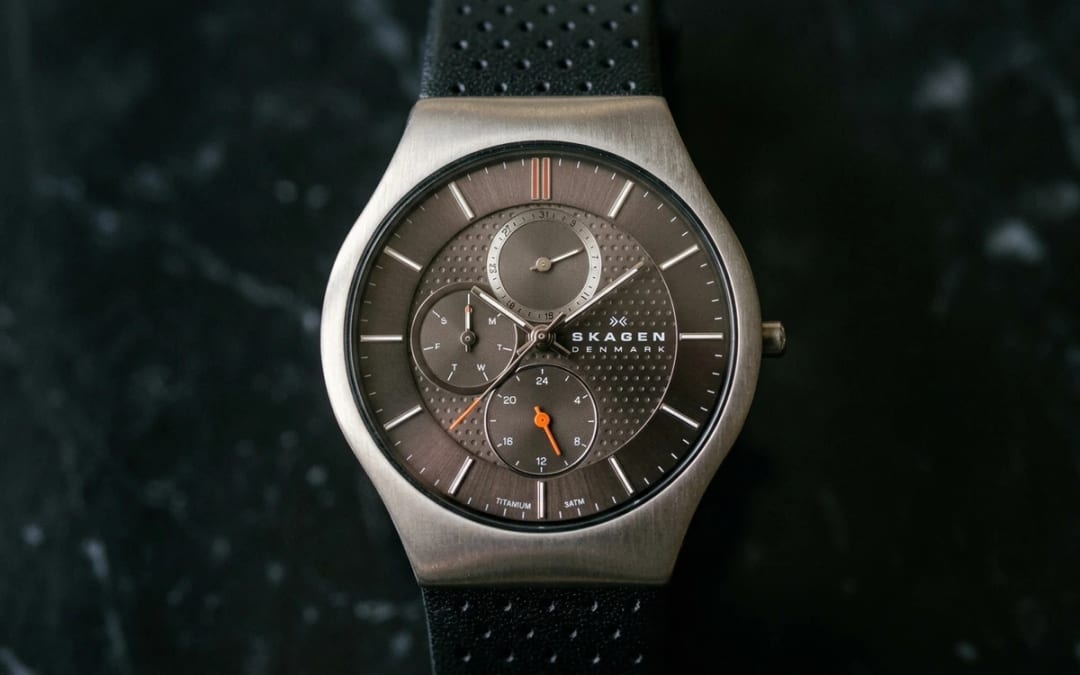
| Energy source | Battery (or solar / kinetic) | Wrist movements (rotor) |
| Standard accuracy | ±15 sec/month | ±10 to 30 sec/day |
| Optimal accuracy | ±5 sec/year (temperature-compensated) | -4/+6 sec/day (COSC) |
| Routine maintenance | Battery change every 2 to 5 years (€10 to €30) | Full service every 3 to 5 years (€100 to €300) |
| Mechanical complexity | Low (electronic circuit) | High (150 to 400 parts) |
| Shock resistance | Very good | Adequate, but more vulnerable to repeated shocks |
| Hand fluidity | Second-by-second jump ("tick-tock") | Continuous sweep |
| Entry-level price | From €50 | From €200 |
| Expected longevity | 10 to 20 years depending on use | Several decades with maintenance |
| Long-term value | Rapid depreciation (with rare exceptions) | Retention, sometimes appreciation |
| Sensitivity to magnetism | Negligible | Real (hairspring affected) |
| Reference examples | Casio G-Shock DW-5600, Citizen Eco-Drive | Seiko 5 Sports SRPD, Hamilton Khaki Field |
Advantages and disadvantages of quartz
To explore the subject on a specific Casio brand, consult our complete guide to Casio watches written by Pierre Laurent, workshop watchmaker in Lyon.

What quartz does better
Accuracy without intervention. A standard quartz watch only needs adjustment twice a year for daylight saving time changes. Its monthly drift, often less than 15 seconds, remains invisible in daily use, whereas an entry-level automatic can accumulate 2 to 3 minutes of deviation over the same period. For a doctor or pilot, the advantage is real.
Access and maintenance costs. The electronic circuit is mass-produced, which drives prices down both in manufacturing and maintenance. A battery change costs between €10 and €30, compared to €150 to €400 for a full automatic service. In twenty years at the workshop, I've seen customers spend more on servicing than they paid for the watch.
Shock resistance. Fewer moving parts means fewer components likely to become misaligned. Casio's G-Shock watches take this logic to the extreme: their structure absorbs violent impacts whilst maintaining accuracy. For sports activities or harsh environments, quartz is clearly better suited.
Water resistance. The compact design of the quartz module facilitates the design of water-resistant cases at significant levels. This is why the majority of technical diving watches are quartz.
What quartz does not do well
Prestige and perception. In the world of watchmaking, quartz is rarely considered a collectible object or a symbol of artisanal craftsmanship. This perception is debatable technically, but it is real commercially: on the watches we resell second-hand at Montres Outlet, automatics sell on average 40% more expensive than quartz watches of equivalent entry-level range.
Absolute longevity. In twenty years of dismantling movements, I have never discarded a mechanical calibre for lack of unavailable parts. An ETA 2824 or a Miyota 9015 can be cleaned, re-oiled and run for decades more. A faulty quartz module, on the other hand, often ends up in the bin as soon as the manufacturer stops producing it: repair is simply no longer profitable.
Risk of battery leakage. A battery left in place after becoming exhausted can seep and corrode the contacts within just a few weeks. In my workshop, I've recovered modules rendered irreparable by this alone. Change the battery as soon as it stops: it's the cheapest quartz maintenance gesture.
Advantages and disadvantages of automatic

What automatic does better
The wearing experience. The fluid sweep of the seconds hand, the absence of a battery, the sensation of a living object on the wrist: difficult to quantify, but twenty years of opening cases have taught me that this is often what tips a buyer over. Of the 11,000 watches in our stock, automatics with transparent case backs consistently sell faster than their dial-only equivalents: watching the rotor and gears in motion remains a very real satisfaction.
Transgenerational durability. A serviced mechanical calibre can pass through several generations without ever becoming "obsolete". Parts are generally available for a long time, and watchmakers know how to work with them. A Seiko automatic watch purchased in 1980 can still run today with proper care.
Heritage value. Automatics from recognised brands hold their resale value better. Some iconic models (Seiko SKX, Hamilton Khaki Field) trade second-hand above their original retail price. This is an exception, not a rule, but it is structurally rare with quartz.
Energy independence. As long as you wear it, it works. No battery to anticipate, no sudden failure on an important morning.
What automatic does not do well
Daily accuracy. A variation of 15 to 30 seconds per day requires resetting the time regularly if you are particular about this. It is not a deal-breaker, but it is a reality to accept.
Maintenance cost. A full service every 3 to 5 years costs between €100 and €300 for a standard movement. Neglecting this maintenance leads to accelerated wear, loss of accuracy and potentially much more costly repairs. To find out more about best practices, consult our complete guide to automatic watch maintenance.
Sensitivity to shocks and magnetism. A violent shock can knock the balance wheel out of alignment or bend an axis. An intense magnetic field (speakers, magnetic bag clasps, MRI machines) can magnetise the hairspring and cause the watch to drift by several minutes per day. These risks are manageable with a few precautions, but they exist.
When to choose quartz
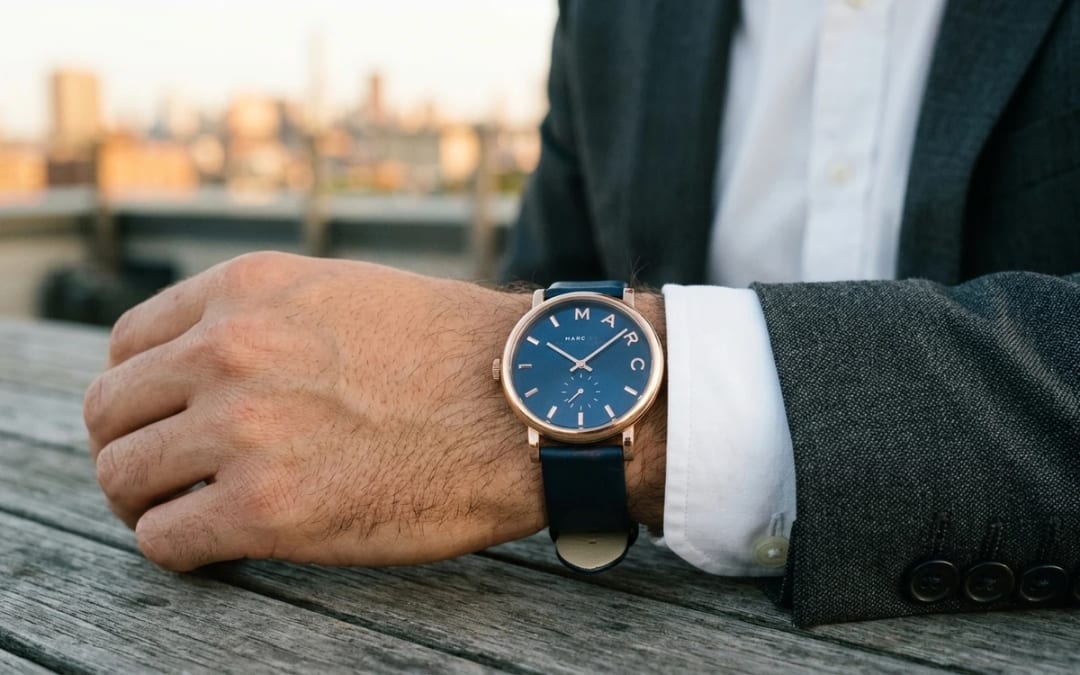
Typical example: jewellery watches worn intermittently, where quartz restarts at the exact time after weeks of being stopped. Our guide to Swarovski watches, all quartz Swiss-made, develops this case.
Do with a quartz
- Use as a sports or daily work watch
- Choose solar technology if you forget to change batteries
- Opt for a quartz chronograph if you need accurate stopwatches
- Replace the battery at the first signs of slowing
- Have water resistance checked each time you change the battery
Don't do
- Wait for the watch to stop completely before changing the battery
- Open the case yourself without resealing tools
- Confuse quartz accuracy with case quality (the two are independent)
- Buy a budget quartz hoping for durability identical to automatic
For a first purchase or a controlled budget. Quartz opens access to reliable, well-finished watches from €50. Entry-level ranges from Casio or Seiko offer solid cases, stable movements and careful aesthetics without requiring heavy maintenance.
For sports activities and demanding environments. Quartz's shock resistance is structurally superior. Casio's G-Shock, designed with triple-resistance structures, embodies this logic. For cycling, running, contact sports or industrial environments, quartz is less risky.
For professionals demanding exact time. A doctor timing a pulse check, a pilot managing time zones, a diver monitoring decompression stops: all benefit from quartz's native accuracy. A good quartz calibre drifts a maximum of 15 seconds per month, versus 5 to 15 seconds per day for an entry-level automatic like the Miyota 8215. Resetting every morning is not an option in these professions.
For travel. Lightweight, robust, zero winding: quartz is the ideal travel companion. From customer feedback we receive at Montres Outlet, travel incidents concern almost exclusively poorly wound automatics before departure. In case of failure, a battery can be changed at any jeweller in the world for less than €10.
When to choose automatic

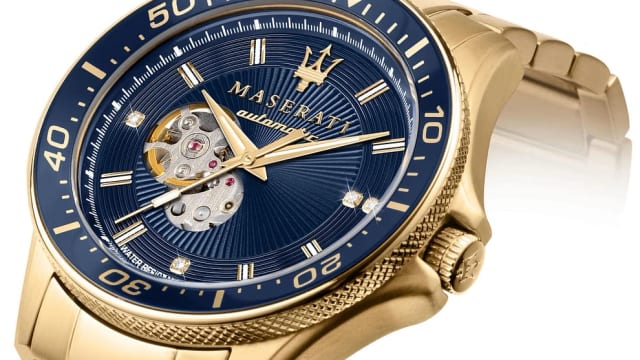
Concrete example of this trade-off, backed by sales figures: our review of the Maserati Sfida automatic with open heart, compared to the strictly identical quartz version.
Do with an automatic
- Wear it regularly to keep the mainspring wound
- Have it serviced every 3 to 5 years even without symptoms
- Store it on a winder if you alternate several watches
- Check water resistance annually if you swim
- Keep it away from intense magnetic sources
Don't do
- Wear it for sports with repeated impacts (tennis, road running)
- Force manual winding beyond the natural resistance of the crown
- Store it for months without running it
- Ignore sudden drift, a possible sign of magnetisation or wear
For passion and watchmaking culture. If you are drawn to engineering, the history of calibres, mechanical complications, automatic is a gateway to a rich universe. Understanding the difference between an ETA 2824 and a Sellita SW200, watching a balance wheel oscillate at 28,800 beats per hour: these are pleasures reserved for automatic.
For formal occasions and prestige. An automatic with a transparent case back worn at a professional meeting or ceremony signals an attention to detail that few accessories can claim. Unlike a high-end quartz that may display the same dial, the visible movement answers a question before it is even asked.
For investment and heirloom. A quality automatic watch, regularly maintained, can be passed on to the next generation with intact value. Some entry-level models like the Seiko 5 Sports SRPD trade on the secondhand market at their new purchase price, which is exceptional in the consumer goods sector.
To escape dependence on electronic components. A mechanical calibre carries no integrated circuit liable to become obsolete or unobtainable. Over twenty years of dismantling movements, I have repaired calibres from the 1960s with parts still available today: this is a form of durability that no quartz watch, however excellent, can guarantee over the same timeframe.
Concrete examples and indicative prices
| Movement type | Segment / Examples | Indicative price | Strengths | For whom |
|---|---|---|---|---|
| Quartz | Fashion / Sport (Casio G-Shock, Festina Sport) | €50 to €200 | Excellent precision, shock resistance, minimal maintenance, ideal for everyday wear | Student, athlete, first purchase, intensive use |
| Quartz | Elegant / Chronograph (Seiko Quartz, Citizen Eco-Drive) | €200 to €500 | Refined design, high precision, advanced technologies (solar, radio-controlled) | Professional, traveller, design and technology enthusiast |
| Automatic | Entry level (Seiko 5 Sports SRPD, Orient Bambino) | €150 to €400 | Accessible mechanical charm, smooth sweep, transparent caseback often included | Beginner enthusiast, first automatic, significant gift |
| Automatic | Mid-range (Tissot Powermatic 80, Hamilton Khaki Field) | €400 to €1,000 | Reliable movements (enhanced ETA/Sellita), extended power reserve, refined finishing | Connoisseur, lasting investment, beginner collector watch |
All watches available on Montres Outlet are authentic and benefit from a 2-year warranty. Free delivery from €69 of purchase (delivery time 3 to 5 working days). You have 14 days to return any item if your choice does not suit you. For personalised advice, our team is available via the customer service contact page.
To make an informed choice, consult verified customer reviews from Globe Reviews directly on each product page: feedback from buyers who have decided between automatic and quartz is often more telling than any comparison.
To deepen best maintenance practices, our complete guide to automatic watch maintenance and the Advice & maintenance section cover both mechanical and quartz watches, with concrete service intervals according to calibres.
Ready to choose your movement?
Consult our practical guides to maintain your future watch from day one and avoid costly mistakes.
Frequently asked questions
What is the main difference between an automatic watch and a quartz watch?
Which is more accurate: automatic or quartz?
What maintenance does an automatic watch require?
Why do automatic watches cost more than quartz watches?
Do I need to manually wind an automatic watch every day?
How do I choose between automatic and quartz based on my lifestyle?
Will an automatic watch continue to work for life?
Which brands offer the best automatic and quartz movements?
Read next
More in this vein
Buying guides
200m Water Resistant Watch: The ideal companion for diving
Buying guides
The materials making a comeback in both watchmaking and creative jewellery
Buying guides
Swarovski watch: crystal, Swiss Made, what you're really paying for
Buying guides
Maserati Sfida R8823140004: autopsy of an open heart NH70
Buying guides
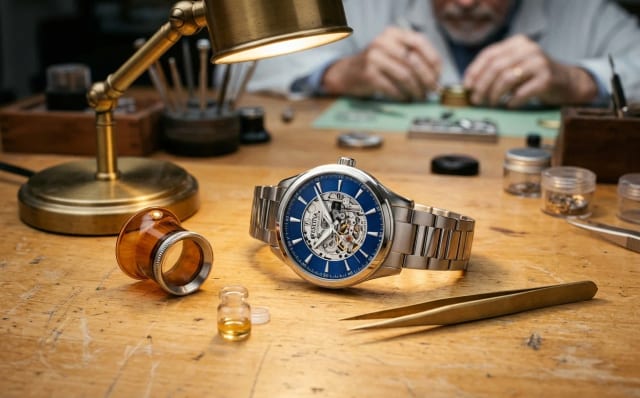
Skeleton watch: the complete guide from a watchmaker (men's, women's, automatic)
Buying guides
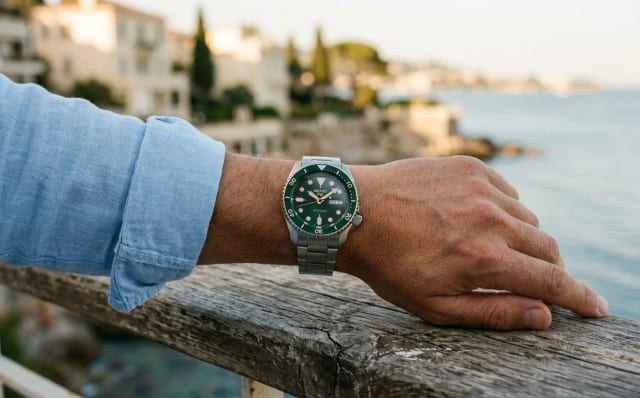
Rolex-style watch: Submariner, Datejust and affordable homages
Buying guides
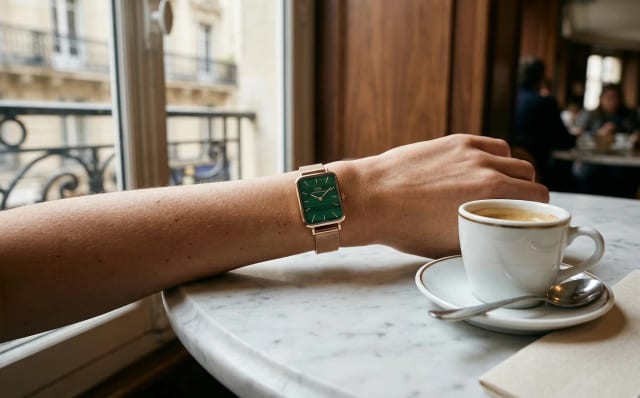
Rectangular watch: from the Cartier Tank to affordable alternatives
Buying guides