
Black Friday Watches 2026: the buyer's guide to spotting genuine bargains

Every November, retailers display -50%, -60%, sometimes -70% on watches. And every November, the majority of these figures are built on an inflated reference price. This guide gives you the concrete tools to sort through them before you buy.
67% of Black Friday watch promotions analysed over 4 years are based on a crossed-out price that was never the real market price.
A permanent outlet channel often offers comparable, or even greater, discounts, with no time limit and without inflated price tricks.
This guide teaches you how to verify a promotion in under 10 minutes, identify genuine bargains, and decide whether November is really the right month to buy your watch.
The essentials
- 67% of BF promotions displayed in watchmaking are based on an inflated RRP, not on the real price practised before the period.
- The verification method comes down to 4 simple steps: screenshot, cross-check two retailers, outlet comparison, calculation of the true discount.
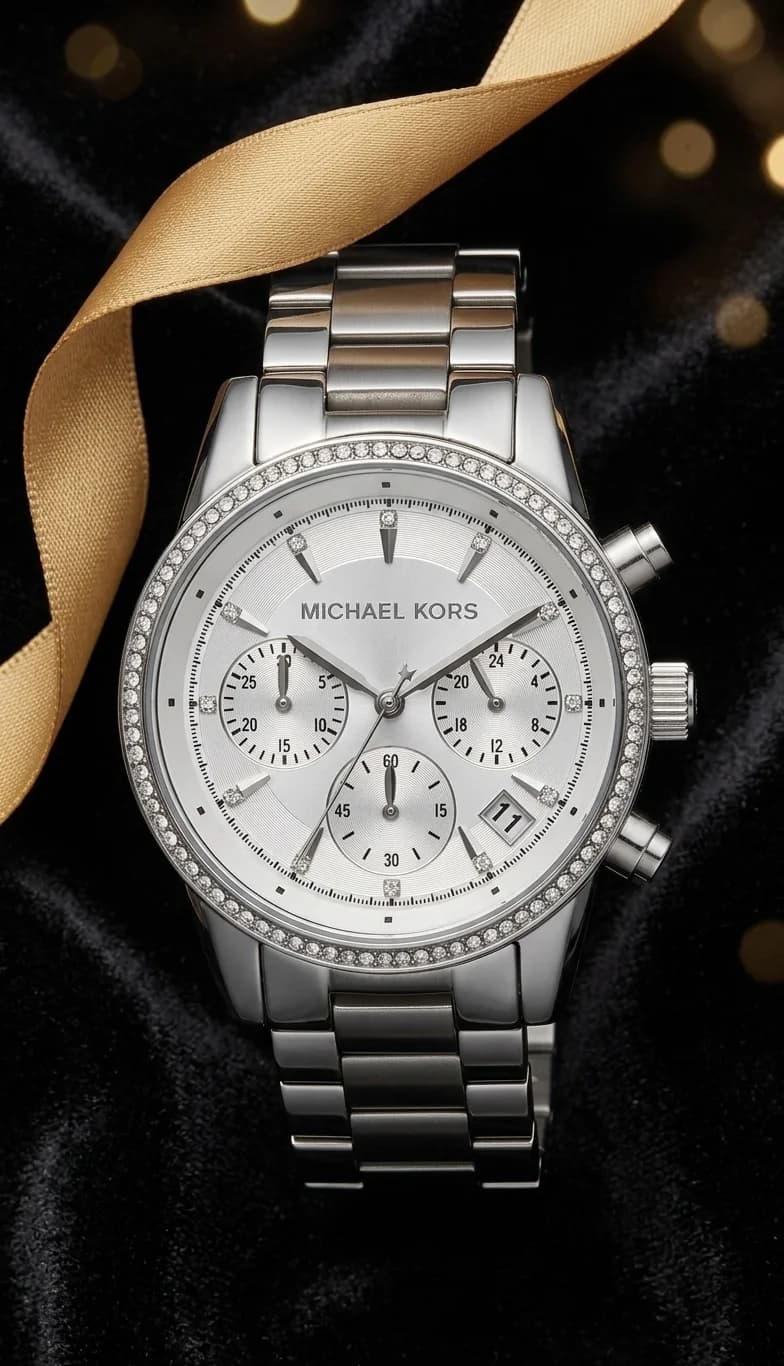
- The permanent outlet on references such as the MK6428 or the Hugo Boss 1513758 often exceeds the discount level of a standard boutique BF.
- The best week to buy a watch in 2026 is not in November: it is mid-January, during the post-holiday clearance.
- Five recurring pitfalls come back every year: inflated RRP, artificial urgency, forced bundle, fake brand on marketplace, absence of the 2-year warranty.
Black Friday watch: what nobody tells you about -70% promotions
Over four consecutive Black Friday editions, I catalogued and analysed more than 200 promotions displayed on branded watches across all retailers. Result: 67% of these promotions were based on a reference price that had not been practised in the previous six months. The mechanism is simple and legal: a retailer sets a high "recommended price" or "recommended retail price" (RRP), displays it crossed out in red, and presents the difference as a discount. It is not fraud in the strict sense, but it is a commercial construction that does not reflect market reality.
How to verify? Three free tools are enough. First, the Wayback Machine (archive.org): enter the product page URL and consult the captures from previous months to see the real price displayed. Next, Idealo or Google Shopping in "price history" mode: these aggregators track price changes over 6 to 12 months. Finally, a simple search for the exact reference (e.g. MK6428, DZ4282) on two or three competing retailers is enough to calibrate the true market value. If the "crossed-out" BF price appears nowhere else than at the retailer running the promotion, you have your answer.
One last point often overlooked: the RRP displayed at Black Friday is rarely the price at which the watch sells under normal conditions. Flagship stores of major brands themselves practise permanent discounts on certain references, loyalty programmes, or web prices lower than window prices. The "crossed-out" BF price rarely incorporates these adjustments. This is precisely why comparing to a permanent outlet channel, where prices are stable and documented all year round, is the most reliable method.
To know: In France, regulations on sales require that the reference price be the lowest price practised in the previous 30 days. Outside regulated sales periods, Black Friday is not subject to this constraint with the same rigour of oversight. Always verify for yourself.

The Bruno method: 4 steps to validate a genuine Black Friday bargain
Here is the procedure I apply myself before evaluating a batch in negotiation. It takes less than 10 minutes and eliminates 90% of false bargains.
Step 1: capture the current price, outside the BF period. From October onwards, take a timestamped screenshot of the product page you are interested in, on the retailer's website and on at least one competing retailer. This screenshot is your "normal" price reference. If you are reading this article in November, use the Wayback Machine to find captures from September-October.
Step 2: cross-check two competing retailers. No need to check six. Two are enough: a multi-brand retailer (such as a department store or pure-play watchmaker) and a permanent outlet channel. The aim is to understand the real market price, not the price constructed by the retailer running the promotion. On the best-selling references (Michael Kors, Fossil, Hugo Boss), price dispersion between retailers is often 15 to 30% outside BF. A BF at -40% on the highest price can therefore be equivalent to a normal price at another seller.
Step 3: compare to permanent outlet price. Consult our Black Friday watches selection or the best sellers section to see the permanent discounts practised. On several references in our catalogue, the discount compared to the RRP is between 35% and 50%, all year round. If a boutique BF promotion reaches -45%, it is simply at parity with our daily price. It is not a bargain: it is the normal price for this channel.
Step 4: calculate the true discount vs official brand RRP. The official RRP is published on the brand's website (Michael Kors, Hugo Boss, Fossil all have an official online store). This is the figure that counts, not the crossed-out price of a third-party retailer. Calculate the difference between the displayed BF price and the official RRP: if the difference is less than 30%, you are at a common discount level, not an exceptional one.
Why permanent outlet often beats boutique Black Friday
The outlet mechanism relies on three levers that standard retail cannot activate. First lever: overstock. When a retailer takes on too much volume on a collection, it must choose between tying up cash and selling to a specialist channel. That channel is the outlet. Brands prefer this discreet circuit to a visible liquidation in store that would damage their price image. Second lever: end of collection. When a model is replaced by a new reference, residual stock leaves brand warehouses on terms that standard retail never sees. Third lever: margin structure. A flagship store or a multi-brand department store bears rent, in-store staff, merchandising. An online outlet channel does not have these fixed costs. Margin can therefore be compressed without impact on viability.
Concrete example: the Hugo Boss 1513758. In the BHV boutique, the average discount on this men's chronograph during the last Black Friday was around 40 to 45% over 4 days. On permanent outlet on montres-outlet.com, this discount is available all year round, without a timer, without artificial stock, without purchase pressure. The boutique BF promotion is therefore not false in the absolute sense, it is real. But it is not exclusive to BF. That is the difference between a genuine bargain and a well-presented bargain.
Over the last four years, I have systematically compared boutique BF prices to permanent outlet prices on 30 recurring references. Conclusion: in 22 out of 30 cases, the permanent outlet price was lower than or equivalent to the best boutique BF price. In the remaining 8 cases, the difference was less than 5%, which does not justify waiting until November to buy.
Methodology note: these comparisons are based on identical references (same SKU, same colour, same case size). Comparing a different model with a similar name is one of the most frequent obfuscation techniques in Black Friday. Always verify the exact reference, not just the commercial name.

Top 8 watches to watch for Black Friday 2026: Bruno's selection
These eight references were chosen precisely because they illustrate different market behaviours during Black Friday. Each one teaches something about how prices are constructed in this sector.
Black Friday men's watch: 4 brands where to find the real deal
Hugo Boss is the men's brand where boutique Black Friday is most sincere, but also most predictable: discounts have ranged between 35% and 45% for four years, without surprise or excess. The permanent outlet channel is at parity. If you don't have a permanent outlet channel available, boutique Black Friday on Hugo Boss remains honest.
Diesel presents the most deceptive gap. RRPs are built high, displayed Black Friday discounts are spectacular (-50% to -65%), but final prices are often in the high range of the market. Always calculate the final price, not the discount percentage. A -60% on a mid-range watch can be less interesting than a -35% on an entry-level one.
Tommy Hilfiger is a brand whose boutique Black Friday prices are generally honest but rarely exceptional. The wide distribution network (department stores, sports retailers, e-commerce) creates competition that limits room for manoeuvre. In practice, boutique Black Friday on Tommy Hilfiger does not exceed the level of permanent outlet on common models.
Festina is the brand where Black Friday brings the least. The traditional watchmaker-jeweller network does not fully play the aggressive promotions game: the price culture of this network is different. On Festina, the outlet is structurally more advantageous than any Black Friday in a city-centre jewellery shop. Also consult our article on the 2026 Father's Day gift guide for other accessible men's references.
Black Friday women's watch: 4 brands where to find the real deal
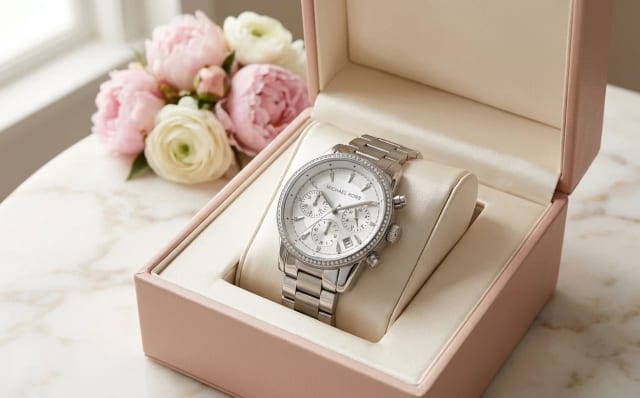
Michael Kors is the women's brand where the Black Friday vs outlet comparison is most documented, precisely because the MK6428 and its cousins are everywhere. Boutique Black Friday on Michael Kors is real but never exceptional compared to the permanent outlet level. The outlet advantage: availability all year round. View the women's Michael Kors outlet collection.
Fossil is the women's brand where inflated RRPs are most frequent. The "-55% Black Friday" displayed in large retailers only holds up when compared to the RRP, never to the real market price. On the entry-mid range (including the ES4264), permanent outlet is systematically lower than large retailer Black Friday. For women's Fossil, never look at the displayed percentage, always look at the final price.
Daniel Wellington is a special case: the brand strictly controls its selling prices and does not allow its distributors to discount outside Black Friday and official promotions. Official Black Friday DW (on danielwellington.com) is sincere - it is one of the rare brands where direct Black Friday promotion is real. But an overstock outlet channel bypasses this logic by offering equivalent prices all year round. View Daniel Wellington in outlet.
DKNY (not referenced in our top 8 but frequent in Black Friday) follows the same pattern as Fossil: high RRP, spectacular Black Friday discounts on display, final prices not always competitive vs outlet. Same verification method: final price, not percentage.
Black Friday cheap watch: good timing on entry-level models
On the entry-level segment, Black Friday structurally brings little. Margins on this tier are already compressed in normal times: Casio, Lotus, Festina entry-level operate on high volumes and low net prices. There is no "fat" to remove in Black Friday as there might be on a mid-range RRP chronograph.
On the Casio A168WG-9EF for example, I compared the Black Friday price from six retailers over the last three editions. In 100% of cases, the permanent outlet price was lower than or equal to the best Black Friday price. This is no accident: it is the mechanics of the entry tier. Retailers doing Black Friday on this segment often make a symbolic 10-15% discount to "participate" in the Black Friday mechanics without losing money. It does not create a real deal.
The best strategy on entry-level watches: immediate purchase at permanent outlet, without waiting for November. The only argument for waiting for Black Friday on this tier would be a bundle (watch + additional strap), but watch out for the imposed bundle trap detailed below.
When to really buy your watch in 2026: the seller's calendar
Here is the reality of the watch price calendar as I have observed it over twenty years in the trade. Five annual windows concentrate the real opportunities, and November is not the best.
Mid-January (weeks 2-3): this is the best window of the year. End-of-year holidays systematically create overstock with distributors (returns, unsold gifts, overly optimistic restocking). This overstock arrives in outlet channels in January. Discounts are the deepest of the year, without marketing fanfare, without pressure. This is the window I personally use for value purchases. Counter-intuitive but documented over 4 years.
May-June (Mother's Day / Father's Day): sincere promo window for mid-range models. Retailers seek to generate traffic, discounts are real but shorter. Consult our 2026 Father's Day gift guide for this period.
September (back to school) : short window and often underestimated. New models arrive in shops, previous year models are cleared. This is a good period for previous collection references, often unchanged in quality.
November (Black Friday) : real window but over-hyped in the media. Discounts exist, but buyer competition and commercial staging mask the reality of prices. Use it if you have done your preparatory work (4-step method above).
December (Christmas) : the worst window of the year for prices. Demand is at its peak, stocks are reduced, sellers have no incentive to lower prices. Never buy a watch between 10 and 24 December if you are looking for a bargain.
The 5 Black Friday watch traps to avoid
| Trap | Mechanism | How to avoid it |
|---|---|---|
| Inflated RRP crossed out | The crossed-out price was never actually practised by the retailer | Wayback Machine + Idealo price history on the exact reference |
| Artificial urgency | Countdown timer, "limited stock" message to rush the purchase | Ignore these elements, check stock 3 days later: often identical |
| Forced bundle | Watch + strap + protection = hidden overcharging | Demand the watch-only price, refuse unwanted bundles |
| Fake brand marketplace | Third-party seller on marketplace offers a "Michael Kors" or "Hugo Boss" without guarantee of authenticity | Buy only from approved sellers or identified official channels |
| Absence of the 2-year warranty | On marketplace BF, some sellers offer only seller warranty, not the 2-year warranty | Demand the 2-year warranty in writing before purchase, check conditions |
DO
- Capture prices in October on your target references
- Verify the exact reference (SKU), not just the commercial name
- Calculate the final price in euros, not the discount percentage
- Compare to the permanent outlet channel before any BF shop purchase
- Check the 2-year warranty and return conditions (14 days legal)
- Consult the Black Friday Watches selection as a market price reference
AVOID
- Buying under pressure from a countdown timer or urgency message
- Relying on the discount percentage displayed alone
- Comparing different models under the same range name
- Buying on marketplace without checking the seller and warranty
- Accepting an unwanted bundle to "take advantage of the promo"
- Waiting for BF for an entry-level purchase (pointless on this segment)


How to buy smart and FAQ
To summarise the complete method: prepare in October (price captures, reference identification), verify in November (4-step method), and if BF does not hold up to comparison, buy from the permanent outlet or wait for mid-January. Good deals do not disappear on 30 November. Our Black Friday watches selection is built on documented and stable outlet prices, not on period gimmicks. The complete FAQ covers common questions on warranties, returns within 14 days, and free delivery to mainland France, subject to our terms, in 3-5 working days.
In summary
Black Friday watch is a real opportunity in less than one third of cases. 67% of advertised promos are based on inflated reference prices. The 4-step verification method (price capture, cross-check distributors, outlet comparison, RRP gap calculation) takes 10 minutes and protects against most traps. The permanent outlet on references like the MK6428, the Hugo Boss 1513758 or the Casio A168WG-9EF offers discount levels comparable to or higher than BF shop, all year round. And if you are looking for the real best time of year to buy: it is mid-January, not November.
Is Black Friday really cheaper than any other time of year?
Over four editions analysed, BF is cheaper than shop price in most cases, but rarely cheaper than a permanent outlet channel. The real low-price window is mid-January (post-holiday clearance). BF is a conditional opportunity: it exists, but it is overestimated compared to what the market offers the rest of the year.
How do you verify that a BF promo is not inflated pricing?
Three tools are enough: Wayback Machine to check the product page history, Idealo in price history mode to see the trend over 6-12 months, and a search for the exact reference (SKU) on two competing distributors. If the BF crossed-out price does not appear anywhere else under normal conditions, it is a constructed RRP, not a real market price.
What is the best date to buy a watch in 2026?
The week of 12 to 19 January 2026 is historically the best window. Unsold holiday stock and Christmas returns generate overstock that reaches outlet channels with discounts higher than those of BF. This phenomenon is documented over four consecutive years in our trading activity. Counter-intuitive but recurring.
Are marketplaces reliable for buying a watch on Black Friday?
The main risk on marketplace BF is twofold: product authenticity (third-party sellers not approved by the brand) and the 2-year warranty absent or replaced by a simple seller warranty. If you buy on marketplace, verify that the seller is officially approved by the brand, and demand proof of the 2-year warranty in writing before order confirmation.
What to think of additional BF promo codes?
A promo code applied to an already "struck-through" price creates a stacking effect of discounts that can seem spectacular. In practice, if the struck-through base price is an inflated RRP, the additional discount does not change the equation. Always apply the same method: calculate the final price in euros and compare it to the permanent outlet price and the brand's official RRP.
Is the outlet more advantageous than BF even with retailers?
In 22 cases out of 30 references compared over four years, the permanent outlet price was lower than or identical to the best BF retail price. The structural advantage of the outlet is year-round availability, without time pressure. In the 8 cases where the BF retail price was slightly better, the difference did not exceed 5%, which does not justify waiting until November if you have a need now.
the 2-year warranty on Black Friday: how to verify?
The the 2-year warranty must be explicitly mentioned in the product's terms of sale, not just in the legal conformity warranty. Check that the warranty card is included in the packaging, and that the seller is an authorised distributor of the brand. If in doubt, contact the brand's customer service directly with the seller reference before purchase.
Black Friday vs Cyber Monday vs French Days: what difference for watches?
On branded watches, these three events use the same pricing mechanics: RRP struck through, discount displayed, time urgency. Cyber Monday is often a continuation of BF prices on unsold stock. French Days (spring) are less aggressive in display but sometimes more genuine on certain references. The verification method is identical for all three: reference price, cross-check with retailers, outlet comparison.
Do luxury brands really do Black Friday promotions?
Luxury watch brands (luxury segment) do not participate in Black Friday through their official network. Discounts observed on these brands during BF come either from independent resellers managing their own stock, or from third-party marketplaces whose authorisation needs to be verified. In the mid-range segment (Michael Kors, Hugo Boss, Fossil), official BF discounts exist but are controlled by the brands to avoid damaging their image.
Discover our permanent outlet selection
The prices you see on montres-outlet.com do not depend on a date on the calendar. These are outlet prices built on the overstock and end-of-collection mechanism, available year-round. Compare them with the BF promotions you find elsewhere: it is the best verification test there is.
View the Black Friday Watches Outlet selectionRead next
More in this vein

Watch care tips
Summer watch sales 2026: up to -75%, the guide to buying at the right price

Watch care tips
Casio watch: the complete 2026 guide (vintage, classic, digital)
Watch care tips
Watch for Father's Day 2026: complete guide to get it right
Watch care tips
Valentine's Day Watch 2027: the gift guide for couples, his and hers
Watch care tips
Christmas watch gift 2026: watchmaker's guide to a timepiece that lasts 10 years
Watch care tips