

A 200m water-resistant watch is not simply an improved waterproof watch. It is a technical instrument built according to precise protocols, subjected to pressure tests, shock resistance tests and readability in darkness. But "200m" does not mean you can descend to 200 metres: here is why, and
how to choose the model suited to your real usage.Updated 2 May 2026 · 16 min read · By Thomas Durand, WOSTEP certified watchmaker
Diagnosis in 5 seconds
What "200m" really means: static pressure versus real use

One ATM (atmosphere) is equivalent to approximately 10 metres of water column at rest. So 20 ATM = 200 metres of theoretical pressure. The test takes place in a pressure chamber, with the watch stationary in a calm fluid. No turbulence, no sudden movement.
In real diving, pressure is not what changes the picture. A dive from a boat adds almost nothing: the dynamic pressure of entering the water is ½ρv², roughly 0.5 bar at 10 m/s, far below the test pressures. What lets water in is the condition of the watch: the crown (pulled out or not fully screwed down means no water resistance at all), ageing seals (salt, chlorine, sun cream, soap, temperature cycles, permanent compression), thermal shocks, a cracked crystal, a case back reopened without a new test. The ISO 6425 standard does require a test at 125% of the nominal pressure: a laboratory check margin on a new watch, not a reserve against the diver's movements.
A 200m certified watch remains perfectly suited to recreational diving, whose operational limits are between 30 and 40 metres in standard scuba. The margin is comfortable, on one non-negotiable condition: seals in good condition and regular servicing. In our workshop, a dry seal is enough to compromise theoretically serious water resistance.
Water resistance correspondence table: displayed rating and recommended use
| Displayed water resistance | Pressure tested | Suitable use | Scuba diving |
|---|---|---|---|
| 30m / 3 ATM | 3 bars static | Water splashes, rain | No |
| 50m / 5 ATM | 5 bars static | Occasional shower, rain, hand washing | No |
| 100m / 10 ATM | 10 bars static | Swimming pool, sea, light snorkelling | No |
| 200m / 20 ATM | 20 bars static | Recreational diving (if marked Diver's, ISO 6425), freediving, intense water sports | Yes (recreational, if marked Diver's) |
| 300m / 30 ATM and above | 30+ bars static | Technical diving, saturation | Yes (professional) |
The ISO 6425 standard: the only certification that truly matters
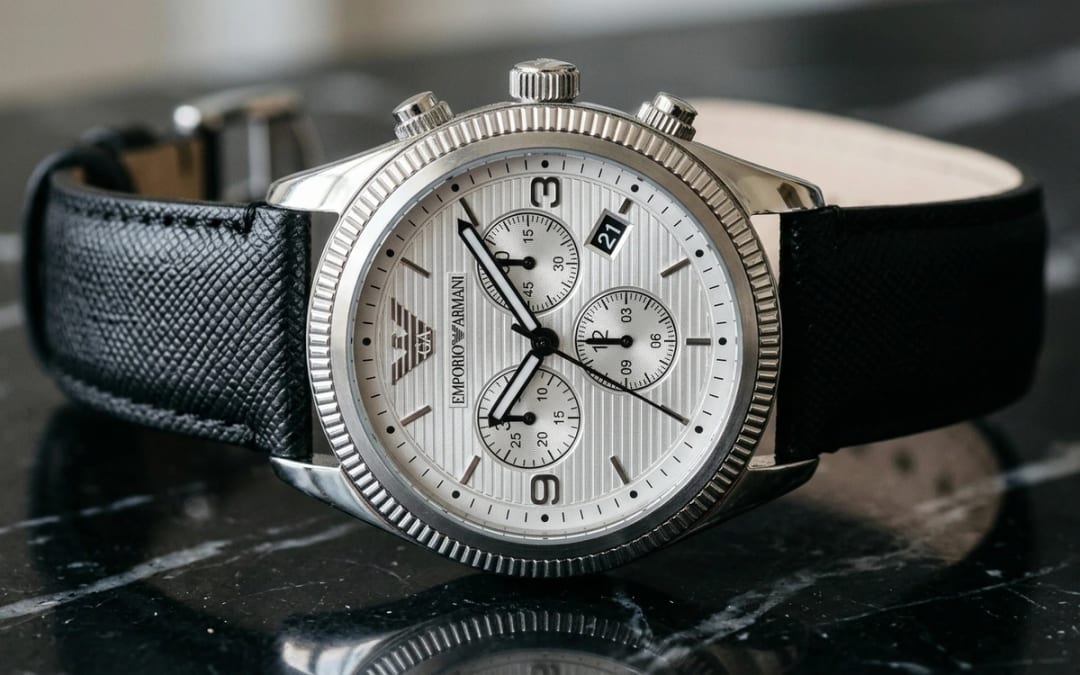
The ISO 6425 standard was designed specifically for diving watches. It goes far beyond the simple static water resistance test. Here are the main requirements:
- Overpressure water resistance test at 125% of the rating, together with a condensation test and a thermal shock test (water at 40 °C, then 5 °C, then 40 °C). No condensation must appear under the crystal.
- Salt water resistance: 24-hour immersion in an artificial seawater bath. Corrosion is the first enemy of a watch used in the sea.
- Shock resistance: two shocks of 3 kg from 1 metre distance in opposite directions. The watch must continue to function and maintain its water resistance.
- Magnetic resistance: operation in a field of minimum 4,800 A/m.
- Readability in total darkness at 25 cm: the indices, hands and bezel marker must be immediately readable, including an indicator confirming that the watch is running (usually a seconds hand with a distinct luminous dot).
- Unidirectional bezel mandatory with graduation every 5 minutes and a clearly identifiable luminous zero marker.
- End-of-life battery indication for quartz movements: the seconds hand must jump every 4 seconds to alert the diver before total failure.
How do you know if your watch is certified? Look for the inscription "Diver's Watch XXX m" engraved on the dial or case back. A simple mention "Water Resistant 200m" without this inscription does not guarantee ISO 6425 compliance.
Brands such as Seiko (Prospex range) and Citizen (Promaster range) apply their own internal protocols often as rigorous as the ISO standard, with decades of experience in professional diving. Their reputation directly commits the quality of their production.
Anatomy of a true 200m diving watch: the components that matter

The case: materials and dimensions
The case of a diving watch is thicker and larger than a standard watch, with a diameter generally between 40 and 46 mm and a thickness of 12 to 15 mm. These dimensions are not a fashion effect: they result from structural constraints related to pressure resistance.
Three materials dominate:
- 316L stainless steel: the industry standard. Resistant to marine corrosion, solid, easy to polish and maintain. Present on the vast majority of diving watches on the market.
- Titanium: 40% lighter than steel, hypoallergenic, superior resistance to salt corrosion. Preferred choice for divers seeking comfort over long periods or with allergies to ferrous alloys.
- Ceramic: virtually scratch-resistant, impervious to decay, aesthetically interesting for bezels. Caution: it is more fragile to violent impacts than steel or titanium, which reserves it more for bezels than complete cases in technical diving contexts.
The unidirectional rotating bezel: a safety mechanism, not an ornament
The unidirectional bezel is the most recognisable element of a diving watch, and its unique direction of rotation is not arbitrary. It rotates only in the anticlockwise direction: if it is moved accidentally underwater, it will always display a dive time greater than reality, forcing ascent earlier. Rotation in the clockwise direction would mask elapsed time, which directly compromises decompression stop management. Contrary to what many beginners imagine, this is not an aesthetic choice, it is the most important safety decision of the entire case.
The zero marker (triangle or luminous dot at 12 o'clock) aligns with the minute hand at the start of the dive. Reading elapsed time is immediate, even with 5 mm thick gloves, whereas a digital display requires finding the right button.
Bezel materials vary: anodised aluminium (lightweight, colourable, but sensitive to scratches), steel (robust, understated) and ceramic (better resistance to wear and scratches, but higher cost).
The screw-down crown: the number one vulnerability point
The crown is the component most often responsible for water ingress. On a diving watch, it must be screwed onto the case tube, creating a seal comparable to a threaded cap. Out of a hundred watches returned for water ingress, over 70% simply had a crown that was not screwed down properly: check it systematically before any immersion, without forcing.
The helium valve: for whom, for what
The helium valve is reserved for saturation diving: professional divers live for several days in hyperbaric chambers, and helium molecules from breathing mixtures gradually infiltrate the case. During decompression, the valve opens automatically to evacuate this helium before it shatters the crystal. A mechanism I once had the opportunity to disassemble: the precision of the valve machining is frankly impressive.
For recreational diving down to 40 metres, this valve is completely unnecessary. Contrary to what many buyers imagine, its presence on a mainstream model is more about marketing positioning than genuine functional necessity. It does, however, indicate a serious level of engineering by the manufacturer.
The crystal: sapphire or treated mineral
Two main choices:
- Synthetic sapphire crystal: hardness 9 on the Mohs scale (diamond is 10). Virtually insensitive to everyday scratches, anti-reflective treatment often applied to one or two faces. This is the standard for quality diving watches.
- Treated mineral crystal: less hard than sapphire, but more resistant to impacts. Seiko's Hardlex is an example of a treated mineral crystal offering an excellent durability/price compromise. More financially accessible, it remains suitable for recreational diving use.
Luminescence: seeing in depth
Below 10 metres depth, colours begin to disappear. At 20-30 metres, ambient light is greatly attenuated. The luminescence of indices, hands and bezel marker is not an aesthetic accessory: it is safety equipment.
Super-LumiNova is the industry standard: it charges in light and emits an intense and lasting glow in darkness. Lumibrite (Seiko) offers comparable performance. The quality of luminescence can be tested simply by exposing the watch to a light source for 30 seconds, then observing it in a dark room.
The bracelets: comfort and safety according to use
- Steel bracelet with diving extension : allows you to wear the watch over a thick wetsuit. The double-locking deployant clasp keeps the watch secure even if a spring bar accidentally unlocks.
- Rubber or silicone strap : dries quickly, comfortable on a wet wrist, does not retain salt or chlorine. Ideal for exclusively aquatic use.
- NATO strap : passes under the case via two spring bars. If one bar fails, the watch remains held by the second. Lightweight and versatile, although the added thickness may hinder passage under a wetsuit.
Choosing your 200m water-resistant watch: the criteria in order

Do
- Check for the "Diver's Watch" marking on the case back if you dive with a tank
- Test the luminescence under real conditions before purchase
- Choose a screw-down crown for any diving use
- Plan for annual servicing with a watchmaker if you dive regularly
- Rinse with fresh water after each immersion in the sea or swimming pool
- Consult our complete guide to men's water-resistant watches to compare options
Don't
- Consider "200m" as a maximum operating depth
- Operate the crown or pushers underwater without prior verification in the manual
- Confuse "Water Resistant 200m" and "Diver's Watch 200m": these are not the same guarantees
- Forget to screw down the crown before diving
- Wear the watch in a sauna or hammam
- Change the battery yourself without replacing the seals
Use: define your main activity
Recreational scuba diving (up to 40 m) requires ISO 6425 certification or a serious equivalent (Prospex, Promaster). Freediving, surfing, swimming or water skiing can be satisfied with a 200m watch without ISO certification, provided that key components (screw-down crown, screw-down case back) are present.
For everyday life with regular water activities, a 200m watch without ISO certification is more than sufficient and offers a comfortable safety margin.
Size and comfort
A 44 mm case on a 16 cm wrist will be uncomfortable and difficult to read (the edge extends beyond the tendons). General rule: wrist below 17 cm, aim for 40-42 mm. Beyond 18 cm, 44-46 mm are suitable. Weight is also a factor: a 45 mm titanium case will weigh significantly less than steel of the same size, which matters during a long dive or an active day.
Movement: quartz or automatic
Japanese quartz (Miyota, Seiko, Citizen) offers accuracy of ±15 seconds per month, battery life of 2 to 3 years, and requires little daily attention. It is particularly suited to tool-watch use where reliability takes priority over mechanical romance. Note: battery changes must always be entrusted to a professional to preserve water resistance.
Automatic movement is wound by wrist movements. It requires no battery, but demands regular daily wear (or a winder) and servicing every 5 to 7 years. Its accuracy is generally ±10 to ±15 seconds per day depending on the quality of the calibre. For diving use, automatic movement poses no particular technical problem, but it requires more structured maintenance.
Brands and models to know

The technical segment: certification and diving heritage
Seiko Prospex is one of the absolute reference ranges for diving. Since 1965 and the launch of the first "Sumo", Seiko has developed recognised worldwide expertise. The in-house automatic calibre, Hardlex crystal (or sapphire depending on models), ISO 6425 certification and Super-LumiNova LumiBrite characterise these watches. Prices remain accessible for instruments of this quality.
Citizen Promaster offers a serious alternative with its Eco-Drive movements (light recharging, no battery). ISO 6425 certification is present on Promaster Marine models. The absence of battery change constraints is a non-negligible practical advantage for intensive use.
The Submariner heritage and its influence on contemporary design
Without ever citing patented references, it is impossible to discuss diving watches without evoking the influence of 1950s-1960s design on all current production. The unidirectional black bezel, the clean dial with luminous indices, the extension bracelet and the screw-down case back: these visual and technical codes, established during the first decades of sport diving, are found today in the productions of almost all serious manufacturers in the segment. It is a functional as much as aesthetic heritage.
The style and sport-luxury segment
Hugo Boss and Emporio Armani offer 200m watches with assertive design, inspired by the classic codes of diving but oriented towards urban-sports use. 316L steel cases, mesh or textured rubber bracelets, reliable Japanese quartz movement: these watches are suited to water sports and occasional recreational diving, without claiming to compete with ISO 6425 certifications from specialists.
Tommy Hilfiger adopts a nautical approach with its touches of blue and red, offering excellent value for money for reliable 200m water resistance in daily and sports use.
Casio, with its G-Shock and Edifice ranges, occupies a particular position: very shock-resistant 200m watches (MIL-STD-810G testing for G-Shock), often multiband, at very accessible prices.
Comparative table of 200m diving watch profiles

| Profile | Representative brands | Diameter | Movement | Crystal | ISO 6425 | Primary use |
|---|---|---|---|---|---|---|
| Certified technical | Seiko Prospex, Citizen Promaster | 44-46 mm | Automatic / Eco-Drive | Sapphire / Hardlex | Yes | Scuba diving, freediving |
| Sport-luxury | Hugo Boss, Emporio Armani | 42-44 mm | Japanese quartz | Treated mineral | No (generally) | Water sports, leisure diving |
| Distinctive design | Diesel, Michael Kors | 44-48 mm | Quartz | Mineral | No | Daily wear, swimming, surfing |
| Classic nautical | Tommy Hilfiger | 40-44 mm | Japanese quartz | Treated mineral | No | Water sports, daily wear |
| Extreme robustness | Casio G-Shock | 44-50 mm | Multi-band quartz | Mineral / sapphire | On certain models | Extreme sports, recreational diving |
| Minimalist technical | Daniel Wellington | 40-42 mm | Quartz | Sapphire | No | Daily life, water sports |
This table presents typical characteristics by profile. Please verify the exact specifications of each model with the manufacturer or on the Montres Outlet product sheet.
Maintenance: how to preserve water resistance over time
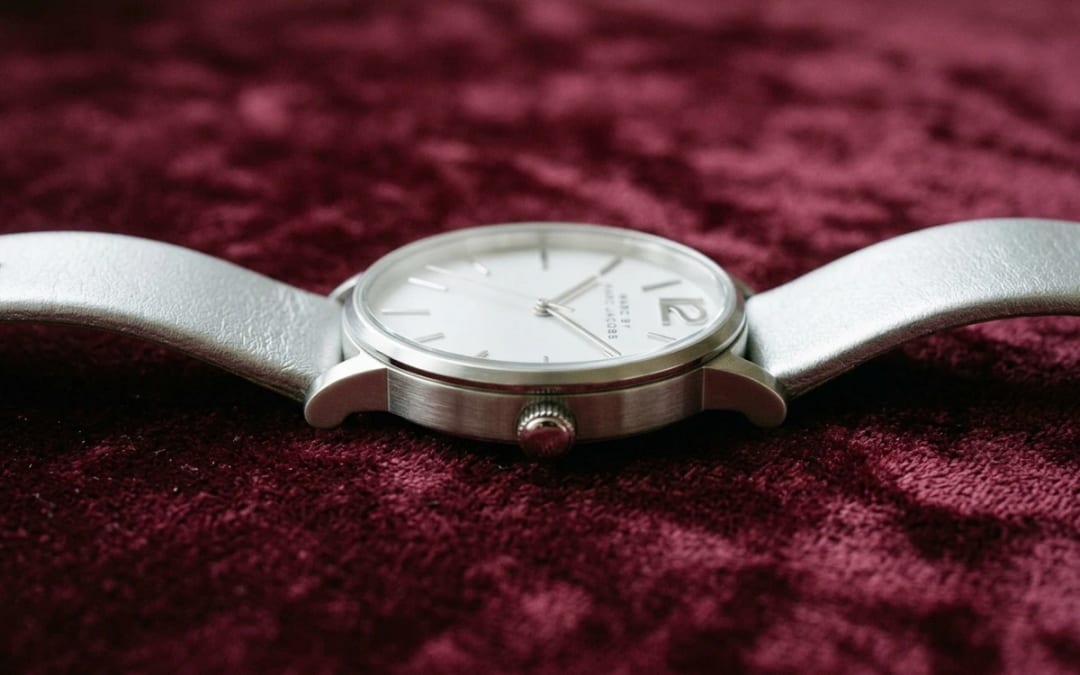
A watch certified 200m on the day of purchase is not necessarily so three years later without maintenance. On the movements I have dismantled in the workshop, Nitrile or silicone seals harden and lose their elasticity well before you notice it visually, especially after exposure to heat or chlorinated products from a swimming pool.
Structured maintenance programme
- After each immersion in sea water or swimming pool: rinse with lukewarm fresh water, gentle cleaning with a soft brush in the gaps of the strap and case, dry with a soft cloth. Never use a high-pressure cleaner.
- Every 12 months for regular diving use: water resistance test with an approved watchmaker (pressure or vacuum test). This test takes a few minutes and can detect a seal failure before it causes damage.
- At each battery change for quartz watches: systematic replacement of water resistance seals and pressure test after case closure. This operation must be carried out by a professional in an equipped workshop.
- Every 5 to 7 years for automatic watches: complete overhaul (cleaning of components, relubrication, seal replacement), in accordance with the manufacturer's recommendations. Find our detailed advice in our maintenance section.
Warning signs not to ignore
Consult our complete guide on condensation and water resistance to distinguish temporary misting (often harmless) from a real sign of water ingress. Simple rule learned in the workshop: a visible droplet inside the crystal or a rusty hand after immersion are not "minor defects", they are urgent signals. Contact our customer service or a watchmaker without delay.
Practical diving tests: what the figures don't tell you
After five years in the workshop dismantling movements and several years of certified diving, here is what the technical sheets never specify, and what I wish I had known much earlier.
Readability in real conditions
A dial readable on the surface can become unreadable at 20 metres: I verified this myself by comparing the Seiko SKX007 and a watch with fine indices in low visibility. The SKX wins hands down thanks to its wide hands and high-density Super-LumiNova. Remember the essentials: the minute hand must be immediately distinguishable from the hour hand, the indices must be thick, well spaced, and the zero marker on the bezel generously luminescent.
Manipulation with gloves
The unidirectional bezel must be operable with 5mm thick gloves. The click stops must be firm enough not to move accidentally, but accessible enough to be manipulated without tools. Ceramic bezels, which are very smooth, are sometimes less easy to grip with thick gloves than brushed steel bezels.
Wearing over a wetsuit
A 5 or 7mm diving wetsuit represents several centimetres of rubber on the wrist. The steel bracelet with diving extension is the best suited solution: the extension (generally 20 to 25mm) allows you to loosen the bracelet enough to slip it over the wetsuit without loosening the clasps. Long rubber straps with multiple pin positions also work well.
Find your next diving watch
Compare specifications, consult complete technical datasheets and benefit from free delivery to mainland France, subject to our terms, with returns within 14 days and 2-year warranty on all Montres Outlet watches.
Can I shower or go to the sauna with my 200m water-resistant watch?
My watch indicates "200m", but the crown is not screwed down. Is this normal?
Moisture has appeared under the crystal of my watch. What should I do?
For general context on watch water resistance and ISO 22810 standard, consult our complete guide to watch water resistance (ATM/bar/metres + infographic).
Is the 200m pressure the maximum depth I can reach?
Read next
More in this vein
Buying guides
The materials making a comeback in both watchmaking and creative jewellery
Buying guides
Swarovski watch: crystal, Swiss Made, what you're really paying for
Buying guides
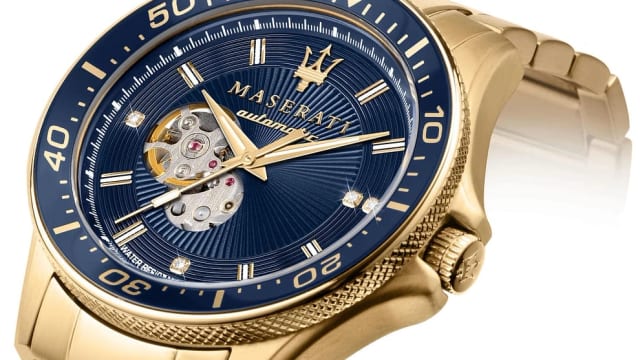
Maserati Sfida R8823140004: autopsy of an open heart NH70
Buying guides
Skeleton watch: the complete guide from a watchmaker (men's, women's, automatic)
Buying guides
Rolex-style watch: Submariner, Datejust and affordable homages
Buying guides
Rectangular watch: from the Cartier Tank to affordable alternatives
Buying guides
Snake watch: from Bulgari Serpenti to Just Cavalli, the complete guide
Buying guides