
Watch box: the complete guide to choosing well (men's, automatic, luxury)

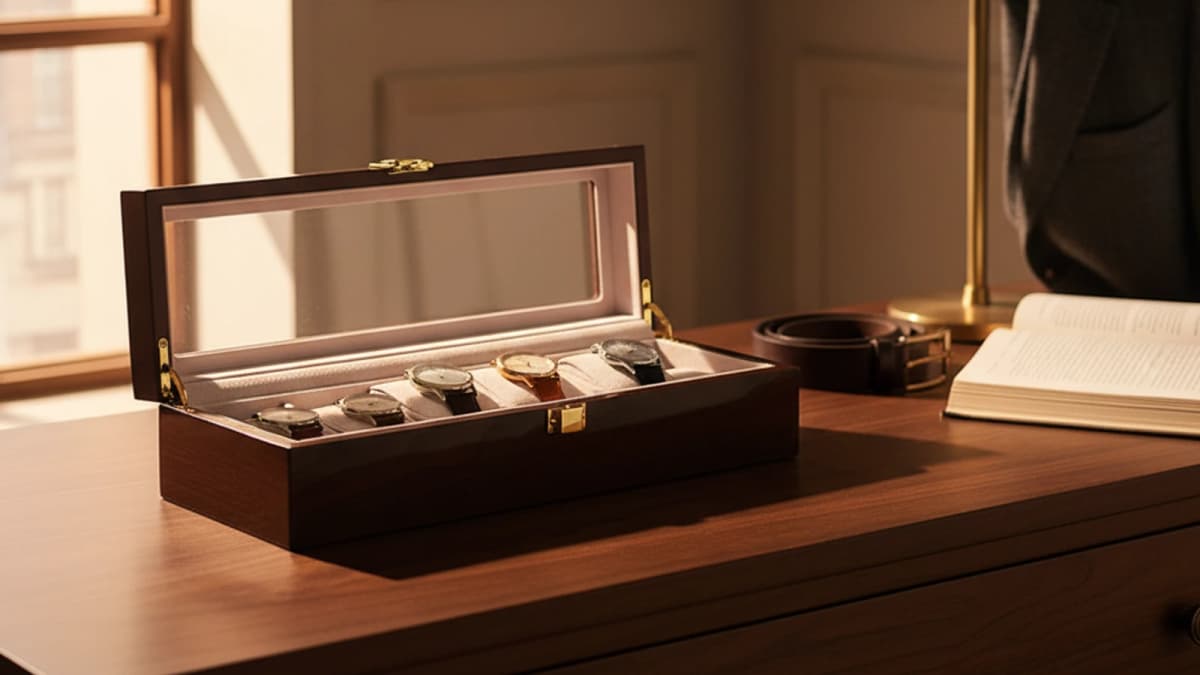
Buying a watch box looks simple. It isn't. Between the listings that sell "wood" without specifying which, the "leather" that isn't, and the "carbon" that is actually a decorative film, the watch storage market is one of the most opaque I know. I have been negotiating and reselling watches for years, and we ended up listing our own range of boxes because I was not satisfied with any of the explanations that sellers gave to my customers. This guide is the one I wish I had read: how to choose a capacity, a material and a format that will last ten years, without paying for vocabulary.
Which box for which profile?
How many watches? Capacity first
This is the mistake I see most often: you buy a box sized for today's collection. Six months later, you receive a watch as a gift, you find a second-hand one, and the box overflows. A watch box lasts much longer than you replace your collection, so think in terms of growth.
In our range, capacities go from 3 to 20 compartments. Here is how I recommend matching them to a real collection, based on what our customers order.
| Your collection | Recommended capacity | Why |
|---|---|---|
| 1 to 3 watches | 6 compartments | The 3-slot fills too quickly, the 6-slot allows room and welcomes the next ones. |
| 4 to 7 watches | 8 to 10 compartments | Comfortable, without empty cushions that make the "half-full box" feel. |
| 8 to 11 watches | 12 compartments | The format for an established collection, still reasonable in size. |
| 12 watches and more | 18 to 20 compartments, or two boxes | Beyond 12, a second thematic box (sports, formal) is often more practical than a single cabinet. |
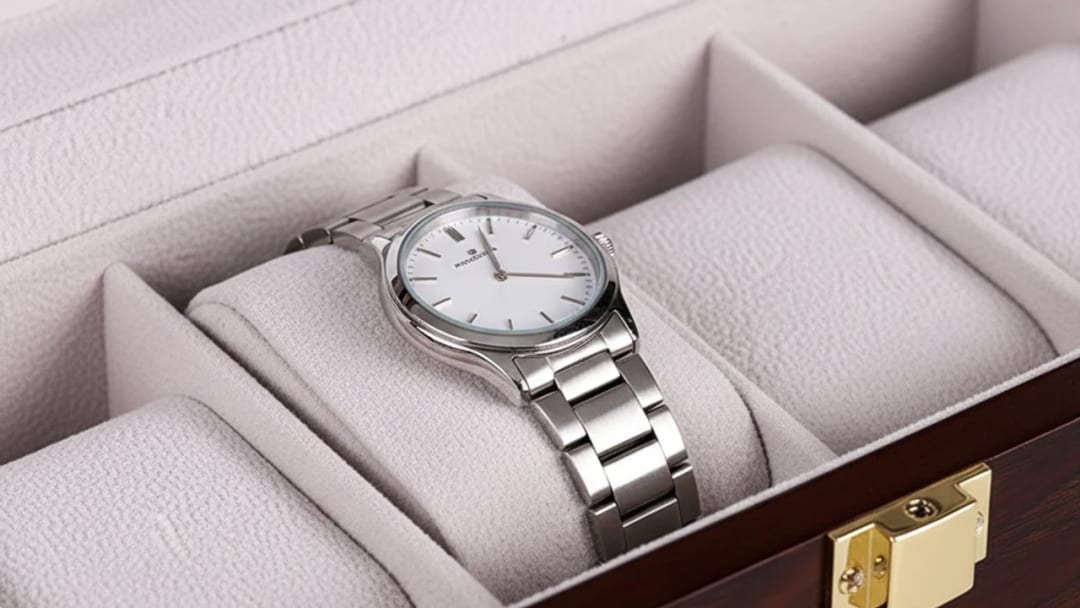
Wood, walnut, carbon, faux leather: what the seller won't tell you
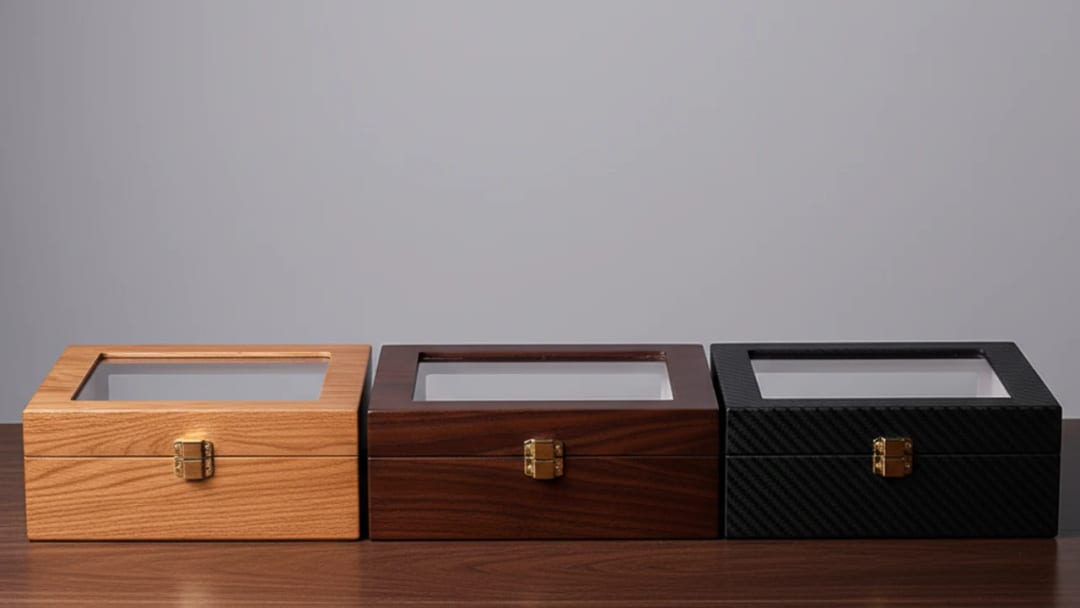
Here is the part that matters to me, because this is where you get fooled. I will be direct, including about our own range: we name our materials exactly for what they are, and here is what that means in practice.
Wood: solid, veneer or "wood" plain and simple
When a listing says "wood" without specifying, be careful. There are three very different realities. Solid wood (our Milan boxes) is carved from the solid: heavy, dense, it sounds full when you tap it, and it develops a patina over the years. Walnut (our Ravello boxes) is a noble species, recognisable by its warm, deep brown grain, usually as quality veneer on a wood structure. And generic "wood" (our Gandi boxes, in lacquered rubber wood) is an honest entry-level wood, lighter, perfectly suitable for daily use without heritage pretensions. All three are real wood. The difference is in density, grain and ageing, not in a lie.
The "leather" that isn't
"Carbon effect" is not carbon
True woven carbon is an aerospace material that costs a fortune and is not found on a consumer storage box. What you buy under the name "carbon" (our Monza boxes) is a composite with carbon-effect pattern: a technical surface with imitated weave, lightweight, modern, which appeals to those who love sporty aesthetics. It's a nice finish, provided you know you're paying for a look, not a structural material.
To make all this concrete, here is the measured comparison of our collections, with real dimensions and real weight taken from the pieces. This is exactly the kind of data that no standardised product sheet will give you in a cross-referenced way.
| Collection | Real material | Style | Weight (6 compartments) | For whom |
|---|---|---|---|---|
| Gandi | Wood (lacquered rubber wood) | Warm classic | ≈ 800 g | First purchase, good value for money |
| Ravello | Walnut (noble veneer) | Heritage, deep grain | ≈ 1500 g | Established collection, seeking material quality |
| Milan | Solid wood, gilt hinges | Dressed espresso | ≈ 1500 g (6c) | Those who want substance and elegance |
| Monza | Carbon-effect composite | Modern sporty | ≈ 800 g | Contemporary style, sports watches |
| Bellagio | Composite faux leather | Two-tier watches and jewellery | ≈ 2000 g | Mixed collection to organise |
| Sorrento | Faux leather, metal trim | Sober contemporary | ≈ 800 g | Office, streamlined design |
The Ravello walnut weighs almost twice as much as a Gandi with equal capacity: this is a sign of denser structure and thicker veneer. Weight is actually an excellent indicator that few people look at. At equal capacity, a heavier box generally has better structure, more serious hinges and better-padded cushions.
If you're looking for a luxury watch box, or a luxury men's watch box to give as a gift, it's precisely towards genuine walnut and solid wood that you should look, not towards the language of the listing. A true high-end piece is recognised by its weight, the grain of the wood, the quality of the hinges and the padding of the cushions, never by the word "luxury" alone displayed on the sheet. A light box sold as "luxury" is a warning sign.
Glazed or closed, with or without jewellery drawer
Almost all of our boxes have a glazed lid, and it's a deliberate choice. The glass allows you to see your collection without opening it, which changes daily life: you choose your watch at a glance, and you enjoy seeing it on display. The downside is exposure to light, which can, over years, cause a very light dial or leather strap to fade slightly. If your box lives in direct sunlight on a piece of furniture, or if you store sensitive pieces, a version with a solid lid offers better protection.
The glazed lid is right for you if
- You like to see and display your collection
- You change watches often depending on your mood
- The box is in a room without direct sunlight
- You want to find a piece without opening everything
Prefer the solid lid if
- The box is exposed to direct light
- You store very light dials or leather straps
- The collection sits unused for long periods
- You prioritise protection over display
The jewellery drawer is the option that changes usage the most. On our Ravello with drawer and our two-tier Bellagio cases, the lower compartment holds bracelets, rings, cufflinks or a second row of watches. If you already keep your accessories loose in a chest of drawers, a mixed case puts them in order and protects them from scratches. It's also a better gift, because it works even for someone who has only one or two watches but lots of small precious items.
Watch box for men, for women, or mixed
The search "watch box for men" is by far the most frequent, and it's no accident. A box designed for men's watches has wider cushions, capable of accommodating a 44 mm chronograph steel bracelet without forcing it, and a generally more understated or technical style (solid wood Milan, carbon-effect Monza). This is the concrete criterion to check, far more than the "men's" label on the listing.
For a woman, or for watches with a slimmer case, cushions of moderate circumference are sufficient, and aesthetics often take priority (warm walnut Ravello, gilt hinges Milan). And for mixed use, for example a couple sharing a piece of furniture or a person with watches and jewellery, a case with a drawer or two-tier is the logical answer. The good news: the mechanics of a box are the same for everyone, only the cushion sizing and style change.
Automatic watch box: do you need a winder?
This is the most frequent confusion, and it deserves a clear clarification. Many search for "automatic watch box" thinking that a special box keeps the watch wound. This is not the case. An automatic watch is wound by the movement of your wrist. Placed in a box, motionless, it loses its power reserve and stops after one to three days depending on the calibre. The box protects it perfectly, but does not wind it.
If you have a single automatic that you wear every day, you only need a box. If you have several automatics in rotation, or a complicated calendar watch that's tedious to adjust, a winder makes full sense. We detail how to choose it, the direction of rotation and the turns per day depending on the calibre, in our guide to the automatic watch winder.
How a box really protects your watches
We talk a lot about aesthetics and rarely about what a box actually does. Yet, storing your watches properly extends their lifespan and value. Here are the four concrete protections, in order of importance.
A word on magnetism, often mentioned: a wooden or composite case does not particularly protect against magnetic fields, and that's not its role. The real magnetic danger comes from speakers, magnetic bag clasps and induction hobs, not from storage. Simply keep your mechanical watches away from these sources, the case does the rest.
Travel case: a different need
If your need is to travel with a few watches, don't take a rigid glazed case: glass is a weak point in a suitcase, and the bulk is unnecessary. For transport, a soft zipped case or a watch roll that wraps each watch in a padded compartment is much better suited. It absorbs impacts, slips into luggage, and protects during transit. We offer these travel formats separately from our home storage range, and that's intentional: these are two different uses that deserve two different objects. We detail how to choose between case, roll and pouch in our travel watch case guide.
View the full storage range
To compare capacities, materials and in-stock formats with warranty and fast delivery:
Frequently asked questions about watch cases
What capacity watch case should I choose?
Does a watch case wind an automatic watch?
Are leather watch cases really made of leather?
Wood, walnut or carbon effect: which material is best?
Which watch case should I choose for a man?
How should I store my watches for travel?
To go further, consult our automatic watch winder guide, or explore our full range of horological advice and guides.
Read next
More in this vein
Buying guides
200m Water Resistant Watch: The ideal companion for diving
Buying guides
The materials making a comeback in both watchmaking and creative jewellery
Buying guides
Swarovski watch: crystal, Swiss Made, what you're really paying for
Buying guides
Maserati Sfida R8823140004: autopsy of an open heart NH70
Buying guides
Skeleton watch: the complete guide from a watchmaker (men's, women's, automatic)
Buying guides
Rolex-style watch: Submariner, Datejust and affordable homages
Buying guides
Rectangular watch: from the Cartier Tank to affordable alternatives
Buying guides