
Automatic watch winder: the guide to choosing well (TPD, direction, silent mode)

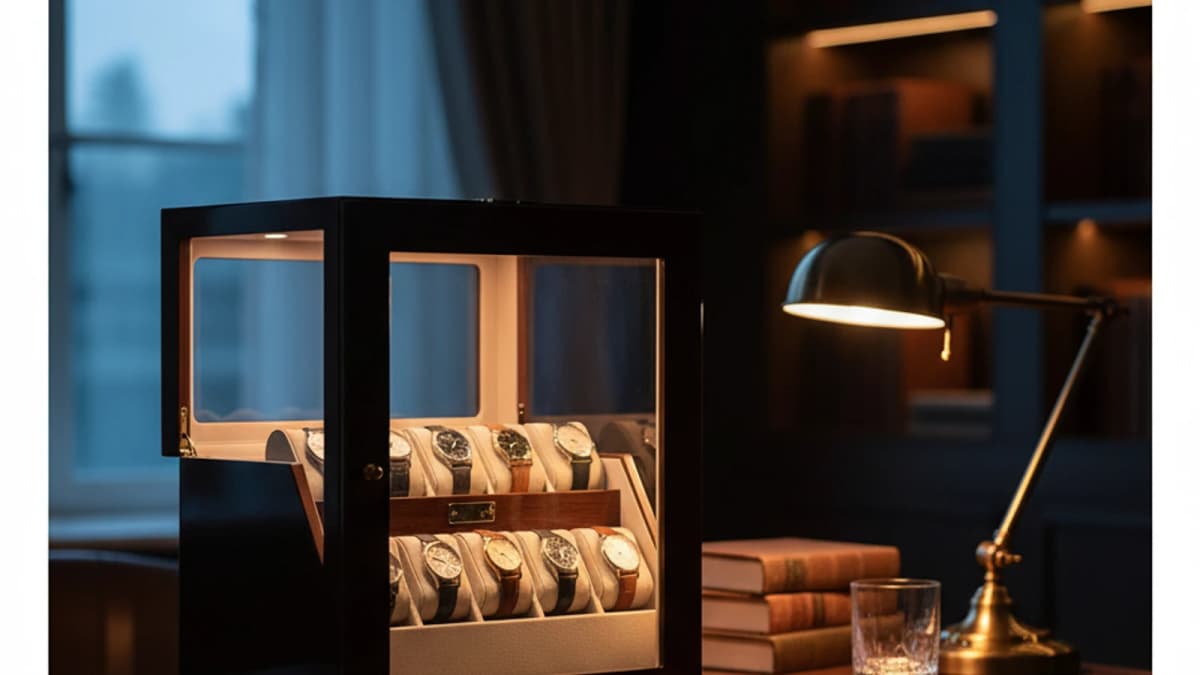
A watch winder for automatic watches (watch winder) has a paradoxical reputation: useful for some, a gadget for others, even dangerous for the movement according to certain forums. The truth lies in a few simple mechanical principles, which I will explain to you as a watchmaker. Properly adjusted, a winder maintains a watch you wear infrequently without straining it. Poorly adjusted, it spins the rotor continuously for nothing, and there, yes, it wears prematurely. The whole question comes down to adjustment, and to the choice of device.
What a winder really does, and who needs one
Let's start by clearing up a common confusion. An automatic watch winds itself through wrist movement: a rotor (oscillating weight) pivots and tensions the mainspring. When you don't wear it, it draws on its power reserve, then stops, usually after 38 to 72 hours depending on the movement. A winder reproduces this wrist movement by gently rotating the watch, so it never stops.
A winder is useful if
- You have several automatics in rotation, never all worn
- You own an annual or perpetual calendar, a date function that's a pain to adjust
- You want to pick up your watch on time without manipulating anything
- You collect and display your pieces running
A winder is unnecessary if
- You wear the same watch every day (your wrist is enough)
- Your watch is quartz (no rotor, nothing to wind)
- You have a single simple automatic, quickly reset
- You store your watches for weeks without touching them (better to stop them)
Turns per day (TPD): the setting that changes everything
This is the parameter that sellers explain the least, yet it's the most important. TPD (turns per day) is the amount of rotation the winder applies over 24 hours. Each movement has its own requirement, linked to the efficiency of its winding system. Here are the orders of magnitude I observe in the workshop.
| Movement family | Recommended TPD | Common examples |
|---|---|---|
| Japanese mass-market movements | 650 to 800 | Miyota, Seiko automatic |
| Standard Swiss movements | 650 to 800 | ETA, Sellita |
| Movements with efficient bidirectional winding | 600 to 700 | many manufactures |
| Movements with unidirectional winding | 800 to 1000 | certain vintage movements |
Direction of rotation and rest mode
The direction of rotation matters because not all rotors wind in both directions. Some movements wind only clockwise, others counterclockwise, many in both. If you don't know, choose a winder capable of alternating bidirectional rotation: it covers all cases. This is why our models offer direction adjustment, not just rotation count.
Rest mode is the true quality marker. A serious winder doesn't run continuously: it performs a series of rotations, then stops for several minutes or hours, then starts again, until it reaches the TPD set over 24 hours. This intermittence reproduces actual wrist wear and limits wear and tear. Avoid budget devices that run without interruption: that's exactly what gives the winder its bad reputation.
Silence: a criterion we overlook
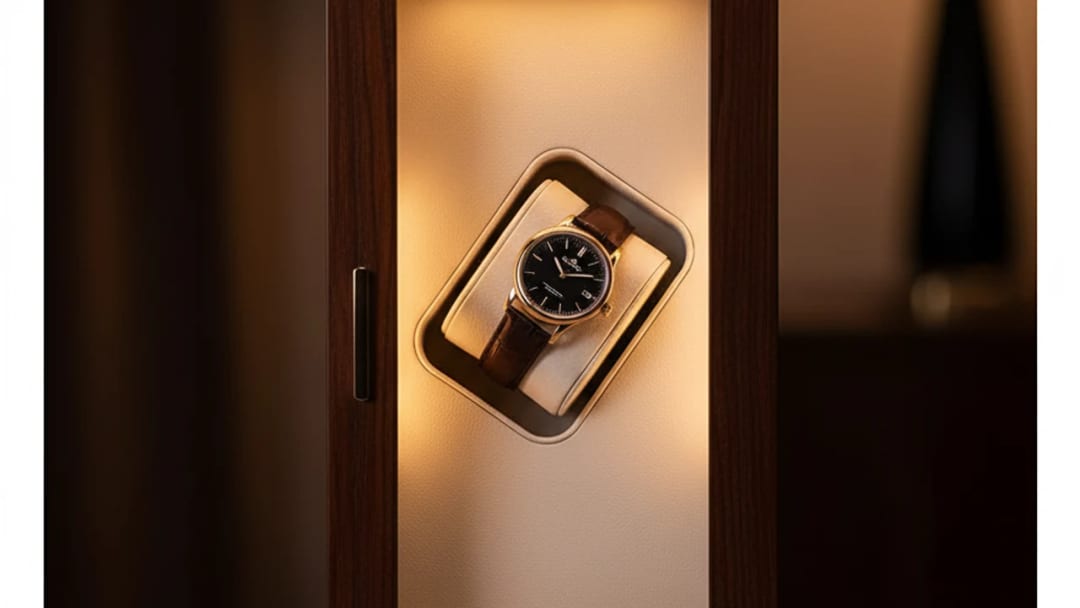
You choose a winder for its nice display window and wood, and you forget it will run for hours, often in the room where you sleep. Motor noise is a criterion I rank very high. A quality motor, typically a Japanese Mabuchi, is nearly inaudible at one metre. A budget motor drones, clicks, and wakes you up. Before buying, look for mention of the motor type, and be wary of product sheets that don't mention it.
Capri or Imola: comparison of our two ranges
We have built two ranges to cover the two dominant aesthetics, with the same mechanical standard (rotation direction adjustment, rest mode, silent motor). Here are the actual figures measured on the pieces.
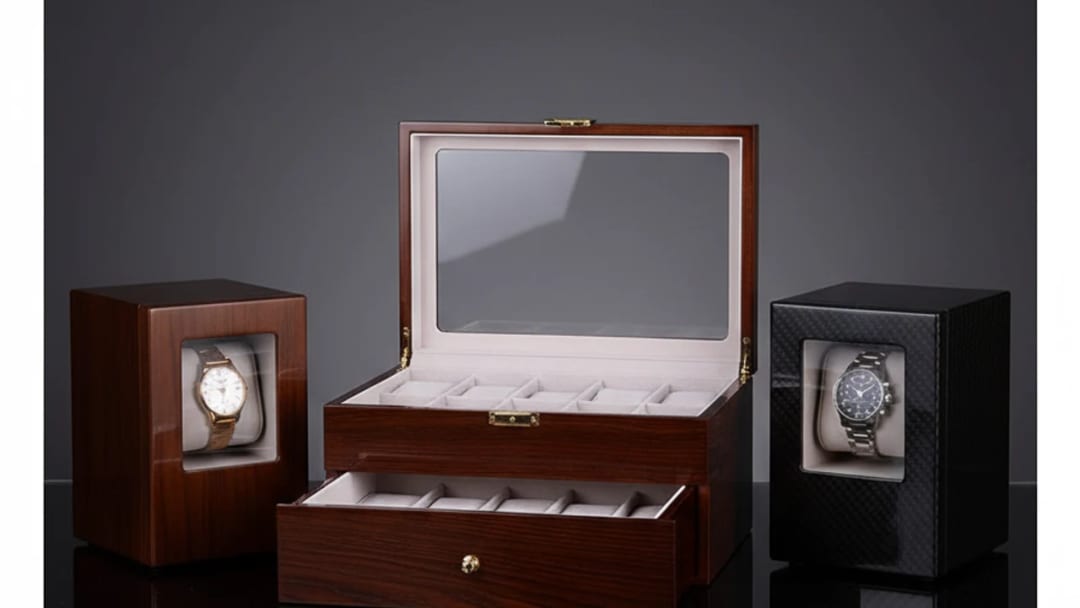
| Capacity | Capri (ebony wood) | Imola (carbon effect) | Footprint |
|---|---|---|---|
| 1 watch | ≈ 1.2 kg | ≈ 2.5 kg | compact, fits on a bedside table |
| 2 watches | ≈ 3.1 kg | ≈ 3.1 kg | 35 × 25 × 31.5 cm, furniture format |
| 4 watches | ≈ 5.5 kg | ≈ 5.5 kg | 35 × 25 × 42.5 cm, vertical |
| 6 watches | ≈ 7.0 kg | ≈ 7.0 kg | 35 × 25 × 54.5 cm, furniture presence |
| 9 watches | ≈ 9.2 kg | ≈ 9.2 kg | 46 × 25.5 × 55.5 cm, display piece |
Note the actual footprint: a 6 or 9 watch winder is not a bedside accessory, it is a piece of furniture over 50 cm tall and weighing 7 to 9 kg. If you are starting with one or two automatics, choose a 1 or 2 position format, you can upgrade later. It is more sensible than buying a 6 position unit that is half empty.
Winder integrated into a box, or dedicated device?
Many look for a watch box with integrated automatic winder, which stores non-motorised watches on one side and maintains a few on the other. It is an attractive solution for saving space. My watchmaker's opinion: these combined models are practical, but the compromise often comes at the cost of motor quality and the fineness of TPD adjustment. If you want to properly maintain a valuable mechanical piece, a dedicated winder with rest mode and rotation direction adjustment remains safer. If you mainly want storage with one or two motorised positions as a bonus, the combined unit does the job.
For pure storage of your watches that you wear regularly, without motorisation, see our complete watch box guide, which details capacities, materials and formats.
View our automatic winders
Compare capacities, styles and finishes in stock, with warranty and fast delivery:
Frequently asked questions about winders
Does a winder damage an automatic watch?
How many turns per day (TPD) should I set on my winder?
What rotation direction should I choose for a winder?
Does a silent winder really exist?
Are carbon fibre winders really made of carbon?
Do I need a winder for a watch worn every day?
For storage of your collection beyond motorised pieces, consult our complete watch box guide, or explore all our watchmaking advice and guides.
Read next
More in this vein

Buying guides
200m Water Resistant Watch: The ideal companion for diving
Buying guides
The materials making a comeback in both watchmaking and creative jewellery
Buying guides
Swarovski watch: crystal, Swiss Made, what you're really paying for
Buying guides
Maserati Sfida R8823140004: autopsy of an open heart NH70
Buying guides
Skeleton watch: the complete guide from a watchmaker (men's, women's, automatic)
Buying guides
Rolex-style watch: Submariner, Datejust and affordable homages
Buying guides
Rectangular watch: from the Cartier Tank to affordable alternatives
Buying guides