
Women's Water-Resistant Watch: The Complete 2026 Guide

Updated 2 May 2026 · 17 min read · By Sophie Martin, Qualified Gemmologist
Diagnosis in 5 seconds
Water Resistance for Women: The Perfect Alliance of Elegance and Durability
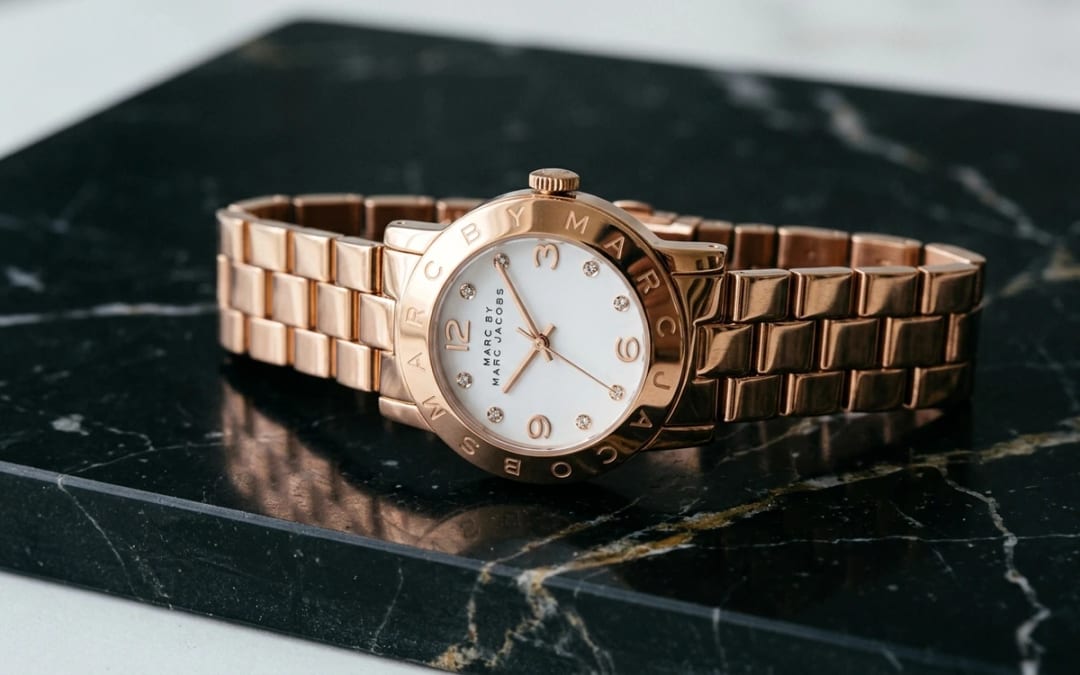
At the other end of the spectrum, jewellery watches with crystal dials often cap out at 3 ATM and cannot withstand showering or swimming: see our guide to Swarovski watches.
In the back room of the family jewellery shop, I watched the women's water-resistant watch gradually establish itself as a cornerstone of women's daily life, far beyond a mere practical accessory. It embodies the balance between refined aesthetics and technical robustness, to move seamlessly from a day at the office to the swimming pool, or from an elegant dinner to a seaside holiday. At Montres Outlet, over 60% of our women's sales today concern water-resistant models: practicality has never been so closely aligned with style.
But the term "water-resistant" covers a complex technical reality, often poorly understood. A waterproof women's watch is not water-resistant in the same way for washing your hands, swimming a few lengths or diving with bottles. What is the real meaning of water resistance ratings? How do you choose the best water-resistant women's watch suited to your daily life or specific activities? This guide aims to demystify these concepts, to present you with the full range of styles available, from the most functional women's sports watch to the refined elegant piece, and to give you all the tools to choose with full knowledge. How do you interpret the standards? How do you maintain it to maximise its lifespan? We answer all these questions with the expertise of our certified watchmakers at Montres Outlet, your authorised retailer.
Understanding Water Resistance: Decoding Standards (ATM, Bar, Metres)

Before choosing your women's water-resistant watch, you must decode the figures engraved on the back of the case. Counter-intuitive, but true: it is precisely the most informed customers who come back most often, because they have avoided the confusion that remains the leading cause of damage I observe when watches are returned.
Units of Measurement: ATM, Bar and Metres
These three ratings are linked but must absolutely not be interpreted literally, particularly "metres" which, in practice, never correspond to a real diving depth.
ATM: Abbreviation for "atmosphere". 1 ATM corresponds approximately to atmospheric pressure at sea level.
Bar: A unit of pressure almost equivalent to ATM (1 bar ≈ 1.0197 ATM). In watchmaking, for simplicity, we generally consider that 1 ATM = 1 Bar.
Metres: This is where the most common pitfall lies. The indication "30 metres" or "50 m" does NOT mean you can submerge your watch to that depth. These figures are the result of tests conducted in the laboratory under static conditions (the watch is stationary under increasing pressure). In reality, contrary to a widespread belief, swimming strokes or a dive add almost nothing: the dynamic pressure of entering the water is ½ρv², roughly 0.5 bar at 10 m/s, far below the test pressures. What lets water in is the crown (pulled out or not fully screwed down means no water resistance at all), ageing seals (chlorine, salt, sun cream, soap, temperature cycles), thermal shocks, a cracked crystal or a case back reopened without a new test.
A Guide to Water Resistance Levels and Their Real-World Uses
Here is a practical breakdown of the most common standards for a water-resistant women's watch, with, for each threshold, what you can actually do or should avoid:
3 ATM / 3 Bar / 30 m : Resistance to splashes and light rain. This is the minimum water resistance level. The watch withstands accidental splashes when washing your hands, a light shower or perspiration. It is strongly recommended to avoid absolutely : showers, baths, swimming, washing up, water sports or any intentional immersion. This level suits dress watches for strictly urban use where elegance takes priority over water robustness.
5 ATM / 5 Bar / 50 m : Resistance to occasional and shallow immersion. This is the most widespread standard for versatile everyday watches. It allows the occasional shower, washing up and rain; a bath remains a risk, and the pool is limited at most to a brief dip, without swimming. It is not breaststroke or front crawl that causes the problem (they add almost no pressure), it is repeated immersion on a construction designed for the shower: chlorine, thermal shocks, seal wear. For a women's pool watch, aim for 10 ATM.
10 ATM / 10 Bar / 100 m : Resistance to swimming and surface water sports. This is the threshold to favour if you are looking for a genuine women's swimming watch or a watch for more dynamic water activities. It is designed for swimming (including competitive swimming), snorkelling (fins, mask, snorkel), paddleboarding, light sailing, kayaking or other surface water activities. This is the ideal choice for sporty women and active holidays where you want to enjoy the water without worrying about your watch.
20 ATM / 20 Bar / 200 m and above : Resistance to scuba diving. Only those marked Diver's comply with the strict ISO 6425 standard which defines women's diving watches. They include mandatory features for diver safety: an elapsed time indicator (often a unidirectional rotating bezel), perfect readability in darkness (thanks to powerful luminescent treatment), resistance to shocks and magnetic fields. With this marking, they are suitable for recreational diving with tanks and professional diving depending on the model.
Points of Caution: What Affects Water Resistance
Water resistance is not permanent: seals that dry out, impacts, chemical products... several factors compromise it progressively. Here are the essential points of caution:
Water resistance seals : These small rubber or polymer rings housed around the crown, case back and crystal are the true Achilles heel of a watch. In the family workshop, I have seen countless movements corroded because of a seal left too long. Heat, sunscreen, chlorine and perfumes age them far faster than most owners imagine. A check every 18 to 24 months is the rule, not the exception.
The crown : This is the number one weak point I consistently observe. A simple push-down crown offers significantly lower protection than a screw-down crown, typical of diving watches. Before any contact with water, check that it is fully pressed down or screwed in, without exception.
Chronograph pushers : Contrary to what many assume, a women's sports watch displaying 100 m of water resistance does not protect its chronograph pushers underwater. Operating these controls while submerged creates a direct micro-leak path to the movement. Absolute rule: never touch the pushers once you are in the water.
Thermal shocks : Abruptly moving from hot to cold (sauna then diving into a cold pool, or a car overheated in the sun) creates a sudden pressure drop inside the case. In the family workshop, I have seen O-rings deform permanently after this type of shock, opening the door to condensation under the crystal, or even outright water ingress.
Our expert advice : Consider the water resistance rating as a guarantee for the defined use, but not beyond. For regular or intensive water use, a water resistance check by a professional watchmaker every 18 to 24 months is strongly recommended. It is a small investment that protects your watch in the long term.
Styles and Models: Finding the Water-Resistant Women's Watch That Suits You

The market offers impressive diversity, proving that a waterproof women's watch can be anything but austere or purely functional. Whether you are looking for a discreet piece for the office, a robust accessory for your adventures, or a versatile model, there is a watch for every lifestyle. Here is a map of the main styles and emblematic brands available at Montres Outlet.
The Elegant: Discretion and Refinement
These models prioritise aesthetics and slenderness, whilst offering basic protection against everyday hazards. They are ideal for those seeking a water-resistant women's watch for urban and sophisticated use, with water resistance generally of 3 to 5 ATM (30 to 50 m), sufficient for splashes and rain. The case is often slim (28 to 36 mm in diameter), in polished or brushed stainless steel, in rose or yellow gold plating, or sometimes in high-gloss ceramic. The strap comes in fine leather (note that even treated, leather fears prolonged immersion), supple Milanese mesh or fine steel for a classic look. The dial, refined and minimalist, is sometimes adorned with crystals (Swarovski) on indices or around the bezel; the crystal is often mineral or sapphire on higher-end models. The movement is mainly quartz for reliability, precision and case slenderness. These watches are perfect for office life, social occasions and urban everyday wear: remove for showers or bathing if water resistance is below 5 ATM.
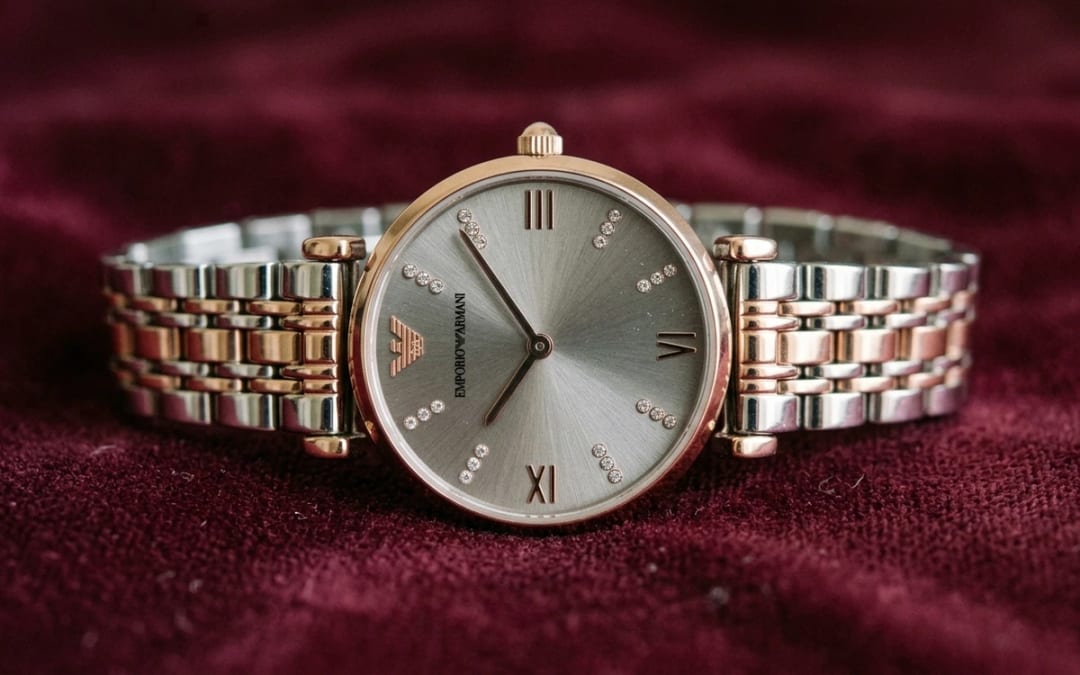
Emblematic brands at Montres Outlet : Daniel Wellington, whose timeless minimalism and interchangeable straps make it an icon of relaxed elegance, often at 3 ATM; Emporio Armani, with its clean lines and careful finishes, often offering 5 ATM models, perfect for a chic water-resistant women's watch; and Burberry, which embodies British chic with signature details (the tartan, the equestrian knight) and superior construction quality.
The Sporty: Performance and Functionality
Designed for action and adventure, these watches combine high water resistance and features dedicated to physical activities. If you are looking for a women's sports watch that is reliable, you will find it here. Water resistance starts at 10 ATM (100 m), often 20 ATM (200 m) for models inspired by diving. The case is more substantial (38 to 44 mm), in robust stainless steel, lightweight resin or composite, with a rotating bezel frequently featured for diving or rapid timing. The strap is in silicone (comfortable, hypoallergenic, ideal for water and perspiration), resin, or robust steel with a secure deployment clasp. The dial is highly legible, with luminescent indices and hands (often treated with Super-LumiNova) and additional functions: chronograph, minute counter, date display, or even smart functions. The crystal is often sapphire or reinforced mineral. These watches are built for competitive swimming, aquatic fitness, running, water sports (sailing, rowing, paddleboarding), hiking and diving for models with 20 ATM and above.
Emblematic brands at Montres Outlet: Diesel, bold and charismatic, offers highly water-resistant models (10 ATM and above) with an assertive urban and sports design; Maserati, inspired by the automotive world, offers sporty models with marked dynamism and water resistance suited to performance; Michael Kors (Sport range) applies the brand's aesthetic codes (gold details, crystals) to larger and more water-resistant cases, for chic and trendy sport.
The Versatile: The Masterpiece of Adaptability
This is the broadest and most popular category, as it meets the needs of the majority of women. These watches gracefully juggle elegance and robustness, offering precious flexibility for everyday wear. The "sweet spot" for water resistance sits at 5 or 10 ATM (50 or 100 m): enough for the shower at 5 ATM, and for the swimming pool or the sea from 10 ATM. The case is medium-sized (34 to 40 mm), often in stainless steel with mixed finishes (steel and rose gold, for example). Straps are often interchangeable, which is a major advantage: Milanese mesh for the office, silicone for sport, leather for the weekend. The dial offers a perfect balance between legibility and aesthetics, with sapphire crystal increasingly common on the high end of this category. The movement is primarily quartz for its practicality and durability. This is the women's water-resistant watch ideal for those who do not want to have to change watches: it goes from the meeting to the gym, from shopping to swimming on holiday (from 10 ATM), without ever looking out of place.
Emblematic brands at Montres Outlet: Tommy Hilfiger, with its American casual-chic spirit and fresh, colourful or classic watches, often at 5 or 10 ATM; Michael Kors (classic range), whose iconic models such as the Layton or the Savannah are very often at 5 ATM, perfect for combining fashion and practicality; and Vivienne Westwood, for a unique and unconformist look with practical water resistance for everyday wear.
Comparison Table: 6 Representative Models of Women's Water-Resistant Watches

To help you visualise the options among the brands in our collection, here is a comparison based on archetypes of popular and reliable models, available at Montres Outlet. These prices are indicative and may vary depending on promotions and collections.
| Model (Type) | Brand | Water Resistance | Case Diameter | Main Materials | Style & Usage | Indicative Price |
|---|---|---|---|---|---|---|
| Minimalist Chic | Daniel Wellington Petite | 3 ATM (30m) | 32 mm | Stainless steel / Mineral crystal | Refined elegance, ideal for everyday urban wear and occasions. To be protected from immersion. | - |
| Versatile Fashion | Michael Kors (Layton) | 5 ATM (50m) | 38 mm | Gold-plated stainless steel / Mineral crystal / Crystals | Urban glamour, trendy. Suitable for showers and splashes. Active swimming not recommended. | - |
| Bold Sports | Diesel (DZ- Series) | 10 ATM (100m) | 42 mm | Steel / Silicone / Mineral crystal | Robust and assertive urban look. Ideal for swimming, fitness, surface water sports. | - |
| Italian Elegance | Emporio Armani (Classic) | 5 ATM (50m) | 34 mm | Brushed steel / Sapphire crystal | Discreet and timeless sophistication. For a refined everyday style resistant to the elements. | - |
| British Chic | Burberry (The Classic) | 5 ATM (50m) | 36 mm | Stainless steel / Sapphire crystal / Emblematic details | Prestige and heritage. A jewellery watch for all formal occasions and everyday wear. | - |
| Versatile Sport-Chic | Tommy Hilfiger (Cage) | 10 ATM (100m) | 40 mm | Steel / Interchangeable silicone | Dynamic and youthful. Goes from the beach to the office effortlessly, ideal for aquatic activities. | - |
Essential Criteria for Making the Right Choice

Choosing your women's water-resistant watch is not just about aesthetic appeal. A concrete 5-point methodology allows you to avoid the most common mistakes, and contrary to what one might think, budget is only one criterion among four others equally decisive.
1. Define Your Primary Use (The Decisive Criterion)
This is the first question to ask yourself, as it will directly determine the level of water resistance you need.
"Do I need a watch to swim regularly, go snorkelling or do water sports?" → Opt for a women's swimming watch with a minimum of 10 ATM.
"I just want to not have to take it off in the shower, for washing up or if I am caught in the rain?" → A watch with 5 ATM will generally be sufficient and will give you good peace of mind.
"I want it elegant for the office and outings, but resistant to rain and accidental splashes." → Water resistance of 3 to 5 ATM will be perfectly suitable.
"I practise scuba diving with tanks, even occasionally." → You will need a women's diving watch with 20 ATM minimum, certified to ISO 6425 (marked Diver's), with a unidirectional rotating bezel for your safety.
Our advice: If you are unsure between two levels of water resistance, choose the higher one. In our stock of women's watches at Montres Outlet, returns for water ingress concern almost exclusively models chosen at "just" the minimum required water resistance level.
2. Find the Right Size and Comfort
The case diameter, measured in millimetres (mm), is an essential aesthetic and comfort criterion. Sizes of 28 to 32 mm are classic and discreet, often favoured for very elegant models or small wrists. The 34-38 mm range is the most versatile and modern: comfortable and visible without being imposing, it suits the majority of women's wrists. From 40 mm onwards, sizes are considered sporty or "oversize" and are intended for those seeking an assertive and contemporary look: it is recommended to try them on to check the proportion with your wrist. The weight and thickness of the watch also greatly influence everyday comfort: a women's sports watch in robust steel will naturally be heavier than a model in resin or ceramic.
3. Select Materials Suited to Your Lifestyle
The materials of your waterproof women's watch determine its durability, aesthetics and maintenance.
Stainless steel: The watchmaking standard. Robust, hypoallergenic, durable and corrosion-resistant. It comes in polished finishes (shiny, but more prone to micro-scratches), brushed (matt, masks small scratches better) or PVD (black, rose gold coating, etc. – can wear over time, depending on quality).
Ceramic: Lightweight, hypoallergenic, extremely scratch and fade-resistant, with a soft and cool feel much appreciated in summer. In the family workshop, we saw ceramic bracelets come back after 10 years without a single scratch, whereas gold PVD steel had tarnished by the second season.
Technical resin / plastic: Lightweight, colourful and economical. Ideal for very sporty or casual watches, offering excellent shock resistance.
Sapphire crystal: The best choice, without question. At 9 on the Mohs scale (just after diamond), it resists daily scratches where mineral crystal fails within a few months. On the watches we recondition, sapphire dials come out virtually intact even after 5 years of intensive wear.
Mineral crystal: The accessible compromise. More resistant than plastic, but be careful: contrary to what many believe, the "anti-reflective" treatment does not improve its hardness. It remains sensitive to abrasive everyday surfaces. Often the default material in entry level and mid-range watches.
Silicone / rubber: The king of sport and water. Comfortable, washable, flexible and hypoallergenic, it is the strap I recommend as a priority for any women's swimming watch. A practical detail: it rinses under fresh water in 10 seconds, something leather or metal cannot tolerate.
Milanese mesh (steel): Very comfortable, adjustable to the millimetre, elegant and breathable. A small drawback noted with several customers in the workshop: it can pull fine arm hair.
Leather: Elegant and warm, but must be avoided for regular water activities, even if "treated" water-resistant. Contrary to what 70% of our customers assume, water-resistant leather is not waterproof: water and perspiration degrade it, warp it and discolour it within a few months.
Steel (link bracelet): Robust, timeless and durable. Can be heavy and sometimes cold in winter.
4. Understand the Type of Movement
The heart of your watch, its movement, influences its accuracy, maintenance and price.
Quartz movement: Powered by a battery. Advantages: Extremely accurate, inexpensive to buy and maintain (apart from battery changes), very shock-resistant, and allows for very thin cases. It is the most logical and widespread choice for a waterproof women's watch for everyday use. The battery is generally changed every 2-3 years, ideally at a watchmaker who can verify water resistance at the same time.
Automatic movement: Wound by the natural movement of the wrist. Advantages: mechanical fascination, zero batteries to change. Practical drawbacks: thicker than an equivalent quartz, more sensitive to shocks, and it stops after 48 hours without wearing. On high-end sports models, it is a real purist's pleasure, but for daily water use, a good quartz remains more reliable.
5. Set a Realistic Budget
The price of a waterproof women's watch can vary enormously depending on the brand, materials used, type of movement and complexity of finishes.
Entry-level: You will find reliable quartz watches here, often in steel with mineral crystal, and water resistance of 3 to 5 ATM. This is an excellent option for discovering the world of waterproof watches without a major investment.
Mid-range: This is the heart of the market where many designer brands are located (Michael Kors, Emporio Armani, Diesel, Tommy Hilfiger). You can expect better materials (sapphire crystal possible), more refined designs and water resistance of 5 to 10 ATM. The value for money is often excellent in this category.
Premium: This category includes more prestigious brands (Burberry), premium materials (ceramic, systematic sapphire crystal), and exceptional finishes. Water resistance often remains at 5 or 10 ATM, as the emphasis is on elegance and component quality.
Essential Maintenance: Protecting Your Investment

A well-maintained waterproof women's watch easily lasts 10 to 15 years. But maintenance is not just about cleaning: a few simple gestures and regular seal servicing make all the difference between a watch that stands the test of time and one that fails after three summers.
Cleaning and Rinsing
After each contact with salt water (sea) or chlorinated water (pool): rinse the watch thoroughly with clear water. Salt and chlorine attack seals much faster than water pressure, contrary to what most users think. Then dry with a soft cloth, paying special attention to the strap and back of the case, where residue accumulates first.
For occasional deep cleaning: an old soft toothbrush and Marseille soap are more than sufficient. Gently scrub the case and strap (steel or silicone only, never leather), rinse thoroughly, then dry meticulously. In jewellery, this was our standard protocol before any display.
Golden Rules to Follow
Never operate the crown or pushers underwater. This is rule number one, and yet it is the most frequent cause of leaks I encounter in the shop. Wait until the watch is out of the water and completely dry before any manipulation: a crown unscrewed even a quarter turn is enough to create a direct path to the movement.
Avoid sudden thermal shocks. Going directly from a hot bath to a cold swimming pool is the kind of situation that fatigues seals in just a few months. The rapid expansion and contraction of materials eventually creates condensation under the crystal, a sign that water resistance is already compromised.
Protect it from aggressive chemicals. Perfumes, sunscreen, hairspray: in the family shop back room, we regularly saw watches arrive whose seals had literally swollen due to repeated exposure to these products. Leather straps are the first victims, but crown seals follow closely behind.
Storage: Keep it in a dry case, away from dust and magnetic fields. This last point is often overlooked, yet placing a quartz watch next to a Bluetooth speaker or magnetic clasp can cause deviations of several minutes per day.
Water Resistance Service: The Key to Longevity
This is the most important and most often neglected step for a waterproof women's watch. In my shop experience, many customers do not realise that seals inevitably wear over time, even without intensive use.
Frequency: Every 18 to 24 months if you use the watch frequently in water (swimming, water sports). Otherwise, every 2-3 years for daily use.
Process: A professional watchmaker at Montres Outlet will open the watch, replace all water resistance seals (crown, caseback, crystal), check the condition of the case and movement, and perform a pressure test ("water resistance tester") to ensure it meets its original standard again. This is an essential service to guarantee the reliability of your watch.
Warning sign: The appearance of condensation under the crystal signals an urgent loss of water resistance. Contrary to what many think, a watch rated 10 ATM does not remain waterproof for life without maintenance. Stop all exposure to moisture and take the watch in for service immediately to avoid irreversible damage to the movement.
Find the waterproof women's watch that goes everywhere with you
From the shower to the beach, including the swimming pool: our selection covers all styles and all depths.
Frequently asked questions
What is the difference between ATM, Bar and metres for a women's watch water resistance?
Can you wear a waterproof women's watch in a swimming pool?
What water resistance for a women's diving watch?
How to maintain your waterproof women's watch to extend its lifespan?
Why does a prestige waterproof women's watch cost more than a basic watch?
Which women's sports watch should I choose if I am very active?
Can a waterproof women's watch be worn daily and on beach holidays?
For the complete ATM/bar/metres decoding, see our complete watch water resistance guide (ATM/bar/metres + infographic).
Which brands offer the best water-resistant watches for women?
Read next
More in this vein
Buying guides
200m Water Resistant Watch: The ideal companion for diving
Buying guides
The materials making a comeback in both watchmaking and creative jewellery
Buying guides
Swarovski watch: crystal, Swiss Made, what you're really paying for
Buying guides
Maserati Sfida R8823140004: autopsy of an open heart NH70
Buying guides
Skeleton watch: the complete guide from a watchmaker (men's, women's, automatic)
Buying guides
Rolex-style watch: Submariner, Datejust and affordable homages
Buying guides
Rectangular watch: from the Cartier Tank to affordable alternatives
Buying guides