

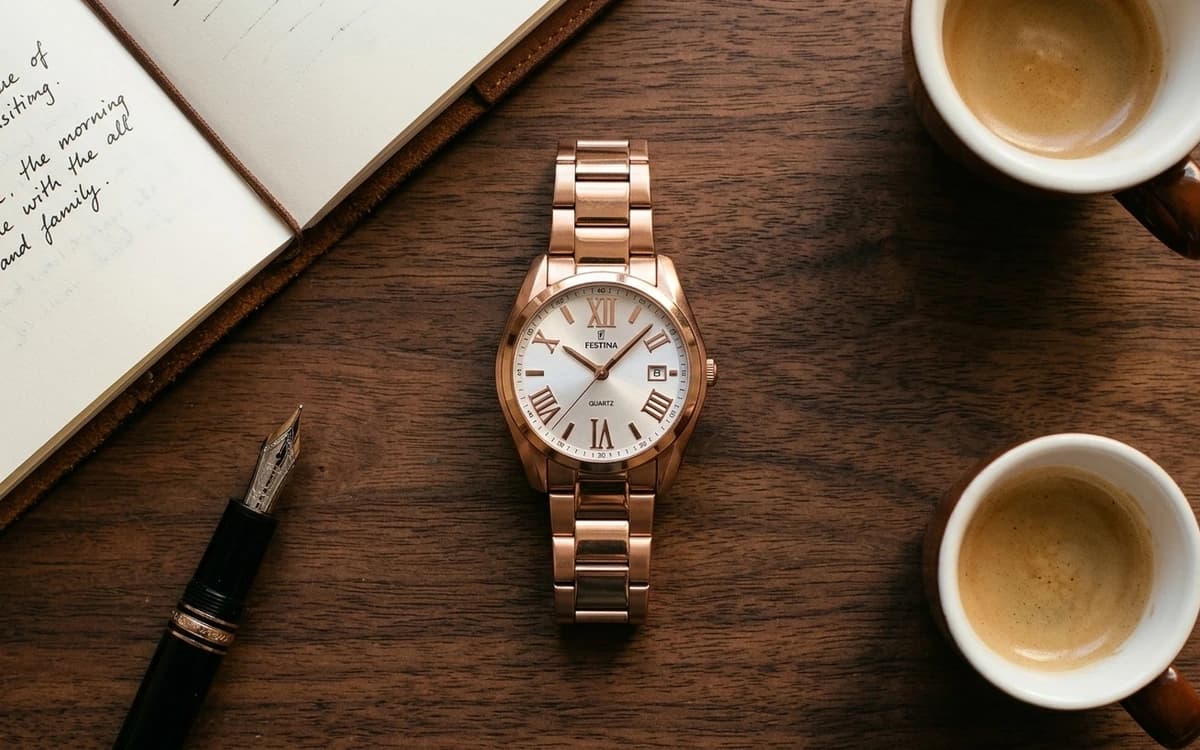
Choosing the size of a women's watch is not just about a figure in millimetres. It's about the balance between your wrist circumference, the case thickness, the strap width and your intended daily use. This guide gives you concrete reference points to measure, compare and decide without approximation.
Diagnosis in 5 seconds

Updated 2 May 2026 · 17 min read · By Julie Renard, Accessories Stylist
Measuring your wrist: the foundation of every successful choice
Special case of jewellery watches: on a piece with a dial set with crystals, brilliance counts as much as diameter. We explain this in our guide Swarovski watch: crystal, Swiss Made and what you really pay.
Before looking at models, take a reliable measurement. The wrist varies depending on the time of day (slightly more swollen at the end of the day), temperature and your hydration. Always measure at the end of the day: with the customers I advise, the difference can reach 4 to 5 mm between morning and evening, which shifts from one range to another.
Measurement protocol in four steps
- Use a flexible dressmaker's tape measure. Failing that, cut a strip of paper, wrap it around and measure with a ruler.
- Position the tape just above the ulnar bone (the bony prominence on the little finger side), where you normally wear a watch.
- Adjust without compressing: the tape should be in contact with the skin without crushing it. Being able to slip a finger between the tape and your wrist is the right tension.
- Note the value in centimetres. Repeat twice to check consistency.
Wrist circumference / case diameter correspondence
| Wrist circumference | Recommended case diameter | Visual category |
|---|---|---|
| Less than 14 cm | 24-28 mm | Discreet, jewellery, minimalist |
| 14-16 cm | 28-32 mm | Balanced, versatile |
| 16-17 cm | 33-36 mm | Bold, modern |
| 17-18 cm | 37-39 mm | Trendy, visible |
| More than 18 cm | 40 mm and above | Oversized, sporty, "boyfriend" |
These correspondences are reference points, not absolute rules. Case shape comes into play: a 28 mm square watch covers a perceived surface greater than a round case of the same diameter. A rectangular "tank" style case looks more elongated and less imposing for an equivalent width.
Case diameter: proportion and visual presence
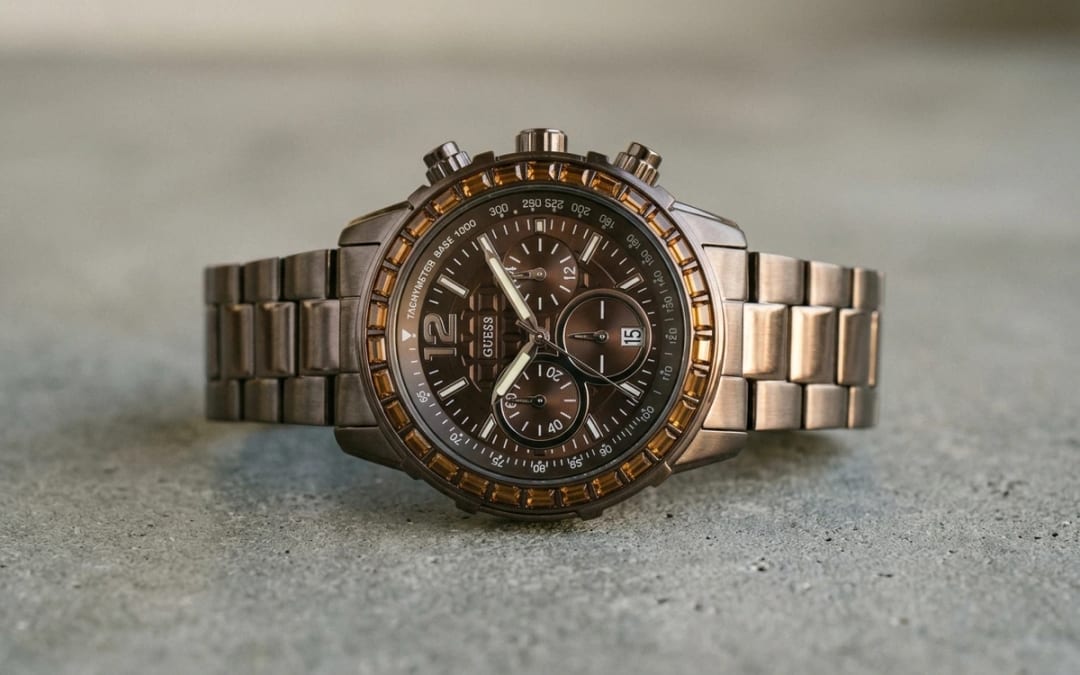
Diameter is measured from one edge of the case to the other, crown excluded. It's the dimension highlighted in all technical sheets, but it only tells part of the story. Here's what each range concretely implies on the wrist.
24-28 mm: the jewellery watch
- Suits very slim wrists (circumference under 14 cm) or those who want a discreet watch-accessory, close to a wrist bracelet.
- Delicate, timeless style, often associated with vintage or jewellery aesthetics.
- Almost exclusively fitted with ultra-slim quartz movements: the case can go below 7 mm thickness.
- Main limitation: reduced readability and visually "lost" effect on a wrist over 16 cm.
This format remains rare: of our 2,813 women's watches in stock, only 24 display a 22 mm dial. If this size interests you, the guide Roberto Cavalli or Just Cavalli details the brands that still offer it.
28-32 mm: the versatile size
- The best-selling range on women's wrists of 14 to 16 cm.
- Visible enough to be noticed, discreet enough to go from a business meeting to an evening out.
- Compatible with almost all clothing styles: suit, evening dress, jeans.
- First choice for a single watch capable of covering all occasions.
33-36 mm: modern and bold
- Suited to wrists of 15 to 17 cm, it occupies visually about 60 to 70% of the flat surface of the wrist.
- Can accommodate complications (date, moon phase, small counter) without looking cluttered.
- Perfect for a casual-chic look or for an entry-level automatic watch whose movement requires more volume.
37-42 mm: oversized and "boyfriend watch"
- Assumes a strong presence. On a wrist smaller than 17 cm, it creates an intentional offset effect, not a flaw: it's a stylistic choice.
- Worn slightly loose, it reinforces the "borrowed watch" effect characteristic of the boyfriend style.
- Often contains a chronograph, a tachymetre bezel or a multi-zone dial: legibility is a functional argument, not merely aesthetic.
- Less suited to very fitted outfits with narrow long sleeves: the case can catch at the wrist.
The lug rule: quick verification in store
This point matters all the more because some brands offer the same collection across very different diameters: at Marc Jacobs, the Henry line ranges from 34 to 43 mm and the Amy line goes down to 20 mm. Our guide to Marc Jacobs women's collections details these ranges collection by collection.
The lugs (the side attachments of the strap) must not protrude beyond the width of your wrist seen from above. If they extend on both sides, the case is too wide for your build. This criterion is more reliable than the stated diameter: on two 36 mm models I regularly compare in store, the difference in lug protrusion can reach 4 to 5 mm depending on the case design.
To go further on technical criteria related to water resistance and crystal type, our complete guide to water resistance details the ATM standards applicable to women's watches as well as men's.
Case thickness: comfort under sleeves and bold style
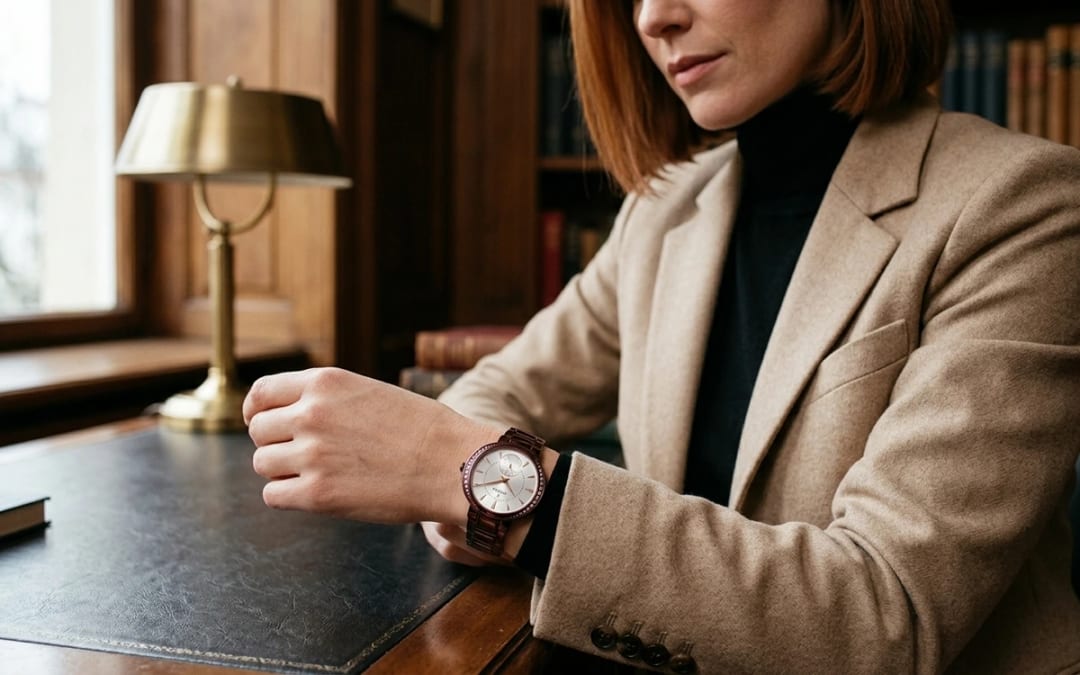
Thickness is measured from the case back to the top of the crystal. It depends directly on the movement inside: a flat quartz hovers around 5-6 mm, while an automatic with date often exceeds 10 mm.
Less than 8 mm: maximum slenderness
- The height of discretion. Slips under any cuff without resistance.
- Almost exclusively fitted with compact quartz movements or high-end ultra-thin mechanical calibres.
- Light sensation on the wrist: you'll forget you're wearing it.
- Less room for a busy dial or multiple complications.
8-10 mm: the standard versatile range
- The most common bracket in women's collections from brands like Michael Kors or Tommy Hilfiger.
- Compatible with standard quartz movements and the most compact automatics.
- Good balance between wrist presence and easy passage under sleeves.
- Moderate weight: pleasant over an entire day.
10-14 mm: bold and functional
- Typical of chronographs, sports watches and automatic calibres with large power reserve.
- Visible and intentional: this thickness is part of the watch's aesthetic statement.
- May catch the cuff of a structured jacket. Avoid if your daily life includes many formal outfits with fitted jackets.
- Automatic watches deserve particular attention on this point: consult our automatic watch maintenance guide to understand how the movement influences dimensions.
| Thickness | Suitable use | Associated movement type | Passage under cuff |
|---|---|---|---|
| 6-8 mm | Office, formal evening, jewellery | Ultra-thin quartz, ultra-thin mechanical | No problem |
| 8-10 mm | Versatile daily wear | Standard quartz, compact automatic | Without friction |
| 10-12 mm | Casual, light sport | Standard automatic, quartz chronograph | Slight resistance on fitted jacket |
| 12-14 mm and above | Sport, bold look, multiple complications | Mechanical chronograph, diving | Difficult under narrow sleeves |
Strap width and type: the forgotten balance

Proportions: the practical rule
The strap width (measured between the lugs, where it attaches to the case) should represent approximately 50 to 60% of the case diameter. Concretely: a 32 mm case calls for a 16-19 mm strap, a 28 mm case for a 14-17 mm strap.
- 28 mm case: 14-16 mm strap.
- 32 mm case: 16-18 mm strap.
- 36 mm case: 18-20 mm strap.
- 40 mm case: 20-22 mm strap.
Exception: watches with integrated design (case and strap forming a single unit, like certain sports models) deviate from this rule by construction. Harmony is ensured by the designer from the outset, the classical proportion does not apply.
Comparison of strap types
| Material | Comfort | Style | Maintenance / limitations |
|---|---|---|---|
| Leather (genuine or vegan) | Gradually adapts to the wrist, lightweight | Elegant, classic, professional | Fears water and perspiration. Lifespan 2-3 years depending on use. Replacement: inexpensive |
| Stainless steel | Cool to the touch, notable weight on large models | Robust, modern, versatile | Very water-resistant. Scratches possible, polishing possible. Adjustment by link removal |
| Milanese mesh | Flexible, micrometric adjustment, lightweight | Retro-chic, textured, elegant | Can catch fine fabrics. Cleaning with soft brush between links |
| Silicone / rubber | Very lightweight, waterproof, hypoallergenic | Sporty, colourful, casual | Can cause perspiration in high heat. Easy to wash |
| Fabric (NATO, perlon) | Lightweight, breathable, easily interchangeable | Casual, military, colourful | Retains moisture: regular washing necessary |
To understand the impact of moisture on the strap and case, our article on misting and condensation in watches explains why certain straps favour moisture infiltration.
To prioritise
- Strap proportioned to the case (50-60% of the diameter)
- Leather or Milanese mesh for elegant office wear
- Steel or silicone for active or sports use
- Interchangeable strap to vary styles according to outfit
- Check the lug width (in mm) before any replacement strap purchase
To avoid
- Strap too thin under a large case: an inelegant "pinhead" effect
- Unadjusted steel strap: it tilts to the side of the wrist continuously
- Leather in aquatic or intensive sports contexts: rapid degradation
- Milanese mesh with fine-knit jumpers: frequent snagging
- Strap too long without adjustment possibility: discomfort and constant rotation
The technical criteria that influence actual worn size
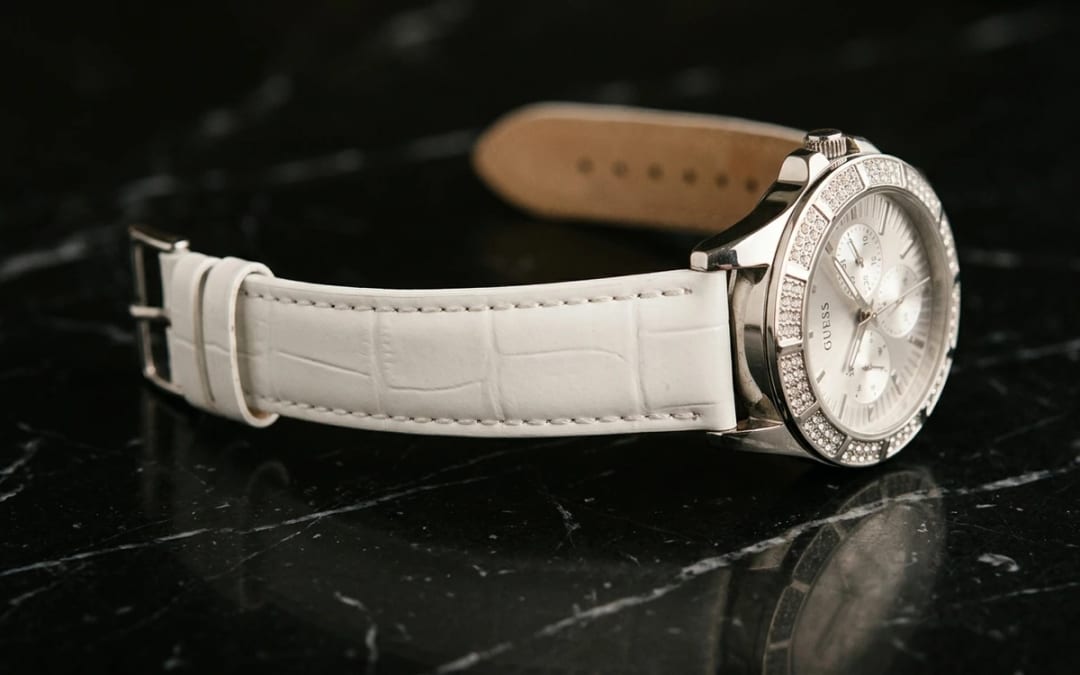
The type of movement and its dimensional impact
The movement is the primary factor that determines the minimum thickness of a case.
- Quartz: Compact module, allows cases from 6 mm. Accurate to ±15 seconds per month on average. Maintenance limited to battery replacement (every 2-3 years). Ideal for thin and lightweight watches.
- Automatic: The rotor and mechanical components impose a minimum thickness of approximately 9-11 mm on standard calibres. No battery, but requires regular wear (or a winder). Service recommended every 5-7 years. Our automatic vs quartz guide details the differences in depth.
- Solar / kinetic: Thickness close to quartz. The photovoltaic cell or kinetic energy recovery mechanism adds little volume. A good compromise for those who want to avoid batteries without the thickness of an automatic.
Water resistance and its link to thickness
Better water resistance implies more seals, a screw-down case back and often a screw-down crown: all elements that increase thickness.
- 3 ATM (30 m): Resists splashes and rain. Not suitable for showers or swimming. Thin case possible.
- 5 ATM (50 m): Occasional showers tolerated, no swimming. Good compromise for daily use without constraints.
- 10 ATM (100 m) and above: Water sports, snorkelling. Case necessarily more robust and thicker. Crown generally screw-down, case back screw-down.
The crystal: durability and fineness
- Mineral crystal: Standard. Resists light scratches, breaks on violent impact. Easily replaceable and at lower cost.
- Synthetic sapphire crystal: Hardness 9 on the Mohs scale (diamond is 10). Virtually scratch-resistant. Often anti-reflective coated. Present on mid-range and high-end models: its thickness is controlled, it does not significantly add weight to the case.
- Acrylic crystal (Perspex): Lightweight and inexpensive. Scratches easily but can be polished. Used on entry-level watches or vintage re-editions.
Guide by wrist morphology and style: which profile matches which watch?
Slim wrist (less than 14 cm): precision and discretion
| Criterion | Recommendation |
|---|---|
| Case diameter | 24-28 mm |
| Thickness | 6-8 mm maximum to maintain proportionality |
| Strap width | 12-16 mm |
| Recommended case shapes | Round, oval, narrow barrel |
| Suitable styles | Classic elegant, jewellery, minimalist |
| Reference brands | Daniel Wellington, Emporio Armani (fine lines) |
On a slim wrist, avoid cases whose lugs visually protrude on each side: the "floating" effect is unflattering and betrays poor sizing.
Medium wrist (14-17 cm): the freedom zone
| Criterion | Recommendation |
|---|---|
| Case diameter | 28-36 mm depending on the desired effect |
| Thickness | 8-10 mm for versatility |
| Strap width | 14-20 mm |
| Suitable styles | All styles: classic, modern, casual |
| Reference brands | Michael Kors, Tommy Hilfiger, Hugo Boss, Tissot |
This is the most flexible morphology in its choices. A wrist of 15-16 cm can wear a discreet 28 mm for the office and an assertive 36 mm for the weekend without a disproportionate effect in either case.
Large wrist (more than 17 cm): space for assertion
| Criterion | Recommendation |
|---|---|
| Case diameter | 34-42 mm |
| Thickness | 10-14 mm acceptable |
| Strap width | 18-22 mm |
| Suitable styles | Sports, oversize, chronograph, boyfriend watch |
| Reference brands | Michael Kors Access, Festina Chronograph, Citizen Promaster |
On a large wrist, a 28 mm watch can look lost. Aim for a minimum of 34 mm for a proportionate result, unless there is a deliberate stylistic intention.
Buying online: precautions to avoid nasty surprises
The information to note on the product sheet
- Case diameter: crown included or not (precision varies by brand). Some manufacturers include the crown, others do not: the difference can reach 2-3 mm.
- Total thickness: crystal included. This is the measurement that counts for passing under sleeves.
- Strap lug width: in mm between the lugs. Useful if you plan to change the strap later.
- Total weight: when indicated. A 42 mm steel case can weigh twice as much as a case of the same size in aluminium or titanium.
- Total strap length: lugs included. Compare with your wrist circumference plus 2-3 cm margin for adjustment.
Analyse photos and reviews
- Wrist shot photos are more reliable than white background visuals: they give a real idea of proportions and visual effect.
- Presentation videos show crystal reflections, brushed/polished finishes and bracelet movement.
- Customer reviews are available on Temovio.
Purchasing conditions at Montres Outlet
Free delivery to mainland France, subject to our terms, delivery within 3 to 5 days. Returns accepted within 14 days if the watch does not meet your dimensional or stylistic expectations. 2-year warranty on all models. If you have any technical questions about a specific reference, our team is available via the contact page.
Summary: size guide for popular styles in 2026
| Style | Diameter | Thickness | Bracelet | Price tier |
|---|---|---|---|---|
| Classic elegant (office, evening) | 26-32 mm | 6-8 mm | Fine leather, Milanese mesh 14-16 mm | mid-range |
| Modern versatile (everyday) | 32-38 mm | 8-10 mm | Steel, structured leather, mesh 16-20 mm | mid-range to accessible upper range |
| Assertive sports (leisure, weekend) | 36-42 mm | 10-14 mm | Robust steel, silicone, thick leather | mid-range to accessible upper range |
| Oversize "boyfriend" | 38-44 mm | 10-12 mm | Steel, soft leather, often interchangeable | mid-range to accessible upper range |
For sports watches with enhanced water resistance, find our selection and technical criteria in our guide to water-resistant watches. Advice on sapphire crystal and O-rings applies to women's models exactly as much as to men's models.
Find all our practical guides in the care and maintenance section to look after your watch once you have chosen the right size.

Find your watch
You know your wrist circumference and ideal diameter range. Browse our selection of authentic women's watches on Montres Outlet, where 28-34 mm represents over 60% of sold references, or consult our guides to refine your choice.
Frequently asked questions
What watch diameter should I choose for women based on my wrist size?
How do I correctly measure my wrist size for a women's watch?
Are oversize watches suitable for women with small wrists?
What is the difference between case diameter and actual watch size?
How do I choose between a classic watch and a trendy oversize women's watch?
Can a watch that is too thick cause discomfort in daily wear?
Why should women with small wrists prioritise slim watches?
Should I consider my personal style when choosing the size of my women's watch?
Read next
More in this vein
Buying guides
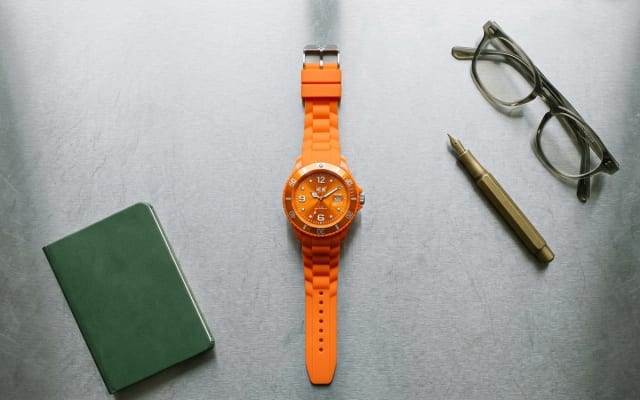
200m Water Resistant Watch: The ideal companion for diving
Buying guides
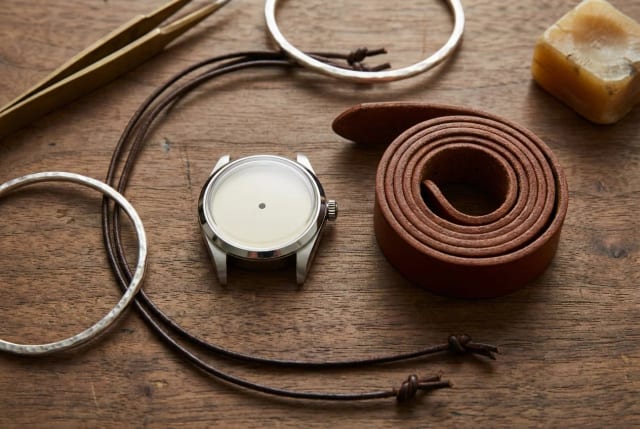
The materials making a comeback in both watchmaking and creative jewellery
Buying guides
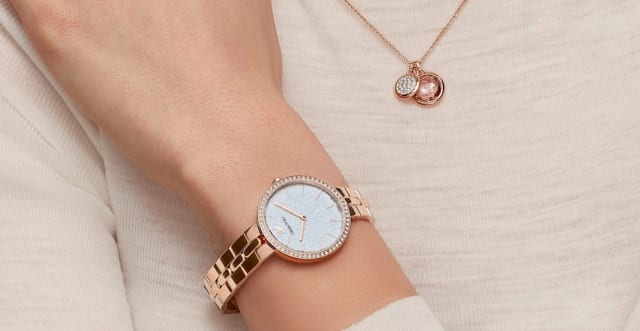
Swarovski watch: crystal, Swiss Made, what you're really paying for
Buying guides
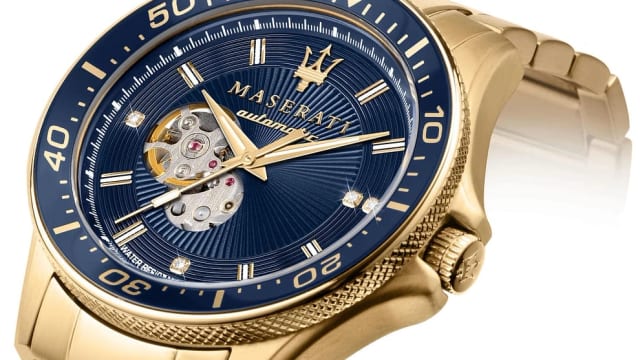
Maserati Sfida R8823140004: autopsy of an open heart NH70
Buying guides
Skeleton watch: the complete guide from a watchmaker (men's, women's, automatic)
Buying guides
Rolex-style watch: Submariner, Datejust and affordable homages
Buying guides
Rectangular watch: from the Cartier Tank to affordable alternatives
Buying guides