

Updated 2 May 2026 · 13 min read · By Antoine Moreau, master watchmaker: 20 years in the workshop, Besançon School of Watchmaking.
An automatic watch has no battery to change, but it is not maintenance-free. The mechanical movement requires regular care: daily habits, periodic servicing by a watchmaker, seal inspection. Well maintained, an automatic can last 30, 50, sometimes 100 years. Neglected, it drifts, seizes up, and damage accumulates silently.
Diagnosis in 5 seconds
Why servicing an automatic is different

An automatic watch differs from a quartz on one crucial point: its energy comes from a spring wound by the rotation of a rotor, itself driven by wrist movements. Depending on the complexity of the calibre, this mechanism contains around a hundred parts for a simple calibre, many more for a calibre with complications. Each pivot, each gear tooth, each jewel receives a highly specific watchmaking oil, incompatible with any other lubricant.
The problem: these oils do not last indefinitely. Depending on the formulations, they dry out or migrate over the years, hence a service roughly every 4 to 7 years, depending on the manufacturer. When lubrication disappears, friction increases, parts wear prematurely and accuracy drops. Add seals that age under the effects of UV, heat and chemical products, and you understand why a structured maintenance plan is essential: regardless of the brand or price of the watch.
Quartz watches require a battery replacement every 2 to 5 years and less frequent servicing. Automatics require more attention, but they can also last for generations if treated correctly.
Daily habits that make the difference
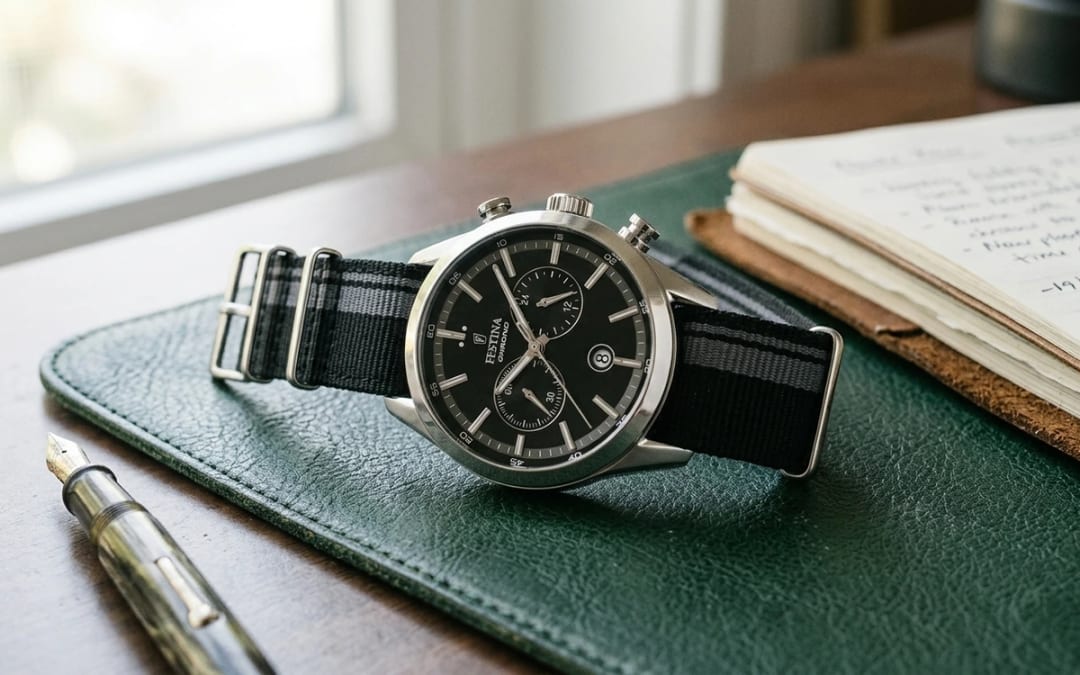
Regular wear: the first natural winding
The rotor of an automatic watch pivots freely; depending on the calibre, it winds the mainspring in one direction only or in both (thanks to a reverser). Ordinary wrist movements (walking, everyday gestures) generate sufficient rotation to maintain the mainspring at correct tension. As a general rule, 8 to 10 hours of daily wear is sufficient for the vast majority of calibres.
If you wear the watch less often, the spring unwinds and the watch stops. This is not catastrophic in itself, but stationary oils age less well: in the services I handle, calibres that have spent long periods in a drawer consistently show more congealed oils than those worn regularly, even at the same age.
For high-impact activities (tennis, mountain biking, martial arts, pneumatic drill), remove the watch. Repeated shocks transmit vibrations directly to the balance and pinions. It is not the sport that wears the movement, it is the repetition of micro-shocks.
Cleaning after each wear
Sweat is slightly acidic and attacks metal finishes, clogs the links and degrades crown seals. After each day of wear, a dry microfibre cloth on the case and crystal is sufficient. For a link bracelet, a soft-bristled brush (a new toothbrush works perfectly) cleans the gaps without scratching. Counter-intuitive: rinsing under running water seems more effective, but it accelerates seal wear if water resistance has not been checked recently.
Products to avoid absolutely: perfumes, lotions, sunscreens, solvents, alcohol. These substances attack seals and can damage surface treatments (PVD, DLC, rhodium plating). Apply your cosmetics before putting on the watch, never after.
Storage: your watch deserves its own space
When the watch is not on your wrist, the original box or a compartmented case serves three functions: protection against shocks, insulation against dust, and a barrier against moisture. Each watch must occupy its own compartment: in my workshop, I have recovered dials starred with micro-scratches caused solely by friction from a neighbouring crown.
Avoid storing an automatic next to Bluetooth speakers, phones laid flat or any magnetic object. The balance spring can become magnetised and generate drifts of 30 to 60 seconds per day: on the ETA 2824 movements I have demagnetised in the workshop, the correction was often spectacular. A professional demagnetiser solves the problem in a few seconds, and a full service normally includes demagnetisation.
Manual winding: when and how

Most modern automatics accept manual winding via the crown, useful in two specific cases: the watch has just stopped after several days without being worn, or you have just acquired it and wish to give it an initial tension before putting it on your wrist. 25 to 30 turns are enough to get it going again on the majority of common calibres; wearing it then completes the winding.
Correct procedure
If the crown is screwed (diving type), unscrew it anticlockwise until you feel it release, without pulling. In winding position (crown pushed in), turn clockwise, slowly, 20 to 30 times. You should perceive regular resistance and rhythmic clicking: this is the winder ratchet working normally. Irregular clicking or sudden resistance are the two signals that immediately alert me to a ratchet problem.
There is no stop to look for: an automatic's mainspring has a slipping bridle that slides inside the barrel once the spring is fully wound. You therefore cannot overwind an automatic, and no stop can be felt. If, on the other hand, the crown catches, forces or jams, stop and see a watchmaker.
Once wound, push the crown and systematically rescrew it if your watch is equipped with one. Contrary to what many wearers believe, a screwed crown that is not properly closed is enough to cancel the stated water resistance, even on a watch rated 20 ATM.
Professional servicing: the cornerstone of longevity

Why oils dry out and what it costs to do nothing
Watchmaking oils are ultra-light synthetic formulations, measured in nanolitres at precise points on the movement: nothing like standard mechanical oil. Over the hundreds of services I have carried out, movements neglected beyond eight years consistently show marked pivots and eroded jewels. These parts often cost more to replace than the service itself, because degraded oils migrate, dry out and turn each pivot into an abrasive.
A well-lubricated movement drifts by a few seconds per day. On the ETA 2824 movements I regularly disassemble, a movement with dry oils can lose or gain several minutes daily, compared to a few seconds in good condition. The first visible sign of failing lubrication is a drift that worsens progressively over several weeks.
Frequency according to use
The rule of roughly 4 to 7 years, depending on the manufacturer, applies to normal daily use. Two factors shorten this interval:
- Intensive use or wear in hostile environments (sea, building site, daily sport): service towards the lower end of this range and have the water resistance checked more often.
- Regular exposure to large temperature variations: thermal shocks accelerate oil migration.
Conversely, a watch stored in good conditions and worn infrequently can aim for the upper end of this range before service, provided the seals are regularly checked.
What a complete service includes
Here are the steps carried out by a qualified watchmaker during a thorough service:
- Complete movement disassembly: each component is separated and identified.
- Ultrasonic bath cleaning: parts pass through successive baths with appropriate watchmaking solvents. All traces of old oils, dust and oxidation are removed.
- Inspection and replacement of worn parts: pivots, wheels, spring, hairspring, balance. Parts showing abnormal wear are replaced with original parts or equivalent quality.
- Precision lubrication: each friction point receives the correct oil in the exact quantity. There are several formulations depending on the part (light oil for the balance, thick grease for time setting, etc.).
- Movement adjustment: the watch is measured on a timegrapher in 5 to 6 positions to adjust amplitude and drift.
- Seal replacement and water resistance test: all seals (crown, caseback, crystal) are systematically changed. Water resistance is checked at the pressure corresponding to the watch's water resistance rating.
- Final inspection over several days: the watch is observed in real conditions before return.
Indicative service costs
| Type of movement | Indicative cost | What is included |
|---|---|---|
| Standard movement (ETA 2824, Miyota, etc.) | moderate | Cleaning, lubrication, adjustment, seals, water resistance test |
| Manufacture or modified manufacture movement | higher | As above + replacement of common wear parts, specific expertise |
| Fine watchmaking, complications (tourbillon, perpetual calendar…) | considerably higher | As above + very high labour time, expensive proprietary parts |
These rates vary depending on the watchmaker, region and condition of the watch. Always request a detailed quotation before commencing work: on the services we handle at Montres Outlet, the gap between an initial quotation and the final invoice is sometimes significant when worn parts are discovered upon opening. An authorised workshop also preserves the 2-year manufacturer's warranty.
Water resistance: a protection that ages
Seals are consumable parts. Made from rubber, silicone or PTFE depending on the brand, they ensure water resistance at three critical points: the crown, the case back and the bezel or crystal. Under the effects of UV, thermal variations and chemical products, they harden, shrink or crack.
A watch rated 10 ATM when leaving the factory may no longer meet that rating a few years later if the seals have not been replaced; only a test can tell. The rating displayed on the dial corresponds to test conditions when new, with new seals: it is an initial value, not a permanent promise.
Practical rules for preserving water resistance
First rule: never manipulate the crown underwater, even on a watch rated 20 ATM. I have opened cases of diving watches recovered with water inside: in half the cases, the cause was a crown operated while submerged, even with new seals. The pressure literally forces water into the threads.
Second rule: avoid humid heat. Showers, saunas, hammams expose seals to vapour well beyond their tolerance range. Heat expands the rubber and creates micro-leaks; the thermal shock that follows makes everything worse. Contrary to what many believe, a 10 ATM watch copes far better with a swim in the sea than with ten minutes of vapour at 70 °C.
Third rule: rinse with fresh water after every contact with salt water or chlorinated water. Chlorine and salt attack the seals and metal finishes. A 30-second rinse under tap water is enough to neutralise deposits.
To go further: our complete guide to misting in a watch distinguishes benign condensation from true infiltration, with the protocol to follow in each case.
Storage and winder: best practices for multiple watches

The winder: useful, not essential
A winder simulates wrist movements by rotating the watch on itself according to a defined programme. It indicates the number of turns per day (TPD) and the direction of rotation (clockwise, anti-clockwise, alternating). Each calibre has its specifications: an ETA 2892 winds effectively at 650 TPD in alternating mode, a Rolex 3135 tolerates up to 800 TPD. Exceeding these values brings no benefit and can stress the clutch mechanism.
The winder is relevant if you regularly alternate between several watches. For a single watch worn daily, it is unnecessary.
To choose a winder correctly according to your calibre (turns per day, direction of rotation, motor quietness), consult our guide to the winder for automatic watches. And to store and protect watches you wear without motorising them, see our complete guide to the watch case.
| Criterion | Entry-level winder | Mid-range winder | High-end winder |
|---|---|---|---|
| Capacity | 1 watch | 2 watches | 4 watches and more |
| TPD programmes | Fixed (650 to 900 TPD) | Programmable, adjustable direction | Advanced cycles, customisable programmes per watch |
| Materials | Plastic, imitation leather | Wood, leather, glass | Precious wood, lacquer, tempered glass, high-end finishes |
| Price tier | entry level | mid-range | accessible upper range |
| Ideal profile | Single automatic, occasional use | 2 watches alternated regularly | Collector, several valuable pieces |
Storage without a winder
If you do not use a winder, store the watch stopped in a case horizontally, dial facing up, in a dry place (relative humidity below 60%), at stable temperature (ideally 15 to 25 °C), away from magnetic sources. Every 2 to 3 weeks, wind it manually (20 turns of the crown) to keep the oils circulating and prevent them from solidifying on contact surfaces.
Common mistakes and risk factors

Do
- Wear the watch at least 8 to 10 hours a day.
- Wipe with a microfibre cloth after each wear.
- Have it serviced roughly every 4 to 7 years, depending on the manufacturer, by a qualified watchmaker.
- Have the seals tested annually if regular water use.
- Wind manually every 2 to 3 weeks in case of prolonged storage.
- Rinse with fresh water after contact with salt water or chlorinated water.
- Remove the watch for high-impact sports.
Do not
- Wear in the shower, sauna or hammam.
- Leave the watch near speakers, phones laid flat or magnets.
- Apply perfume or cream with the watch on your wrist.
- Force the crown in rotation or traction.
- Exceed the recommended TPD in a winder.
- Open the case without appropriate watchmaking tools and skills.
- Ignore misting under the crystal or a sudden loss of accuracy.
Recognising warning signs
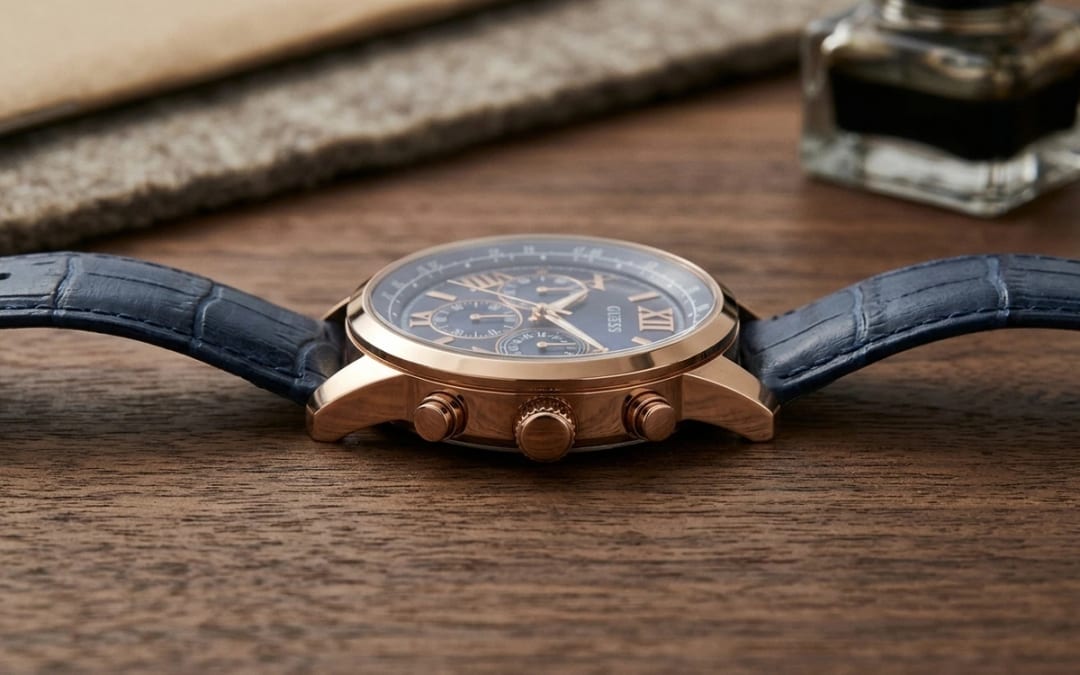
A well-maintained watch makes no unexpected noise, stays within its usual rate (around -10/+30 seconds per day for a standard automatic) and shows no signs of internal moisture. In twenty years of dismantling automatic watches, I have learned that these three criteria account for most problems detectable without opening the case. Here are the six warning signs not to ignore:
- Hands jumping or stopping intermittently: serious mechanical problem, lack of lubrication or damaged component. Immediate consultation required.
- Abnormal noises (grinding, unusual clicking, friction): loose component or excessive friction. The noise does not disappear on its own and indicates ongoing deterioration.
- Seconds hand advancing in jerks: on an automatic watch, the seconds hand advances in regular micro-steps (6 to 8 per second), almost smoothly. Clear one-second or irregular jerks signal a problem with the balance wheel or gearing.
- Drift outside the usual range, or sudden: a standard automatic drifts by around -10 to +30 seconds per day, a better-regulated calibre much less. Outside this range, or if the rate changes suddenly, the oils are probably the cause or the movement has suffered a shock.
- Misting or condensation under the crystal: clear sign of compromised water resistance. Moisture corrodes movement components quickly, within a few days. Do not delay.
- Crown stiff, loose or difficult to lock: indicates a problem with the stem or winding mechanism. Forcing it will systematically make matters worse.
If in doubt, a consultation with a watchmaker is free at most workshops. Contact our after-sales service if your watch purchased from us shows any of these symptoms during the 2-year manufacturer's warranty period (2 years).
To find all our practical resources, consult the maintenance advice section of the blog.
Looking for a reliable automatic watch, well-maintained and at outlet price?
Our watches come with a 2-year manufacturer's warranty, free delivery to mainland France, subject to our terms (3 to 5 days) and returns accepted within 14 days. Customer reviews are available on Temovio.
Frequently asked questions about automatic watch maintenance
How often should an automatic watch be serviced?
How many hours per day should you wear an automatic watch?
How to properly clean an automatic watch daily?
What are the enemies of an automatic watch to avoid?
What should I do if my automatic watch stops for several days?
Should I remove my automatic watch for sleeping or sport?
Is regular wear really the best winding method for an automatic?
Can you use specialised products to clean a watch bracelet?
Another common aesthetic concern, including on new watches: a visible particle between the crystal and the dial. Our complete guide to removing dust from the dial explains when to do it yourself with simple tools and when to take it to the workshop.
Read next
More in this vein
Buying guides
200m Water Resistant Watch: The ideal companion for diving
Buying guides
The materials making a comeback in both watchmaking and creative jewellery

Buying guides
Swarovski watch: crystal, Swiss Made, what you're really paying for
Buying guides
Maserati Sfida R8823140004: autopsy of an open heart NH70
Buying guides
Skeleton watch: the complete guide from a watchmaker (men's, women's, automatic)
Buying guides
Rolex-style watch: Submariner, Datejust and affordable homages
Buying guides
Rectangular watch: from the Cartier Tank to affordable alternatives
Buying guides