
Is sapphire crystal unbreakable? The video guide
The video guide · 2:11
Chapters
Transcript
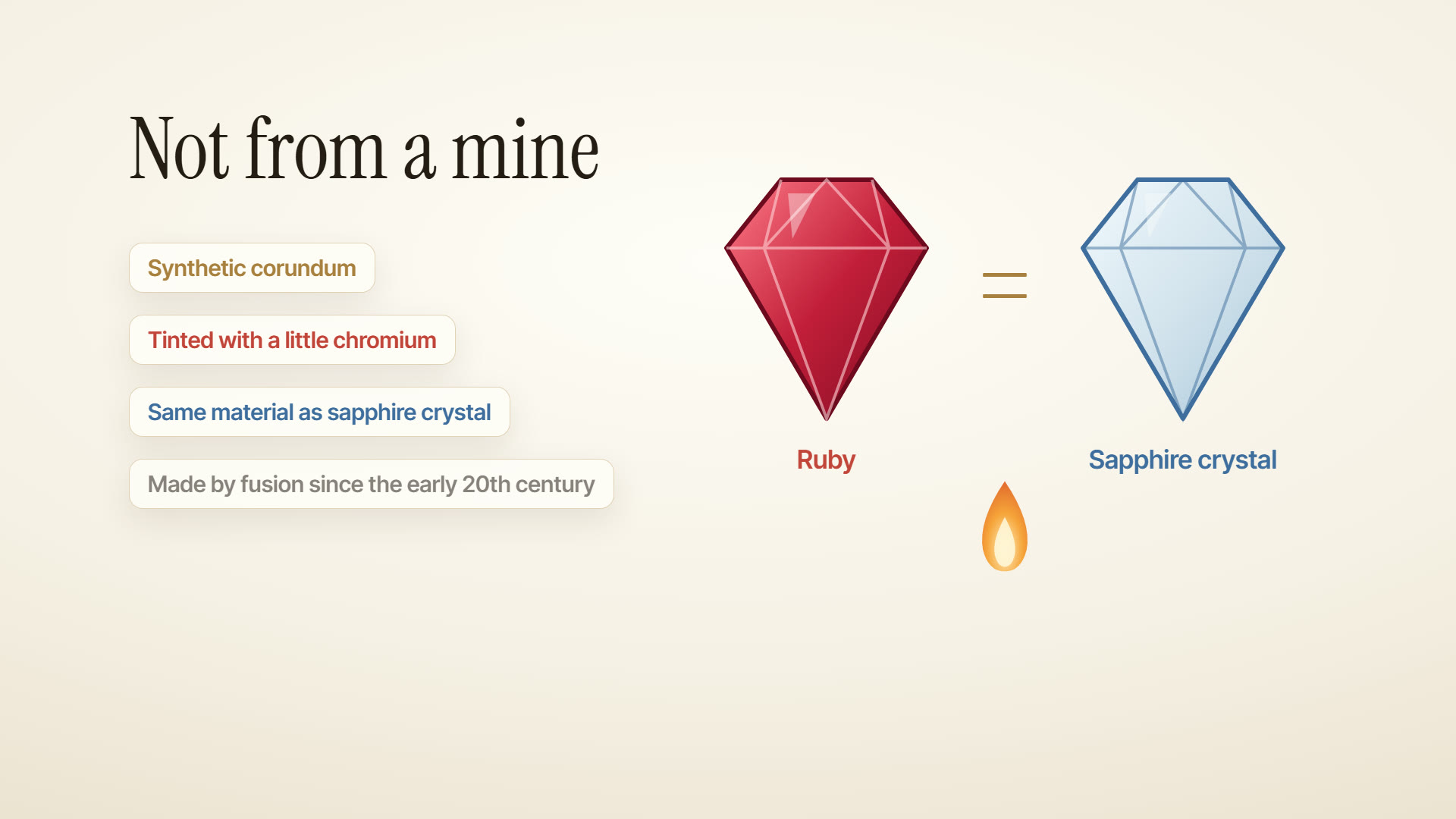
A sapphire crystal is scratch-proof, or nearly. Unbreakable, no. And those are two very different things. This sapphire doesn't come from a mine. It is synthetic corundum, aluminium oxide. A very pure powder is melted in a flame hotter than two thousand degrees, and it crystallises. The process dates from nineteen hundred and two, and it is still in use. On the Mohs scale, corundum sits at nine, just below diamond, at ten. Measured under the ISO standard for watch glasses, it is about three times harder than mineral glass. That is why it hardly ever scratches. Sand and dust contain quartz, harder than mineral glass, but much softer than sapphire. To scratch it, you need something at least as hard: diamond, or certain abrasives. But hard does not mean tough. Sapphire is brittle: it does not bend, it snaps. The same standard checks this with a steel ball, dropped from higher and higher. At the same thickness, sapphire breaks in the same range as a good mineral glass, sometimes even sooner. Mineral glass, being softer, scratches more quickly. Acrylic, often called Plexiglas, scratches more easily still, but a light scratch comes out with polishing paste. In everyday wear, sapphire is the safest: scratches come from grains harder than the glass, and almost none are harder than sapphire. Its real enemy is a sharp knock, against the corner of a table or on a tiled floor. Discover a whole selection of watches at Montres Outlet.
More video guides
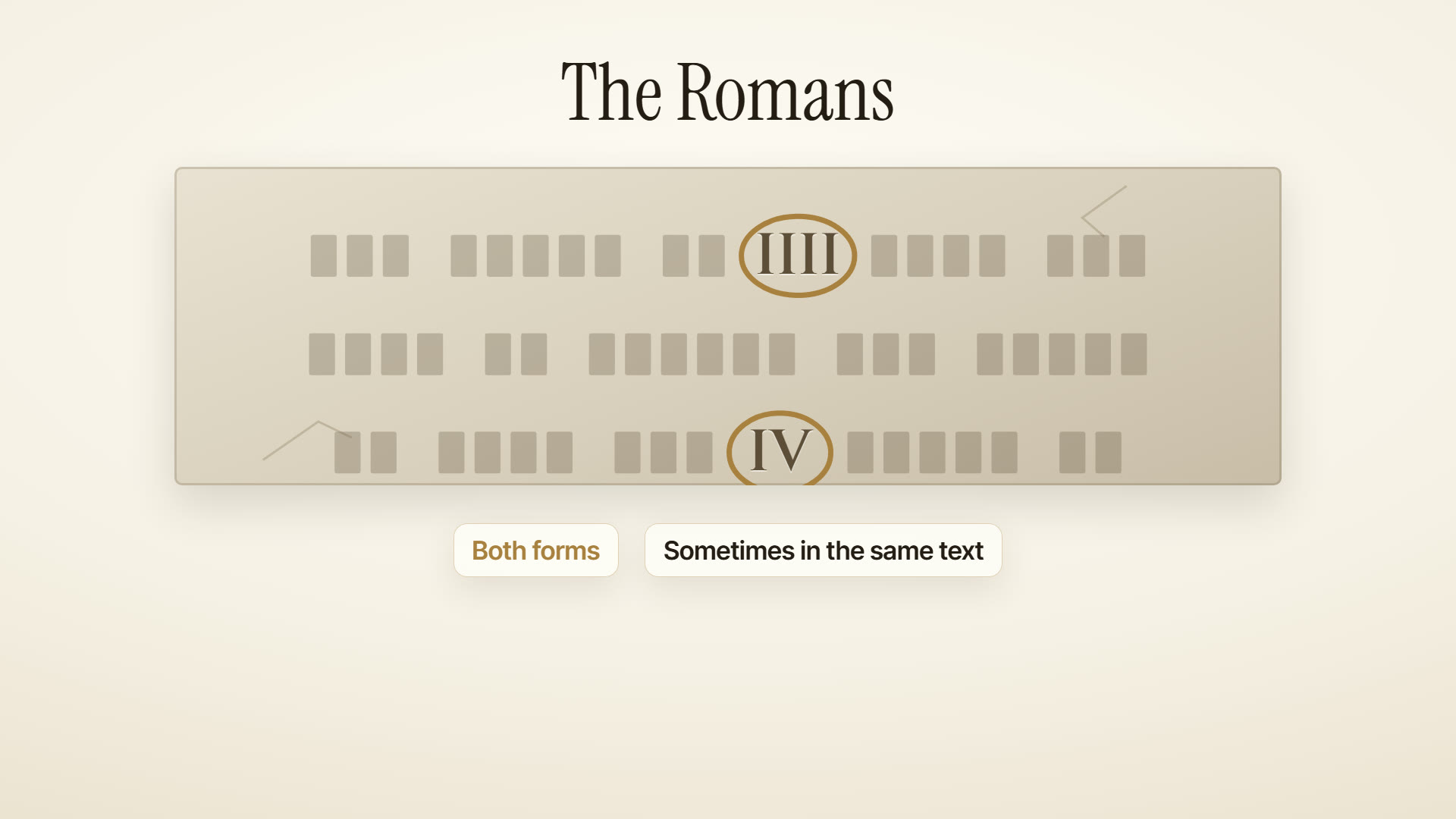 ▶ 2:03
Why do dials show IIII instead of IV? The video guide
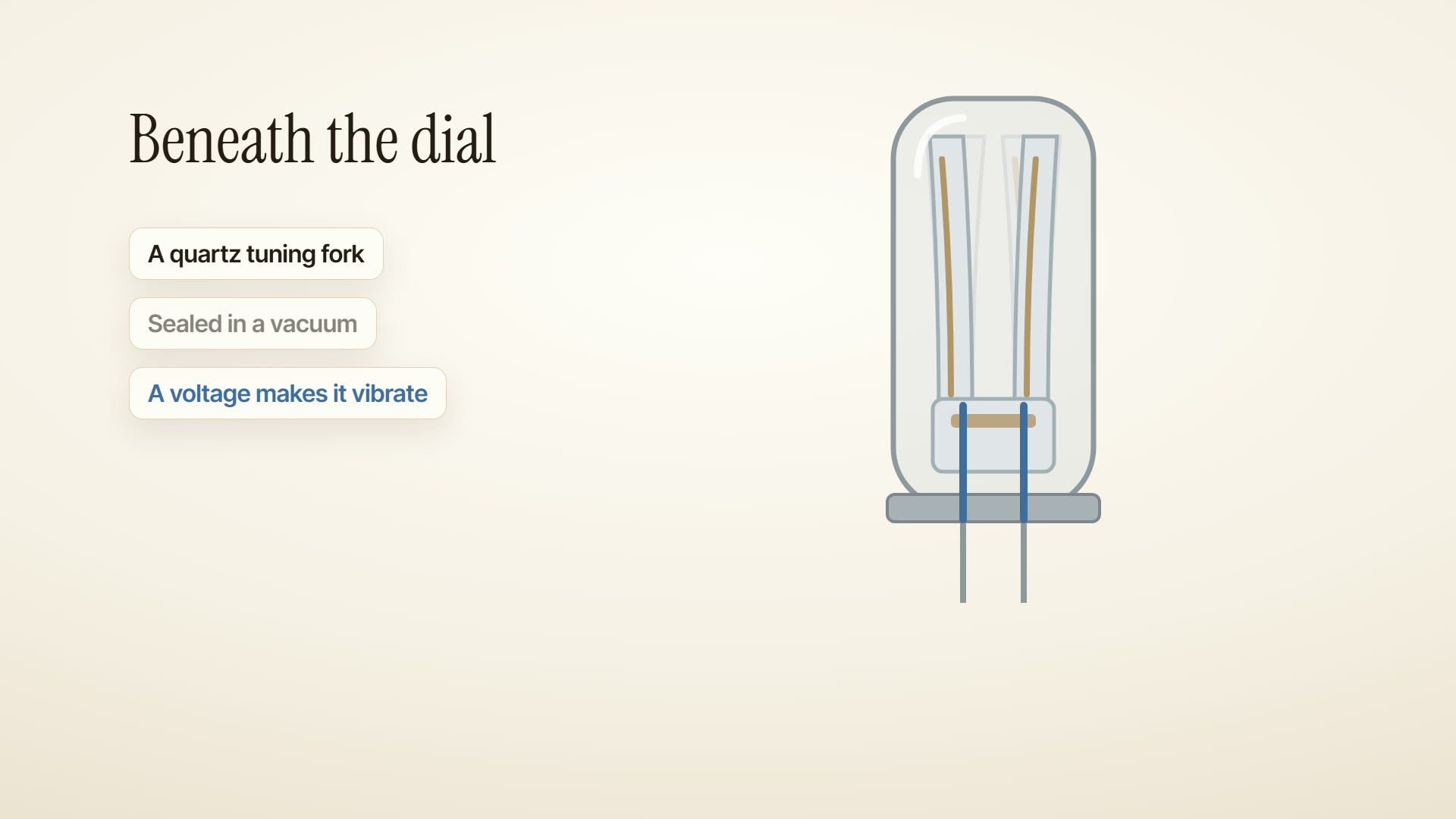 ▶ 2:25
Why do quartz watches run at 32,768 Hz? The video guide
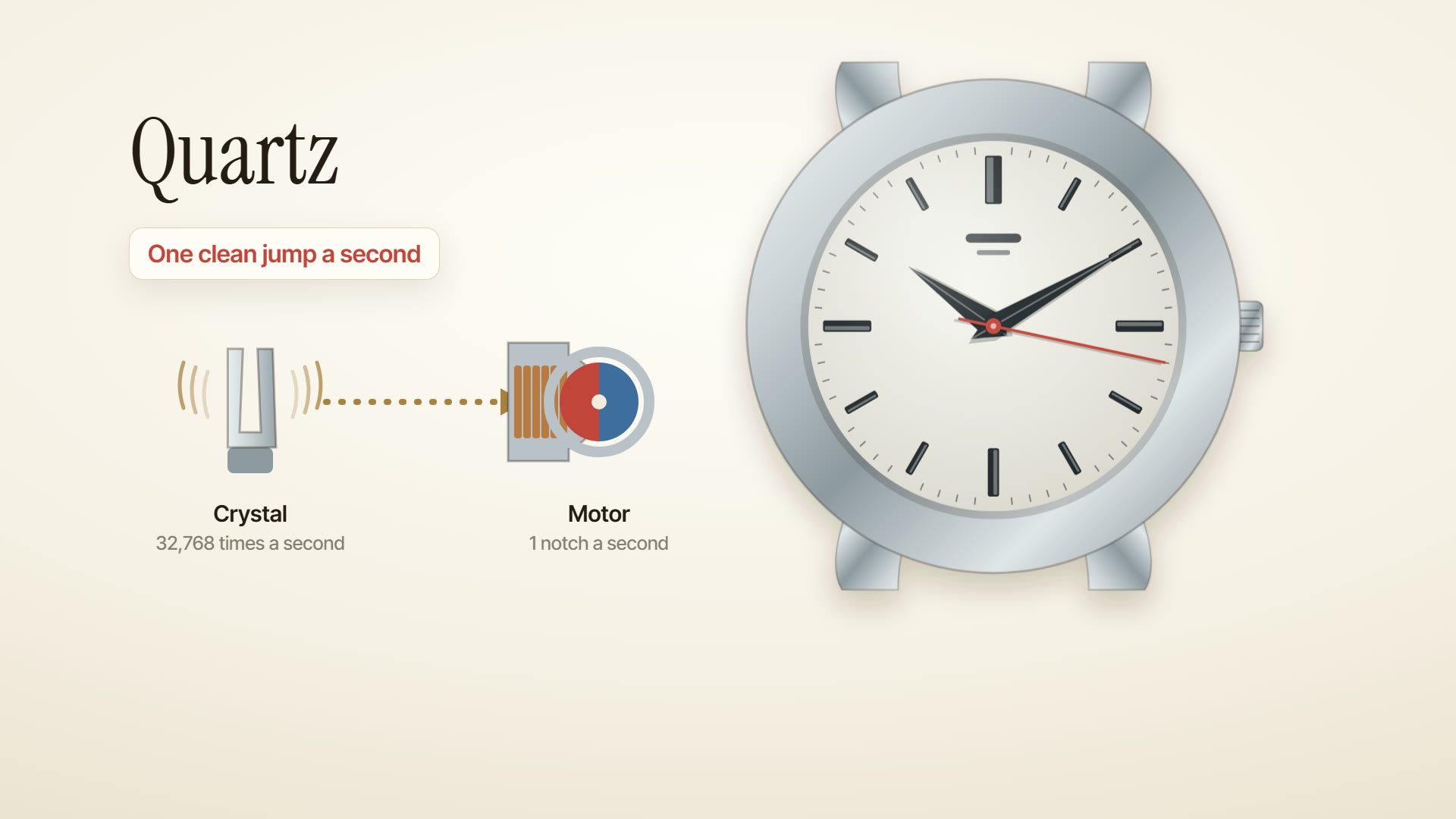 ▶ 2:16
Quartz or automatic? The video guide
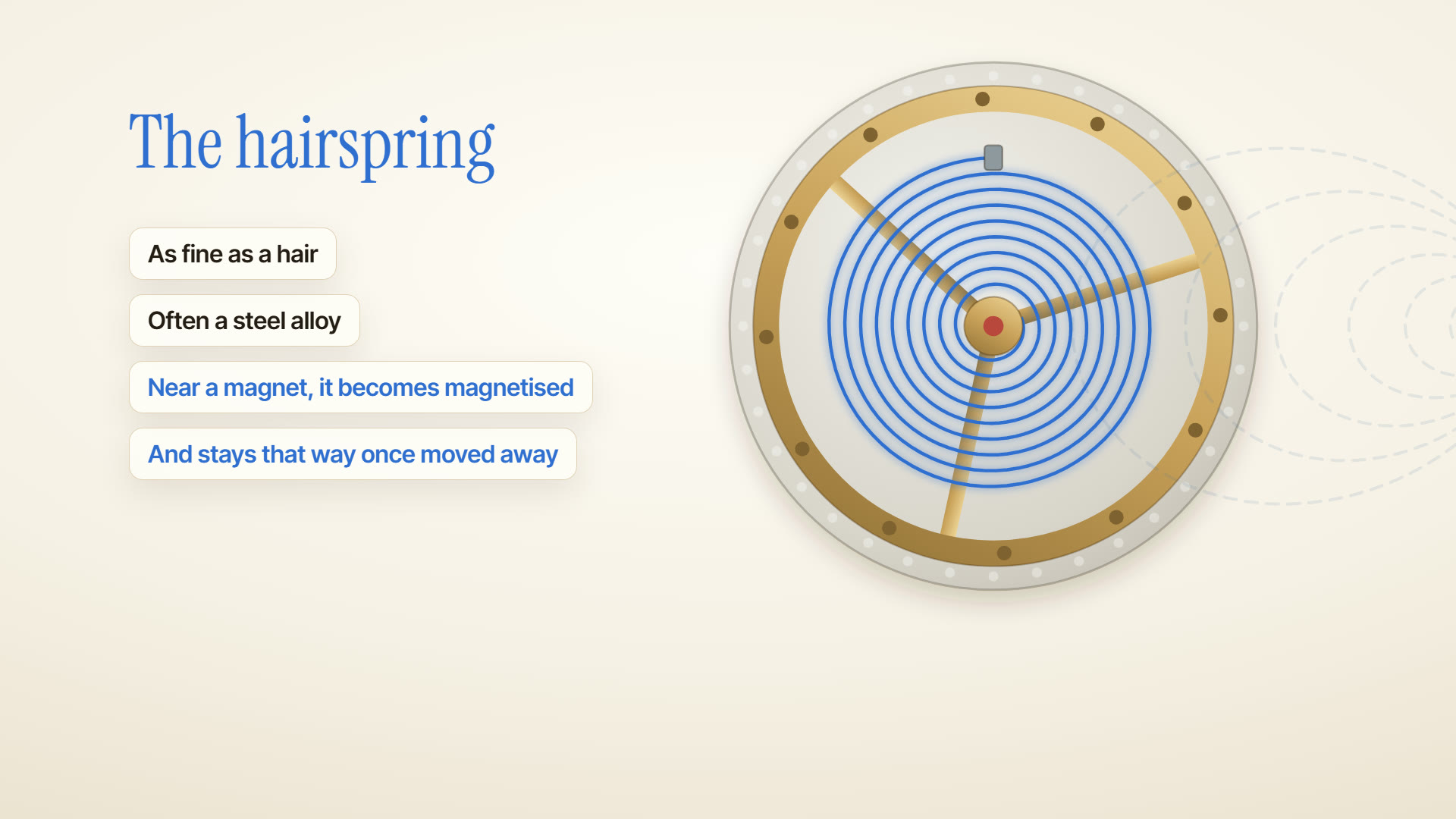 ▶ 2:26
Why does a magnet make your watch run fast? The video guide
 ▶ 2:25
What are the jewels in a watch for? The video guide
 ▶ 2:17