
What are the jewels in a watch for? The video guide
The video guide · 2:25
Chapters
Transcript
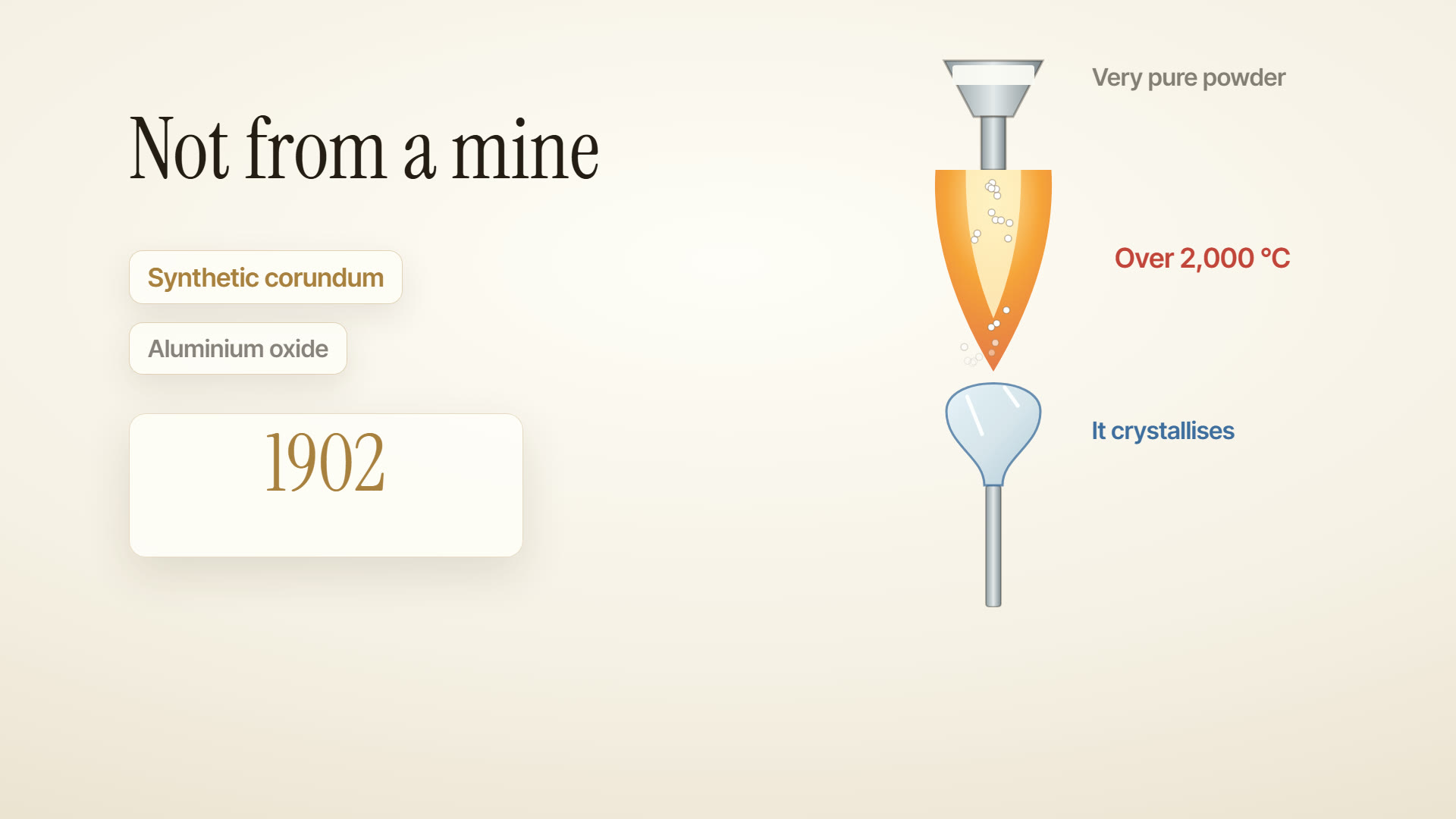
Seventeen jewels, twenty-five jewels, even a hundred. The more there are, the better the watch? It is not that simple. These rubies don't come from a mine. They are synthetic corundum, tinted with a little chromium: the same material as sapphire crystal, made by fusion since the early twentieth century. Their job: to act as bearings. The steel pivots of the wheels turn in a drilled, polished ruby. Friction stays stable and wear goes down: that is the very definition of a functional jewel in the ISO standard. They are needed above all where everything moves non-stop: the balance, the lever, the escape wheel, then the wheels of the train. A hand-wound mechanical movement can make do with seventeen jewels. Automatic winding and the date add more: at the same maker, seventeen jewels for the hand-wound version of a calibre, twenty-five for the automatic version with date. So a simple automatic has around twenty, and twenty-one or twenty-five says nothing about its accuracy: the gap is mostly down to the date or the winding. In the middle of the twentieth century, the race for jewels got out of hand. One watch claimed a hundred: eighty-three were set around the edge of the rotor, where they carried nothing. Hence the ISO eleven twelve standard: only functional jewels may be advertised, those that act as bearings or transmit a force. Decorative jewels no longer count. A quartz watch has very few, sometimes one, sometimes none. That is not a flaw: it has no balance and no escapement, the parts that need them most. Discover a whole selection of watches at Montres Outlet.
More video guides
 ▶ 2:03
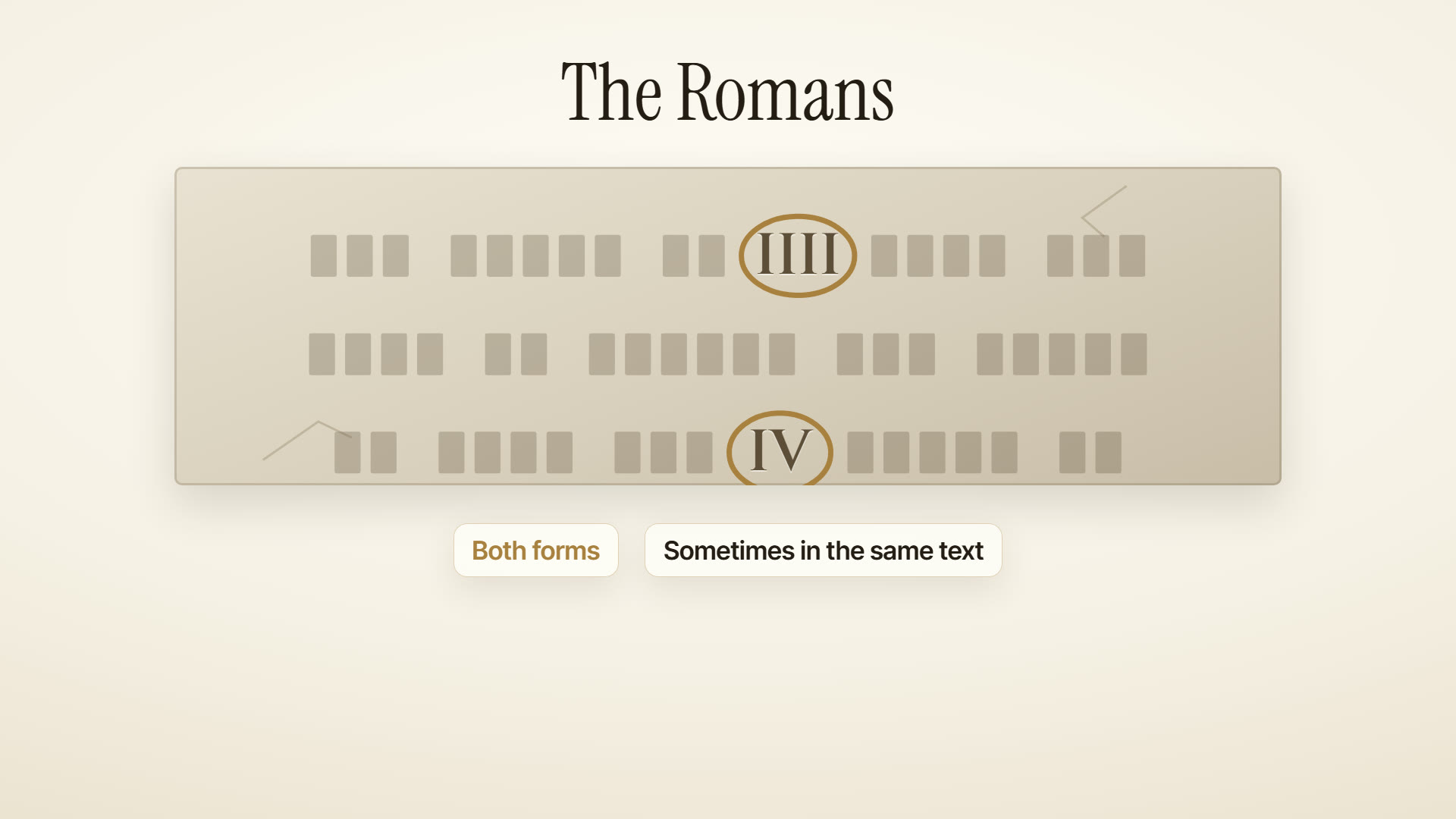
Why do dials show IIII instead of IV? The video guide
 ▶ 2:25
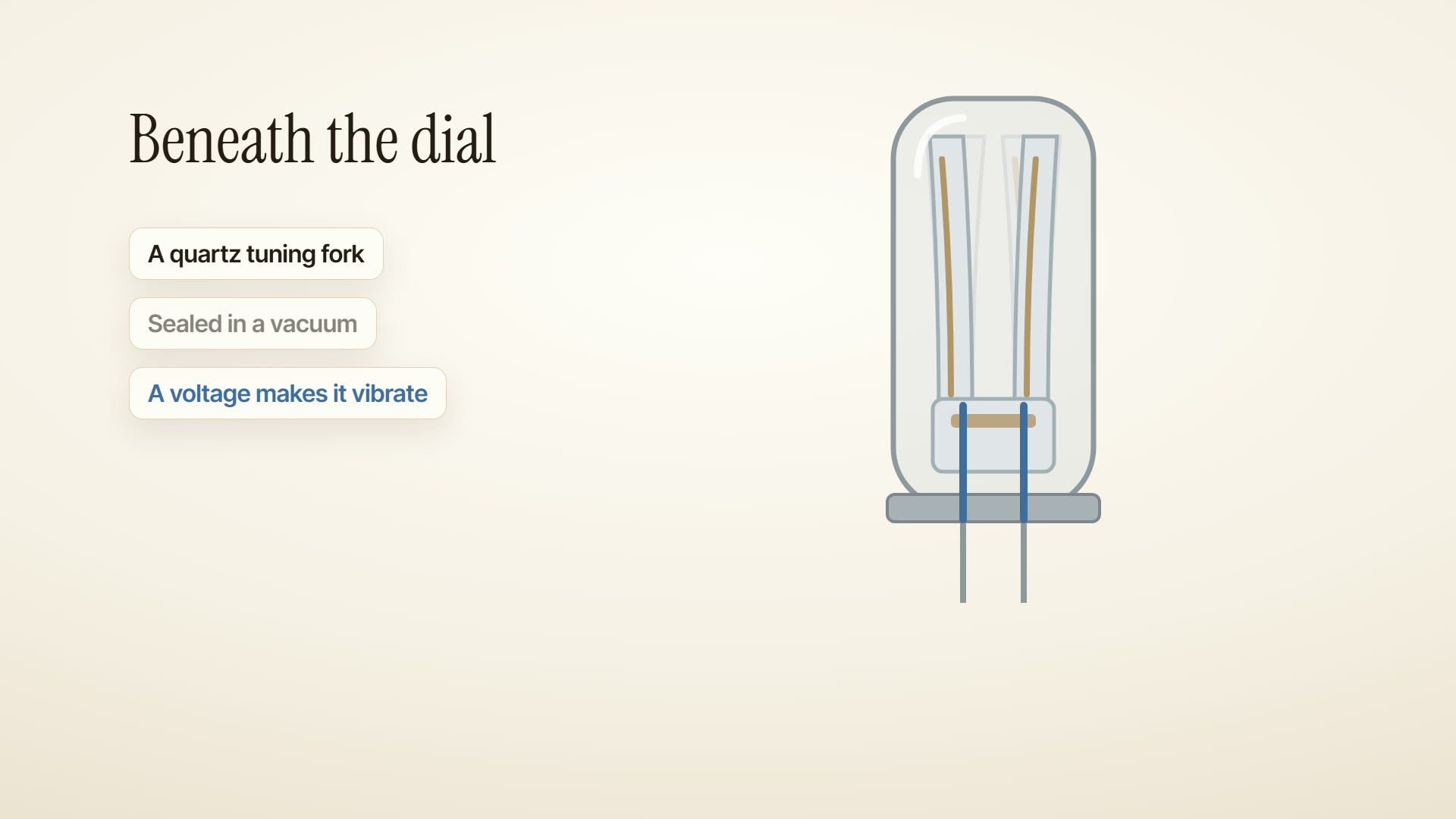
Why do quartz watches run at 32,768 Hz? The video guide
 ▶ 2:16
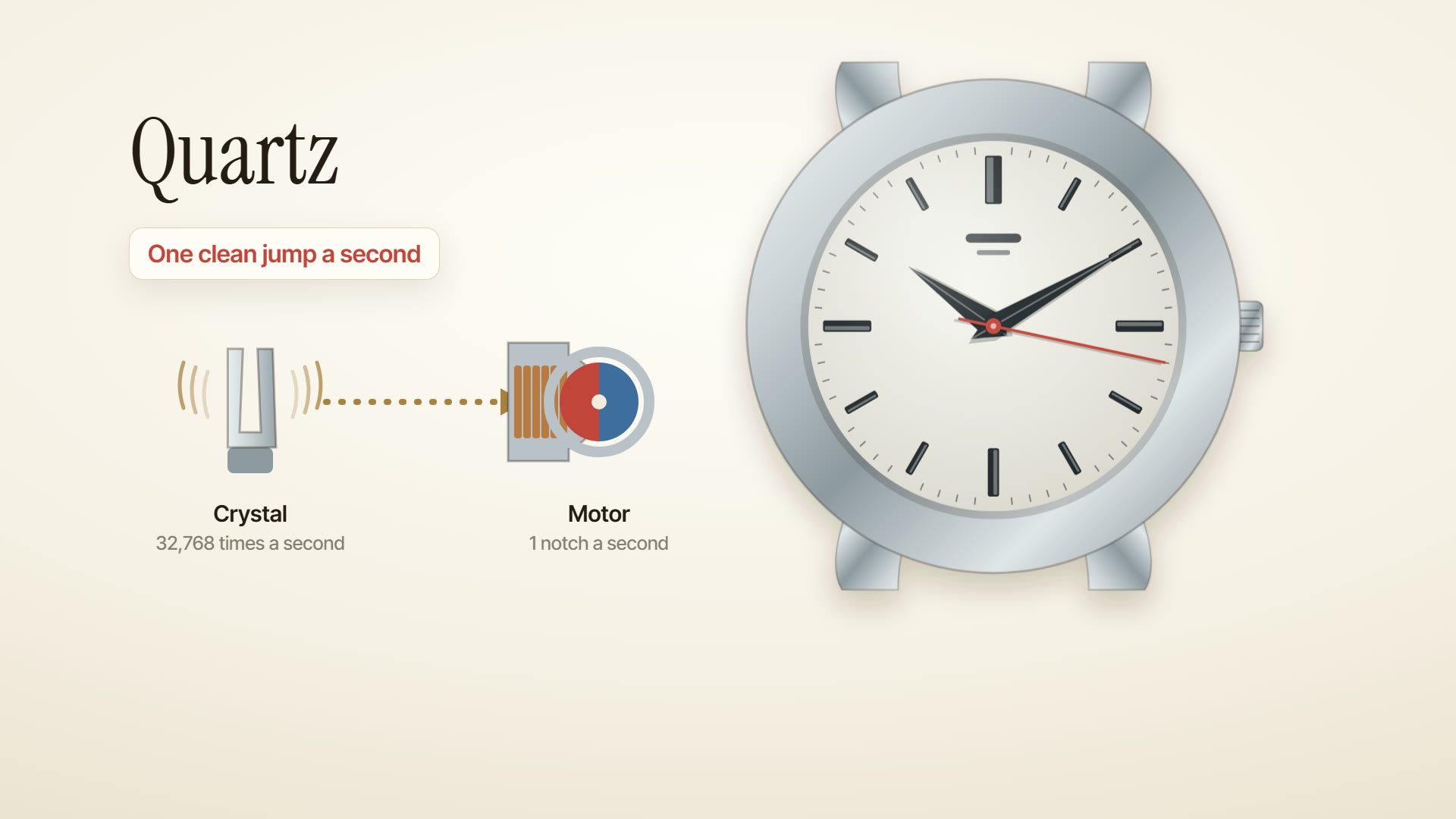
Quartz or automatic? The video guide
 ▶ 2:26
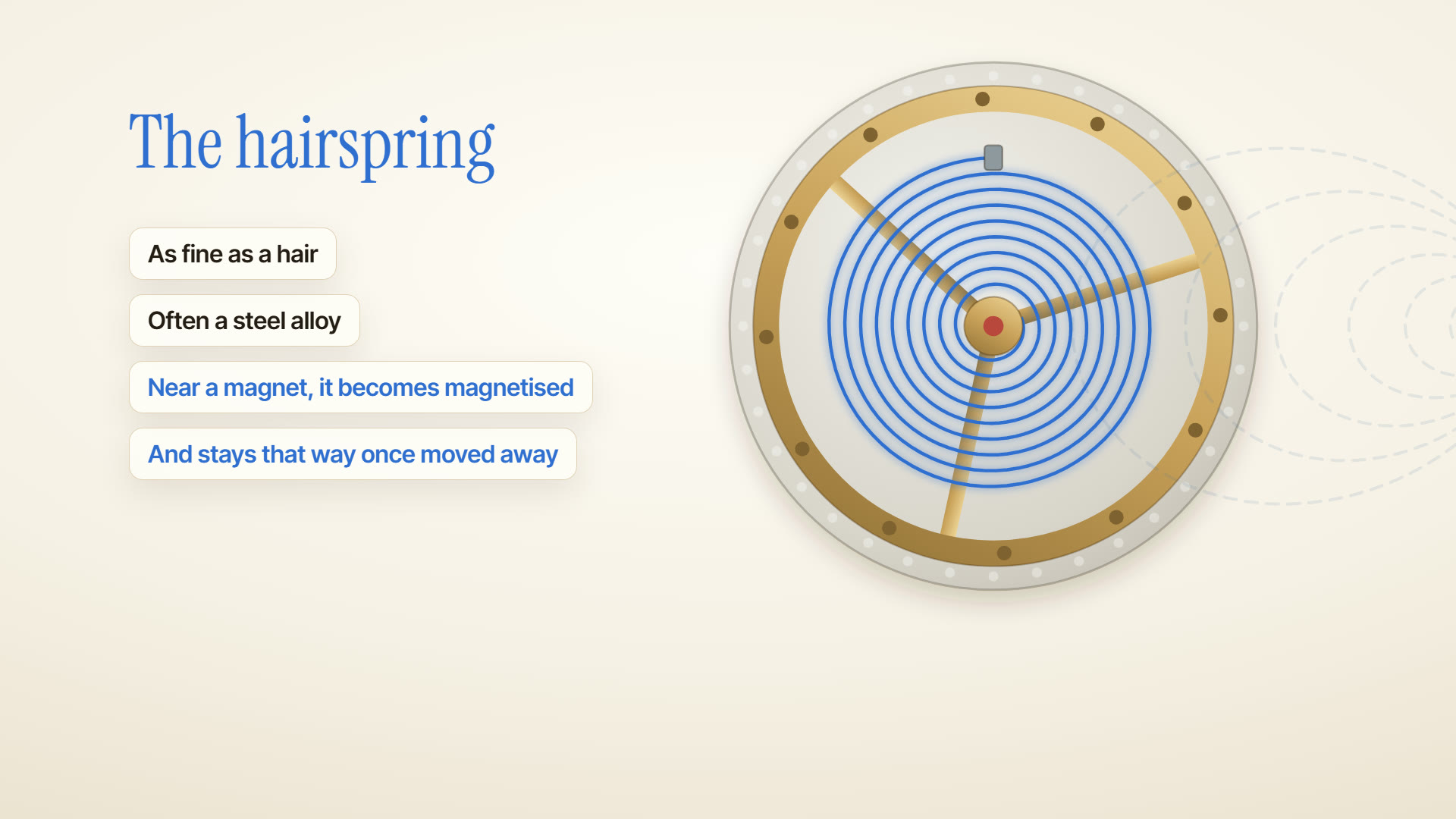
Why does a magnet make your watch run fast? The video guide
 ▶ 2:11
Is sapphire crystal unbreakable? The video guide
 ▶ 2:17