
Chronograph Watch Price: Complete 2026 Pricing Guide

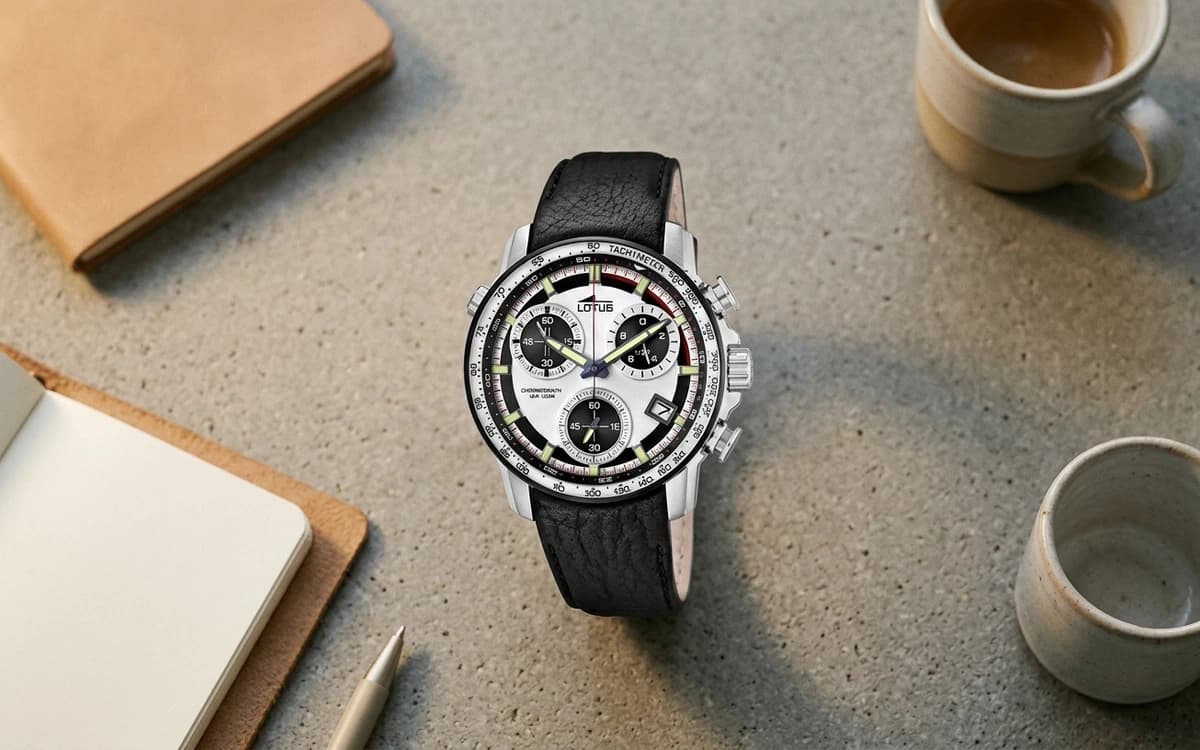
The price of a chronograph watch can range from a modest sum for a beginner quartz to a small fortune for a gold manufacture calibre. Between these two extremes, the difference is not down to marketing: it is explained by the movement, the crystal, the case materials and the level of finishing. This guide gives you concrete benchmarks to assess the real value of a chronograph and choose at the right price, whatever your budget.
Diagnosis in 5 seconds

Updated 2 May 2026 · 10 min read · By Frédéric Blanc, 15 years in watch distribution
Price ranges by segment in 2026
Here are the prices observed on the authentic chronograph market, by segment. The ranges correspond to recommended retail prices in official boutiques: in authentic outlet, discounts reach 30 to 70% on these same references, meaning substantial savings on an affordable model, reaching several thousand on a manufacture calibre.
| Segment | Case and materials | What you gain vs lower segment |
|---|---|---|
| Entry-level | Steel or alloy, mineral crystal, 42–46 mm | Starting point: chrono functions, reliable quartz |
| Budget | 316L steel, genuine leather or steel mesh, 40–44 mm | Japanese/Swiss quartz movement, careful finishing |
| Mid-range | 316L steel, sapphire crystal, 40–44 mm | Sapphire, first automatics, 10 ATM water resistance |
| Upper mid-range | Steel, ceramic, metal bracelet, 41–45 mm | Certified Swiss calibres, advanced complications |
| Entry luxury | Steel or rose gold, saddle leather, 40–43 mm | High-end Swiss manufacture or blank |
| Luxury and prestige | Gold, platinum, precious materials, 40–45 mm | Flyback, split-seconds, precious metals, limited editions |
Entry-level segment
At this price level, a quartz chronograph fulfils its main purpose: measuring time intervals accurately, with no significant maintenance. The crystal is mineral (hardness around 5 on the Mohs scale), water resistance limited to 3 ATM (splashes and rain, not showers), the strap in synthetic leather or basic steel mesh.
Typical brands: Casio Edifice, Timex, Lorus, and certain entry-level Diesel or Tommy Hilfiger models on promotion. These references are suitable for discovering chronograph features before investing further.
Budget segment
This is where the reference segment for a chronograph with real build quality begins. The movement moves to a superior quartz: Miyota or Seiko for Japanese calibres, Ronda or ETA for Swiss calibres. Accuracy reaches ±15 seconds per month. The case is in 316L stainless steel, the strap in genuine leather or solid steel, water resistance rises to 5 ATM.
Brands available in this segment:
This segment is the most competitive in perceived value: recognisable design, careful finishing (applied indices, textured dials), without overpaying for mechanical complication.
Mid-range segment
Two quality breakthroughs define this level: the appearance of sapphire crystal (9 Mohs, virtually scratch-proof) and access to first automatic movements. Water resistance regularly climbs to 10 ATM, which opens up swimming and snorkelling.
The quartz movement can be a Swiss ETA G10.211, or a Japanese automatic such as Seiko VK (meca-quartz) or NH35. Finishing becomes more complex: guillochéd dials, premium bracelets, transparent case backs on automatics.
Brands available in this segment:
To understand the difference in behaviour between these two types of movements in daily use, consult our complete guide automatic vs quartz.
Premium segment
Higher up, you enter the territory of automatic chronographs with high-quality finishes, prized by mechanical enthusiasts. The movements move upmarket: Sellita SW500, Valjoux 7750 or in-house calibres. Swiss Made certification appears regularly. Surface treatments become more refined: PVD, DLC, blued steel.
Certain complications become accessible at this level: engraved tachymetre, flyback (instantaneous reset with a single press), transparent sapphire caseback. Straps incorporate exotic leathers or machined metal mesh. The premium collections from Tissot, Certina or Hamilton position themselves here, alongside Swiss Made Hugo Boss and Emporio Armani lines.
The factors that push the price up (or down)
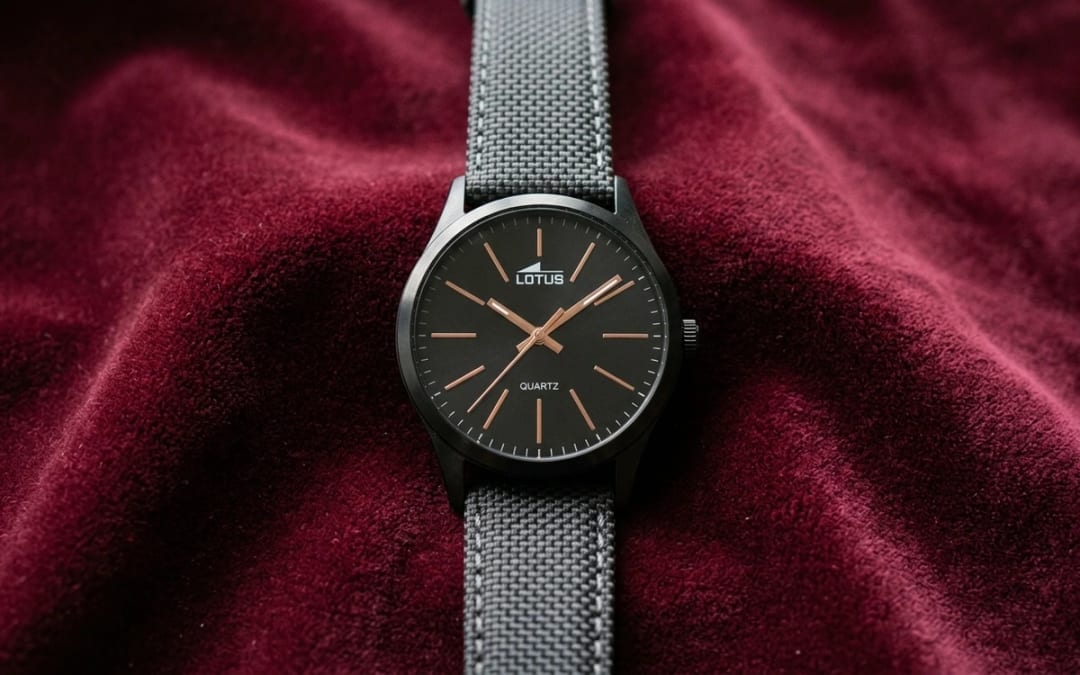
The movement: factor number 1
The type of movement is the main determinant of price. It also conditions the accuracy, maintenance and longevity of the piece.
| Criterion | Quartz | Automatic | Manual winding mechanical |
|---|---|---|---|
| Energy source | Battery (2 to 3 years) | Wrist movement | Daily winding |
| Accuracy | ±15 s / month | ±10 to ±30 s / day | ±10 to ±30 s / day |
| Power reserve | Unlimited (battery) | 40 to 80 hours | 40 to 50 hours |
| Maintenance | Battery every 2 to 3 years | Service every 5 to 7 years (a costly overhaul) | Service every 3 to 5 years |
| Impact on price | Base reference | +50% to +200% | +100% to +300% |
| For whom? | Practicality, sport, everyday | Mechanical passion, heritage | Purists, collectors |
The crystal: a worthwhile investment once you move beyond the cheapest models
The crystal is often underestimated at purchase. Yet it is the first visible surface and the most exposed to daily scratches.
- Mineral crystal: hardness ~5 Mohs, standard at entry level. Scratches with common objects (keys, granite).
- Reinforced mineral crystal (K1, Hardlex): good balance between resistance and cost, found on budget-segment models.
- Synthetic sapphire crystal: 9 Mohs, virtually scratch-proof under normal use conditions. Adds a modest amount to the manufacturing cost. On a watch worn daily for five years, this difference is easily recouped.
Case and strap materials
- Stainless steel 316L: watchmaking standard. Robust, hypoallergenic, resistant to salt corrosion.
- Gold plating / PVD rose gold: luxury aesthetics at controlled cost. The quality of the plating (5 to 20 microns) determines longevity: thin plating wears away in a few years on friction zones.
- Titanium: 40% lighter than steel, hypoallergenic. Ideal for sensitive wrists or water sports. Consult our water-resistant watch guide for technical details.
- Ceramic: virtually scratch-proof on the case, found on premium models for its distinctive matte appearance. Fragile to direct impacts despite its surface hardness.
Strap: genuine leather (vegetable or chrome tanning), silicone/rubber for sport, steel mesh, NATO nylon strap. The quality of the clasp and pin affects comfort and longevity as much as the material itself.
Complications: what really justifies the price increase
Not all complications have the same impact on price. Here is a practical hierarchy:
- Tachymetre: engraved on the bezel or printed on the dial. Adds almost nothing to the price. Calculates average speed on a kilometre or mile basis.
- Telemetre / pulsometre: rare, specific (acoustic distance measurement, manual heart rate). Value mainly aesthetic on modern models.
- Flyback (return in flight): a single press resets and restarts the chronograph simultaneously. Real mechanical complication, it pushes the price up noticeably depending on the calibre.
- Rattrapante (split-seconds): two superimposed hands to capture intermediate times without stopping the chrono. Very complex to assemble, extremely rare outside the most expensive models.
- GMT, full calendar, moon phases, power reserve: complementary complications found at the top end, they multiply the number of components and assembly time.
How to choose your chronograph according to your use

Define main use
- Everyday and office: 40 to 42 mm, sober dial (black, blue, silver), steel or leather strap, sapphire crystal. Water resistance 5 ATM minimum for splashes and rain.
- Sport and leisure: water resistance 10 ATM minimum, robust case, rubber or silicone strap, high legibility of indices and hands. Our water-resistant watch guide details water resistance levels by activity.
- Events and evening wear: thin case (less than 11 mm if possible), polished finishes, fine leather or Milanese mesh strap, streamlined or bold design depending on style.
- Collection and mechanical passion: automatic movement with transparent caseback, visible complications, identifiable calibres (Valjoux, Sellita, ETA). Also read our automatic watch maintenance guide before investing.
Adapt case size to wrist
| Wrist circumference | Recommended case diameter | Visual profile |
|---|---|---|
| Less than 17 cm | 38 to 42 mm | Discreet, balanced |
| 17 to 19 cm | 40 to 44 mm | Versatile, most common |
| More than 19 cm | 44 to 46 mm | Assertive presence |
Quartz or automatic: the right decision framework
The answer depends on your relationship with the watch, not solely on your budget.
Choose quartz if you want a watch ready to wear at any time, always accurate, without manipulation or servicing between battery changes. Contrary to what many think, quartz accuracy (+/- 15 sec/month) beats that of an entry-level automatic (+/- 10 to 30 sec/day): for intensive sports use where the second counts, quartz remains unbeatable.
Choose automatic if you are drawn to watchmaking mechanics, to the idea that a watch lives by itself on your wrist. Accept in return a drift of a few seconds per day and servicing every 5 to 7 years. Our automatic vs quartz comparison details all the selection criteria.
Understanding water resistance ratings
- 3 ATM: splashes only. Hand washing and light rain, no shower or swimming.
- 5 ATM: occasional shower. No bathing, diving or water sports.
- 10 ATM: swimming, snorkelling, water sports. Excellent versatile compromise for an everyday watch.
- 20 ATM and above, with the Diver's marking (ISO 6425): recreational diving, underwater sports.
Water resistance degrades over time if seals are not checked. A water resistance service every 2 to 3 years is recommended for watches frequently in contact with water. If in doubt about your watch's resistance, consult our article on condensation and watch water resistance.
To prioritise
- Sapphire crystal once you move beyond the cheapest models
- 316L stainless steel for the case
- 5 ATM water resistance minimum for daily use
- Identified Swiss or Japanese quartz movement (Ronda, ETA, Miyota)
- 2-year warranty verified on invoice
- Case size suited to your actual wrist circumference
To avoid
- Mineral crystal on a watch worn daily, beyond the cheapest models
- 3 ATM water resistance if you play sports or shower with it
- Gold-plated case less than 10 microns on an everyday watch
- Unidentified movement on a watch that is no longer cheap
- Purchase without warranty or with seller warranty only
- 46 mm or larger size on a wrist under 17 cm
Popular chronographs comparison in 2026

This table compares chronographs we offer in authentic outlet: all new, with 2-year warranty and original packaging. The prices shown are official boutique ranges: at Montres Outlet, the discount is generally 30 to 70% on these prices.
| Model | Movement | Crystal | Water resistance | Case | Boutique price, relative |
|---|---|---|---|---|---|
| Diesel Mega Chief Slim DZ4697 | Miyota quartz (JP) | Mineral | 5 ATM | Steel 46 mm | Most affordable |
| Tommy Hilfiger Gavin 1791471 | Quartz | Reinforced mineral | 5 ATM | Steel 44 mm | Most affordable |
| Michael Kors Bradshaw MK5739 | Quartz | Mineral | 5 ATM | PVD gold steel 44 mm | Middle |
| Hugo Boss Chronograph 1513701 | Ronda quartz (CH) | Sapphire | 5 ATM | Steel 42 mm | Middle |
| Emporio Armani Renato AR11387 | ETA quartz (CH) | Sapphire | 10 ATM | 316L steel 43 mm | Priciest of the five |
Quick reading of this table: the sharpest quality jump is between the Hugo Boss 1513701 and models with mineral crystal. For a small extra amount at boutique price, you move from mineral crystal to sapphire with a Swiss calibre. In outlet, this gap becomes even more favourable.
Buying in outlet: what really changes
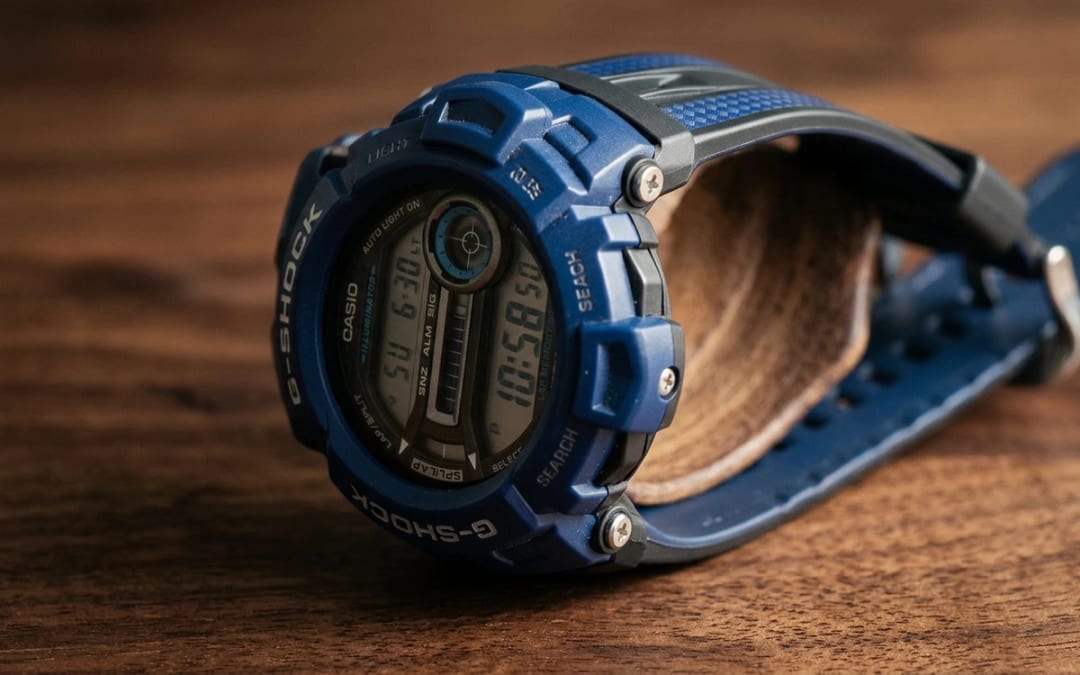
The question comes up regularly: is an outlet chronograph as good as one bought in an official boutique? The answer is yes, with one strict condition: that the outlet is authentic, meaning new pieces, not refurbished, not grey market. At Montres Outlet, 100% of our stock comes from official distribution channels, a point I verify personally with each new brand listing.
At Montres Outlet, each piece is:
- New, in original packaging with all accessories
- Covered by 2-year warranty
- Free delivery to mainland France, subject to our terms (3 to 5 working days)
- Returnable within 14 days without justification
Customer reviews are available on Temovio. For any question about a specific reference, our team is available via the contact page.
Selection of outlet chronographs
Tommy Hilfiger
Sport chronograph black silicone
Ref. 1791724
Hugo Boss
Velocity sport silicone black
Ref. 1513716
Michael Kors
Lexington stainless steel
Ref. MK8515
Diesel
Chronograph denim bracelet
Ref. DZ4541

Find your chronograph
Explore our selection of authentic chronographs with discounts of 30 to 70% off shop price, 2-year warranty and free delivery to mainland France, subject to our terms.
Our Montres Outlet selection
To help you move from advice to purchase, here are the 3 watches we particularly highlight on this subject, all in stock at Montres Outlet and suited to the profiles described in this article.
Frequently asked questions
What is the average price of a good quality chronograph watch in 2026?
Why does an automatic chronograph cost more than a quartz?
How much does a budget chronograph cost and is it reliable?
Does sapphire crystal justify its premium on a chronograph?
Which brands offer the best chronograph value in 2026?
What minimum budget should you plan for a reliable automatic chronograph?
Are there luxury chronographs in the upper price bracket?
How to save on buying a chronograph without losing quality?
Read next
More in this vein
Buying guides
200m Water Resistant Watch: The ideal companion for diving
Buying guides
The materials making a comeback in both watchmaking and creative jewellery
Buying guides
Swarovski watch: crystal, Swiss Made, what you're really paying for
Buying guides
Maserati Sfida R8823140004: autopsy of an open heart NH70
Buying guides
Skeleton watch: the complete guide from a watchmaker (men's, women's, automatic)
Buying guides
Rolex-style watch: Submariner, Datejust and affordable homages
Buying guides
Rectangular watch: from the Cartier Tank to affordable alternatives
Buying guides