
Men's watches: the ultimate 2026 guide to choosing your perfect watch

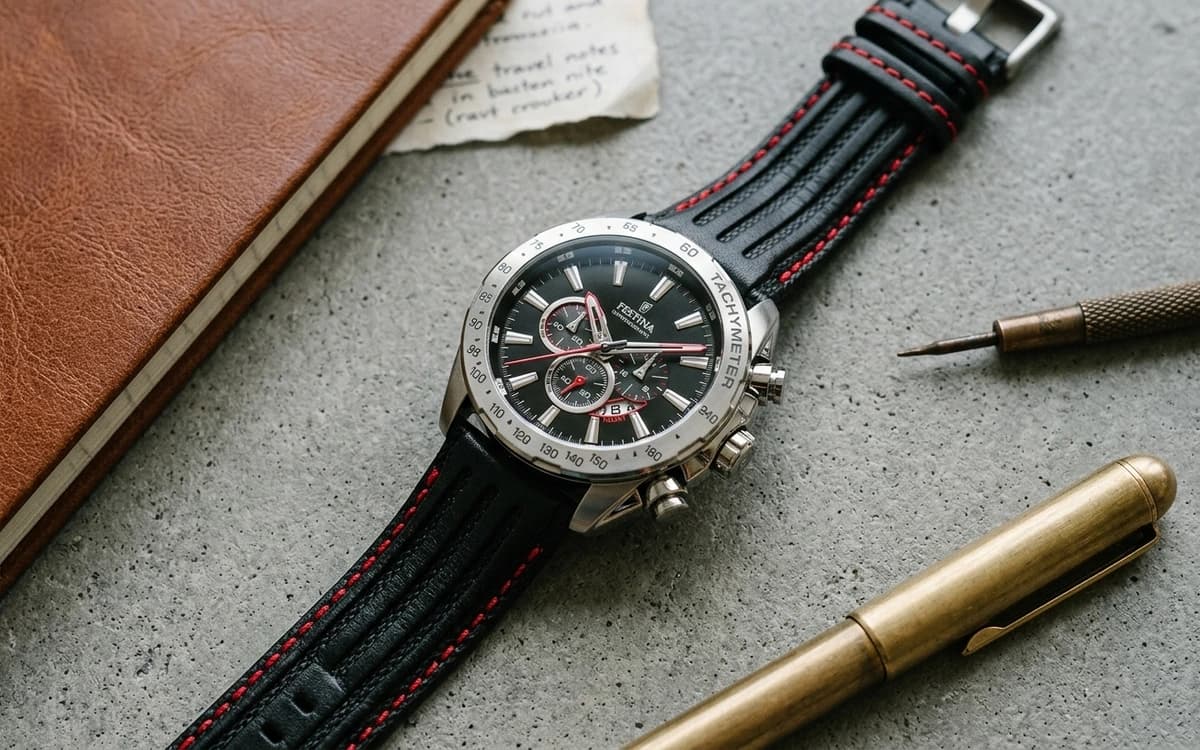
Updated 2 May 2026 · 20 min read · By Frédéric Blanc, 15 years in watch distribution
Choosing a men's watch in 2026 is not simply choosing an instrument. It is a matter of weighing up a movement, a style, materials, a case size and a budget: with dozens of brands competing for your wrist. After fifteen years negotiating and distributing watches across Europe, I have condensed into this guide everything you need to know to make the right purchase, from your first acquisition to building a considered collection.
Diagnosis in 5 seconds

Men's watch styles: finding your category
The first buying mistake I observe in this sector: choosing a watch without defining its usage context. Among the return requests we handle at Montres Outlet, this scenario comes up regularly. A magnificent diver watch on the wrist at the weekend becomes cumbersome under a suit sleeve. Here are the five main families, their technical characteristics and their wearing contexts.
The dress watch
Fine, refined, designed to disappear under a shirt cuff. The dress watch is the anti-statement: it signals taste, not wealth.
- Case thickness: 6 to 10 mm maximum
- Diameter: 36 to 42 mm depending on build
- Sober dial: Arabic or Roman numerals, no visible complications
- Quality leather strap (calf, cowhide, vegetable-tanned)
- Fine quartz movement or flat automatic
Wearing contexts: three-piece suit, professional interview, wedding, formal dinner. The Hugo Boss men's and Emporio Armani men's collections offer excellent references in this category, at intermediate to premium prices.
The sports watch
Designed to absorb shocks, perspiration, water. Its design assumes functionality as an aesthetic argument.
- Steel case, treated aluminium or technical alloy
- Water resistance 100 to 300 metres
- Chronograph functions, countdown, alarm
- Silicone, rubber or brushed steel strap
- Wide luminescent indices (night-time readability)
The sports watch works equally well in casual weekend wear as in business casual with jeans and jacket. Diesel men's and Tommy Hilfiger men's cover this segment well.
The pilot watch (aviator)
Stemming from military aviation in the 1940s-1950s, it is recognised by its large dial and oversized indices designed for cockpit readability.
- Generous diameter: 44 to 48 mm
- Indices and hands treated with SuperLuminova
- Screw-down crown protected by shoulders
- Chronograph and GMT functions frequent
- Aged brown leather or NATO nylon strap
Ideal wearing: casual-chic (chinos, suede jacket), travel, assumed adventurous look. The pilot watch tolerates a certain ostentation that the dress watch categorically refuses.
The diver watch
The most versatile style on the market. Designed for depths that the vast majority of its wearers will never reach, it has established itself as a robust and unpretentious city watch.
- Water resistance 200 to 300 metres minimum (ISO 6425 standard for true divers)
- Unidirectional rotating bezel graduated
- Screw-down sealed caseback
- Wide luminescent indices and easily readable
- Integrated or interchangeable strap (steel, rubber)
To deepen the criteria for actual water resistance, consult our complete guide to men's water-resistant watches.
The chronograph watch
The chronograph adds an immediately identifiable technical and visual dimension. Its subdials and side pushers create a more complex dial reading: which is precisely its appeal.
- Two or three subdials (counters at 6, 9 and 12 o'clock)
- Side pushers to start, stop and reset
- Tachymetre graduated on the bezel (speed measurement)
- Affirmed technical design, diameter often 42-44 mm
Movements: quartz, automatic, mechanical
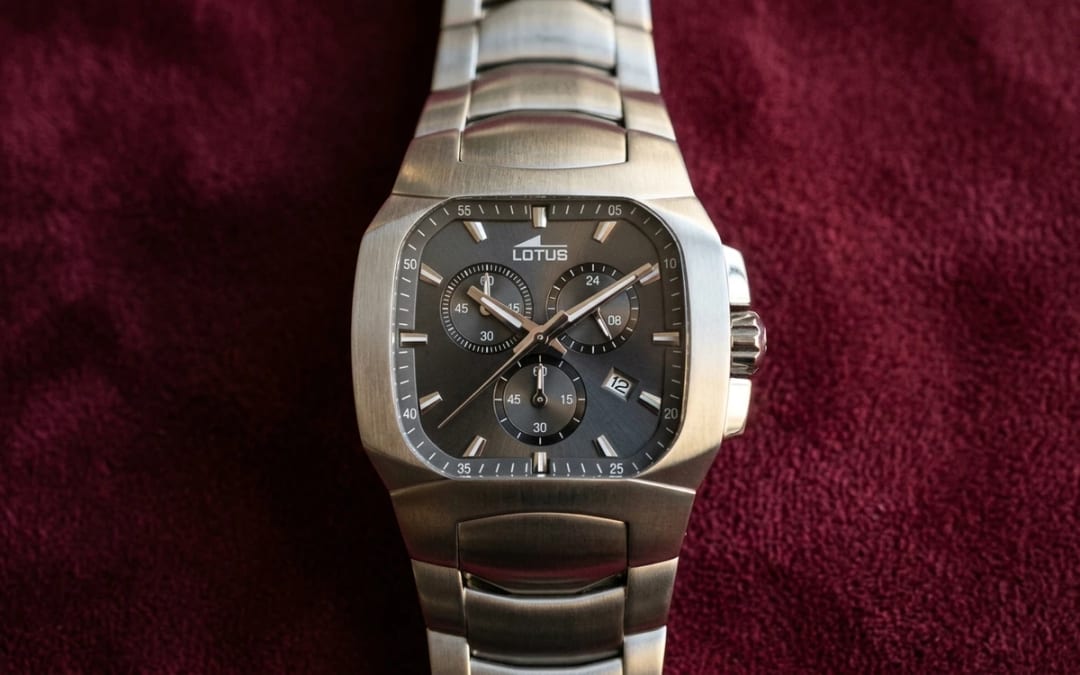
The movement is the heart of the watch. After 15 years auditing distribution networks, I've seen too many buyers convinced by product sheet marketing rather than calibre reality. Understanding the mechanism means aligning your purchase with your actual usage.
The quartz movement
Principle: a quartz crystal subjected to an electric current vibrates at 32,768 Hz, driving the display mechanism with near-perfect regularity.
Strengths: exceptional accuracy (±15 seconds per month on average), low maintenance, accessible price, possibility of very thin cases. Weaknesses: battery to change every 2 to 5 years depending on the movement, more limited heritage value compared to mechanical watches.
Typical profile: the man who wants a reliable everyday watch, without maintenance constraints, with a controlled budget. To deepen the comparison, our automatic vs quartz 2026 guide details all the trade-offs.
The automatic movement
Principle: a rotor pivots thanks to natural wrist movements, winding the barrel spring. No battery if the watch is worn regularly (minimum 8 to 10 hours per day depending on calibres).
Strengths: no battery, incomparable mechanical charm, transparent caseback (exhibition caseback) to admire the movement, power reserve of 38 to 72 hours depending on models, exceptional longevity if maintained. Weaknesses: slightly lower accuracy (±15 to 30 seconds per day depending on calibre quality), full service every 3 to 5 years recommended.
Typical profile: the enthusiast who appreciates mechanical tradition and wants a piece to pass on. In our stock, this segment represents nearly 30% of sales by value, far ahead of entry-level quartz. For maintenance protocols, consult our complete maintenance guide for automatic watches.
The manual winding mechanical movement
Principle: the wearer manually winds the watch each day via the crown. It is a voluntary, deliberate ritual.
Strengths: case often thinner than an equivalent automatic (no rotor, so up to 1.5 mm gained in thickness), intimate connection with the watch, pure watchmaking tradition. Weakness: the daily constraint concretely deters the majority of buyers, particularly those juggling multiple timepieces.
Typical profile: the enthusiast who cultivates a privileged relationship with their timepiece and appreciates this ritual as a moment of mindfulness.
| Criterion | Quartz | Automatic | Manual mechanical |
|---|---|---|---|
| Accuracy | ±15 s/month | ±15-30 s/day | ±15-30 s/day |
| Maintenance | Battery 2-5 years | Service 3-5 years | Service 3-5 years |
| Possible thickness | Very thin | Medium (rotor) | Thin (no rotor) |
| Heritage value | Limited | Strong | Strong |
| Usage constraint | Battery to change | Regular wear | Daily winding |
Materials: case and strap
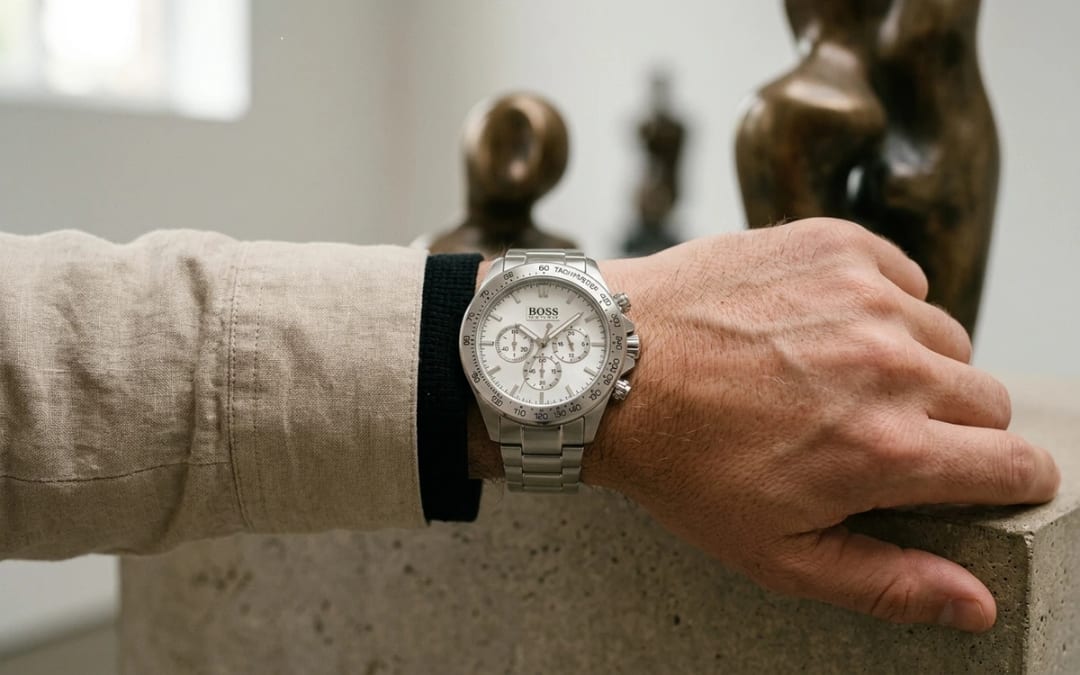
Cases: steel, PVD, titanium, ceramic
316L stainless steel: The standard of sports and everyday watchmaking. Hypoallergenic, corrosion-resistant, finishable in polished or brushed. Of the roughly 11,000 watches in our stock, it is the dominant material, and for good reason: it covers without compromise 80% of uses. Its only real flaw: micro-scratches on polished parts are inevitable, no matter how careful you are.
PVD gold and rose gold: Physical Vapour Deposition deposits a thin layer of precious metal on steel by physical process under vacuum. More resistant than traditional plating. It gives a warm luxurious appearance at accessible prices. Caution: PVD eventually wears on friction areas (lugs, caseback) after several years of intensive use.
Black PVD: Matte or satin treatment that gives a modern and discreet appearance at once. Compatible with a contemporary or military style. The black ranges of Hugo Boss and Diesel are particularly well executed in this finish.
Titanium: 40% lighter than steel, hypoallergenic, corrosion-resistant: titanium is the obvious choice for sensitive wrists and extreme conditions. In our stock, titanium cases represent less than 15% of available references, directly because of machining costs significantly higher than 316L steel, passed on to the final price.
Technical ceramic: Nearly scratch-proof in everyday use, lightweight, available in black or white. Its Achilles heel: fragility to occasional impacts that most customers are unaware of before purchase. In practice, on accessible ranges, it is mainly used on bezels and case inserts, rarely on the entire case.
Straps: leather, steel, NATO, silicone
Leather strap: Natural elegance that patinas over time. Calf leather remains the most common, vegetable-tanned the most noble. Excellent comfort, but sensitive to water and prolonged perspiration. To be replaced every 12 to 36 months depending on use. Do not expose to rain or bathing.
Steel strap: Fine, wide or Milanese mesh, flexible mesh adjustable to the millimetre. Water-resistant, durable, it transitions from office to casual effortlessly. The Milanese mesh remains in my view the best comfort-to-versatility ratio on the market, provided you clean it with a soft brush monthly: limescale deposits quickly become embedded in fine mesh.
NATO strap: From the British military universe. Woven nylon, very light, infinitely customisable (colours, stripes). Economical to replace, ideal for giving a second wind to an existing watch. Suits sports watches and relaxed casual styles.
Silicone and rubber strap: Waterproof, heat and UV-resistant, easy to rinse after sport. Contrary to what many think, a good vulcanised rubber strap (like on Seiko Prospex or Tudor Pelagos) lasts longer than low-grade silicone that softens in two seasons. Irreplaceable for outdoor activities, less suited to formal contexts.
To prioritise
- 316L steel for a first versatile watch
- Leather strap on a dress watch, steel on a sports watch
- Black or gold PVD for a touch of style without major extra cost
- Titanium if you have metal-sensitive skin
- Check strap-usage compatibility (leather + sport = bad idea)
To avoid
- Standard gold plating (galvanic): flakes in 6 to 18 months
- Leather strap for a watch advertised as "water-resistant"
- Full ceramic on a watch in the accessible upper range (variable quality)
- Purchase without checking lug width (strap interchangeability)
- Silicone strap with a dress watch under a suit
Sizes and proportions: the measurement everyone forgets

Choosing the right watch size is the most underestimated step in the buying process. Of the returns I handle from fifteen years in watch distribution, more than 60% concern a single problem: the watch looked beautiful in the photo, unsuitable on the wrist.
Diameter and thickness: the basics
Diameter is measured from one edge of the case to the other, crown excluded. Thickness determines whether the watch passes under a shirt cuff. Beyond 14 mm thickness, snagging problems become frequent.
| Wrist circumference | Recommended diameter | Advised thickness | Suited style |
|---|---|---|---|
| Under 17 cm | 36 to 40 mm | 10-12 mm max | Dress, vintage |
| 17 to 19 cm | 40 to 42 mm | 12-14 mm | Versatile (sports, dress) |
| Over 19 cm | 42 to 46 mm | 14 mm and more tolerated | Sports, diver, pilot |
The lug-to-lug: the secret measurement
The lug-to-lug distance (of the lugs) is the total length of the case from one end to the other. It is this that determines whether the watch "sits" well or overhangs. Absolute rule: lug-to-lug must never exceed the width of the top of your wrist. Counter-intuitively, a 42 mm case can very well fit on a slim wrist if its lug-to-lug is short, whereas a 40 mm with long lugs overhangs.
Concrete example: a 42 mm diameter watch can have a lug-to-lug of 48 mm (very reasonable) or 54 mm (problematic for an average wrist). Diameter alone is not enough. Always consult complete technical specifications before buying, particularly on Montres Outlet product sheets.
Style and proportions: practical rules
- Dress watch: Fineness takes priority over diameter. It may look slightly small, that is its nature. A 38 mm dress watch on a large wrist remains acceptable if it is thin.
- Diver or sports watch: It is naturally thicker (rotating bezel, screw-down caseback). Compensate by choosing a diameter suited to your build to avoid the "paving stone on the wrist" effect.
- Manual winding watch: Without a rotor, it is generally thinner than an automatic of the same calibre. Direct advantage under shirt cuffs.
Complications: functionality or prestige
A "complication" designates any function of a watch beyond indicating hours, minutes and seconds. There are two categories: those that serve daily life, and those that serve prestige.
Utilitarian complications
The date: The most widespread complication. Simple window, large date with two discs, or full calendar (day + date + month). In our stock, it is also the complication that generates the fewest returns: a safe choice for an office or everyday watch.
The chronograph: The "stopwatch" function with pushers on the case. Useful to athletes and timing professionals, it is also a highly sought-after complication among affordable technical watches. Counter-intuitively, of the 11,000 watches in our stock, two-subdial chronographs (like the Seiko SSB031 or Tissot T-Sport) resell better than overloaded tricompax: fewer subdials, often more readability and more buyers.
The second timezone (GMT): Essential for frequent travellers. An additional hand makes one revolution in 24 hours and points to a bezel or dial graduated to indicate the time of a second timezone. The practical complication par excellence for international professionals.
The power reserve: A valuable indicator on mechanical watches. It signals how many hours of operation remain before the watch stops. Particularly useful on manual winding watches.
Prestige complications
The perpetual calendar: Accounts for months with 30 or 31 days and leap years. Once set, no adjustment until 2100. Engineering feat, but significant investment.
The tourbillon: Mobile cage containing the escapement, designed to counter the effects of gravity on accuracy. Its real value in wrist wear is virtually nil: contrary to what many imagine, a good ETA 2824 movement worn daily drifts less than a cheap Chinese tourbillon. Its value is primarily spectacular and symbolic, which remains a perfectly valid reason to appreciate it.
The minute repeater: The watch chimes the hours, quarters and minutes on demand via hammers striking gongs. One of the most complex mechanisms in watchmaking. Reserved for haute horlogerie budgets.
Analogue vs connected: which wrist in 2026
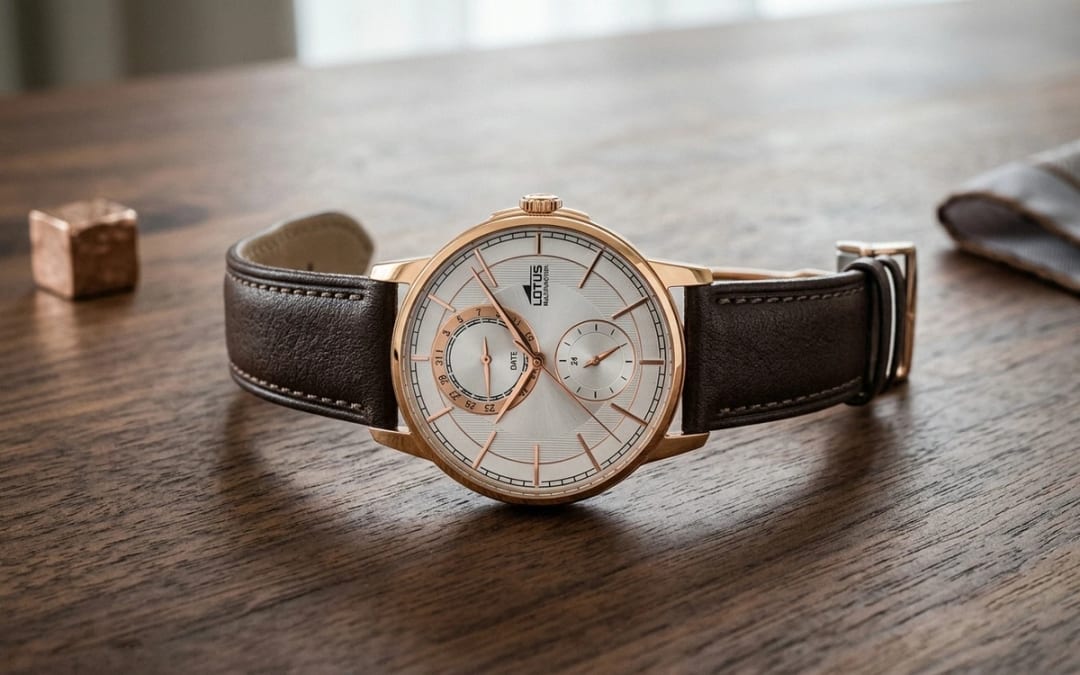
The question comes up often: "Why buy a quartz or automatic watch when my phone tells the time?" That is the wrong question. After 15 years in watch distribution, I observe that the real trade-off opposes two object philosophies: the disposable connected tool every two years, versus the transmissible style object. Not two time measurement technologies.
The connected watch: the wrist assistant
Notifications, health tracking (ECG, SpO2), built-in GPS, contactless payment, dial personalisation: connected watches are true wrist computers. Their strengths are real for an active, connected profile.
Their limitations are equally real: battery life of 1 to 3 days generally, technological obsolescence in 3 to 5 years, and a status as an electronic object that does not transmit. An Apple Watch from 2019 is no longer really usable in 2026. An automatic watch from 1975 still runs perfectly.
Hybrid watches: the best of both worlds
A rapidly growing category: classic analogue appearance (hands, no screen) with discreet connected functions (activity tracking, automatic time correction, vibration notifications). Battery life of several months thanks to quartz movement. These are watches like those offered by Seiko or Citizen in their connected ranges. Timeless aesthetics, modern functions, without the screen constraint.
The classic mechanical or quartz watch: the durable object
It does not do ECG. It does not notify you of your emails. But it will still be readable in forty years, it can be passed on, it requires no software update. Its value is not in functionality, it is in durability, craftsmanship and emotion.
Wearing a mechanical watch in 2026 is choosing to partially disconnect from the digital flow. It is an object that brings you back to "real" time, measured by a tangible mechanism you can observe through the sapphire caseback.
How to choose your watch according to usage and budget
For a targeted Father's Day gift with outlet seller selection, consult our special Father's Day gift guide scheduled for 1 June.
By usage
Office watch: Elegance and professionalism. Size 40-42 mm, fine leather or steel strap, refined dial, 30-50 metres water resistance sufficient. Intermediate to premium budget.
Versatile everyday watch: Stainless steel, 50 metres water resistance minimum, reliable movement (Japanese quartz or Swiss), simple functions (date, seconds). Modest to intermediate budget.
Sport and leisure watch: Enhanced water resistance (10 ATM minimum for swimming, 20 ATM with the Diver's marking for diving), silicone or steel strap, chronograph welcome. In this segment, 65% of our sales are in the mid-range, the real quality-to-price sweet spot. Our guide on men's water-resistant watches covers this segment in detail.
Evening and special occasion watch: Luxurious finishes, automatic movement if budget allows, refined controlled design. Budget from mid-priced to premium.
By personal style
Classic and elegant style: Dress watch with black or brown leather strap, polished steel case 38-42 mm, sober dial. Hugo Boss and Emporio Armani excel here.
Modern and contemporary style: Steel or Milanese mesh strap, black or gold PVD finishes. The contemporary ranges of Michael Kors or Hugo Boss cover this register well.
Sports and adventurous style: Chronograph or diver, enhanced water resistance, resistant strap. Festina and Citizen offer excellent value for money in this category.
Bold and affirmed style: Generous sizes (44 mm and more), original finishes, unconventional designs. Diesel is the absolute reference in this register.
By budget
| Range | What you get | Advised brands |
|---|---|---|
| Entry-level | Reliable quartz, steel, simple design, fashion brands | Tommy Hilfiger, Festina |
| Mid-range | Premium finishes, established fashion brands, some automatics | Hugo Boss, Emporio Armani, Tissot |
| Accessible high-end | Quality automatic, luxurious finishes, recognised calibres | Seiko Presage, Tissot, Citizen |
The brands: overview of Montres Outlet partners
Hugo Boss: accessible German elegance
Hugo Boss has established itself as a reference in accessible luxury watchmaking. German design translates into impeccable finishes, refined dials and remarkable versatility. From sports chronograph to minimalist dress model, each piece embodies a philosophy of style without excess.
Strengths: strong stylistic coherence, impeccable steel finishes, wide range of sizes. Price range: mid-range to upper range. Predominantly quartz movement, with some automatics in premium ranges representing less than 20% of the catalogue but concentrating nearly 40% of requests.
Emporio Armani: Italian elegance
Emporio Armani democratises the elegance of the Giorgio Armani house. Men's watches are distinguished by balanced proportions, luxurious finishes and often dark dials (slate blue, matte black) that signal sober and contemporary elegance. Fine leather straps and satin steel cases constitute the visual signature.
Price range: entry level to accessible upper range. Japanese Movt quartz or Swiss Movt on premium ranges.
Tommy Hilfiger: American style on the wrist
Tommy Hilfiger embodies the American prep spirit in watchmaking: red-white-blue codes, relaxed designs, maximum accessibility. Men's watches are characterised by multifunction coloured dials, retro brown leather straps and generous sizes (44-46 mm) that affirm wrist presence. Collections renew each season.
Price range: rather affordable. Japanese quartz movement.
Diesel: urban boldness
Diesel applies its rebellious DNA to watchmaking: oversized cases (46 to 58 mm), sometimes three-dimensional dials, black or patinated bronze PVD treatments. It is the watch of the man who refuses banality and assumes a strong nonconformist style. Industrial materials and designs that do not leave indifferent are the hallmark.
Price range: affordable to intermediate. Quartz movement, some chronographs in high range.
Maserati: automotive heritage transposed
Maserati watches capture the essence of the Trident maker: power, refinement, Italian passion. Each collection pays homage to an emblematic automotive model. Fluted dials, hands inspired by speedometer gauges and racing colours make these watches collection pieces in their own right.
Price range: intermediate to premium. Predominantly quartz, some automatics.
- See Maserati men's collection
- Complete Maserati men's guide
- Detailed review: Sfida R8823140004 automatic with open heart
Maintenance: making your watch last
Daily cleaning
Steel case: wipe with a soft microfibre cloth after each wear. Dry carefully after any water contact. Seals are the weak point: repeated soapy water degrades them well before the recommended timeframe, I have observed this phenomenon on the majority of watches returned to after-sales service for infiltration.
Leather strap: absolutely avoid water and prolonged perspiration. Nourish with neutral leather cream every 3 months. Store away from direct light. Leather is the most sensitive material in the equation.
Steel or Milanese strap: monthly cleaning with a soft brush, warm water and a few drops of mild soap. Rinse, dry carefully.
Periodic maintenance
Water resistance check: Even a watch certified water-resistant loses its properties over time. In our network, a notable share of watches resold with a water resistance rating certified at the outset show degraded seals after two years of normal use. Have water resistance tested every year or every two years by an authorised watchmaker, imperatively before swimming or sea use. Fogging under the crystal? Consult our guide on condensation and water resistance problems before any immersion.
Full service for automatic: Disassembly, cleaning, lubrication, adjustment, seal replacement. To be performed every 3 to 5 years by a qualified watchmaker. The automatic watch maintenance guide details each step of the process.
Battery change for quartz: Every 2 to 5 years depending on the movement and active functions. A watch that runs slow abnormally or stops requires immediate replacement. Entrust this operation to a professional to preserve the water resistance of the caseback seals.
Storage and conservation
Keep your watches in their original case or suitable watch box, away from speakers, magnetic tablets and bag closures. For unworn automatics, a winder prevents movement regulation drift: contrary to what many owners think, leaving an automatic stopped for several repeated weeks accelerates internal lubricant ageing far more than normal wear from daily wear.
For any technical questions on maintenance or warranty repair, our customer service is available to guide you.

Find your watch
You have identified your style, your budget and your usage. Now explore our selections or refine your choice with our specialist guides.
What are the essential criteria for choosing a quality men's watch?
What is the difference between a quartz watch and an automatic watch?
How do I choose the ideal dial size for my wrist?
What is the best watch style for everyday use?
How much does a good men's watch cost and what budget should I plan?
Which men's watch is timeless and will not go out of style?
How do I maintain my men's watch to make it last long?
Where can I buy a quality men's watch with warranty?
Read next
More in this vein
Buying guides
200m Water Resistant Watch: The ideal companion for diving
Buying guides
The materials making a comeback in both watchmaking and creative jewellery
Buying guides
Swarovski watch: crystal, Swiss Made, what you're really paying for
Buying guides
Maserati Sfida R8823140004: autopsy of an open heart NH70
Buying guides
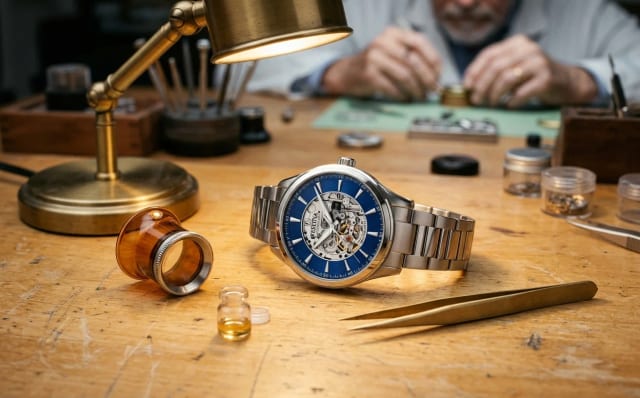
Skeleton watch: the complete guide from a watchmaker (men's, women's, automatic)
Buying guides
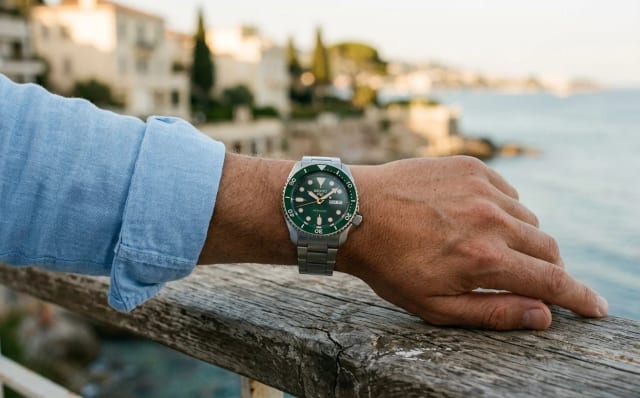
Rolex-style watch: Submariner, Datejust and affordable homages
Buying guides
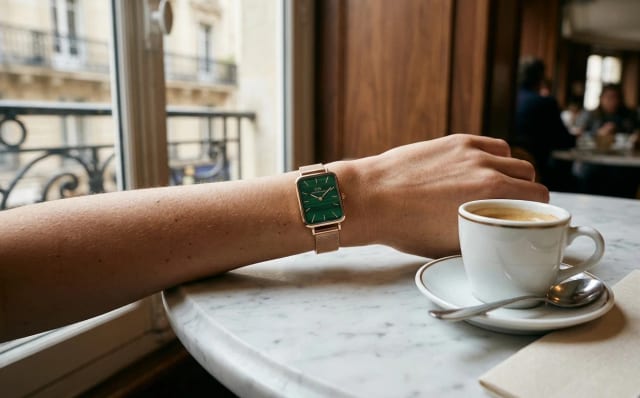
Rectangular watch: from the Cartier Tank to affordable alternatives
Buying guides